
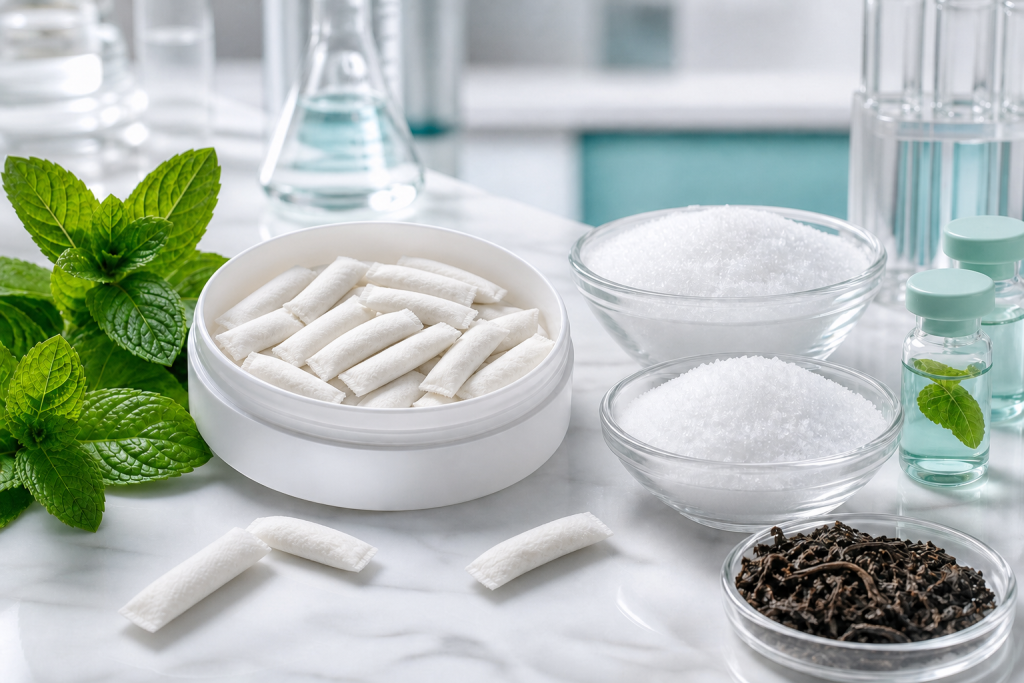
Xylitol and erythritol are often grouped together as sugar alcohols, but they do not create an identical pouch. Their sweetness, cooling, crystal behavior and moisture response differ. The useful question is not which one is “better”; it is how the blend supports the target taste, texture and manufacturing process.
Specify Grade and Particle Size
Request the food-grade specification, assay, particle-size range and supplier for each sweetener. Coarse crystals may feel gritty, while very fine materials can dust and affect flow. Use the production grade in every approval sample because a bench substitute can change both sensory results and machine behavior.
Balance Sweetness and Cooling Separately
Both materials can contribute cooling, and mint or added cooling agents may intensify it. Evaluate sweetness onset, cooling strength, mint identity and finish as separate attributes. A pouch that feels clean for thirty seconds may become overly cold or dry during the intended use period.
Plan the Complete Base
Tea-derived ingredients, flavors and carriers add their own taste and moisture effects. Determine the sweetener ratio after these materials are present. Set target pouch weight, fill volume, moisture, loose-powder limit and seam appearance together rather than approving flavor in isolation.
Be Conservative With Oral-Care Claims
Ingredient familiarity does not automatically substantiate a finished-product claim about cavities, plaque, gums, whitening or disease. Review the exact amount, format, directions and market. A fresh-mouth positioning carries different evidence and regulatory implications from a treatment promise.
Production Checks Worth Defining
- Xylitol and erythritol identity and supplier specifications
- Blend ratio and manufacturing tolerance
- Particle size and flow behavior
- Pouch weight, moisture and water activity where relevant
- Sensory timing for sweetness, mint and cooling
- Microbiological, seal and loose-powder limits
- Change control for sweetener or flavor suppliers
Keep the First Range Focused
One mint and one lighter botanical or fruit-mint option often provide better learning than six similar flavors. Confirm raw-material and packaging minimums before dividing the production order. Keep retained samples to compare sweetness and texture as the product ages.
LinkBioLabs develops oral care pouches using project-approved xylitol, erythritol, mint, tea ingredients and food-grade carriers. Send the market, flavor direction and expected quantity through our contact page.
Related manufacturing references
For a complete OEM review, connect this article with the main product and process pages. Buyers usually need category fit, stock-formula options, custom formulation support, process checks, and a direct project discussion before approving samples.
- Custom oral pouch manufacturing
- Stock formulation options
- Private label pouch project planning
- Formulation and R&D support
- Manufacturing process and quality checks
- Technical manufacturing blog
- Discuss a project
Content review note: technical articles are reviewed for functional oral pouch, ODF, packaging, and OEM procurement relevance.