
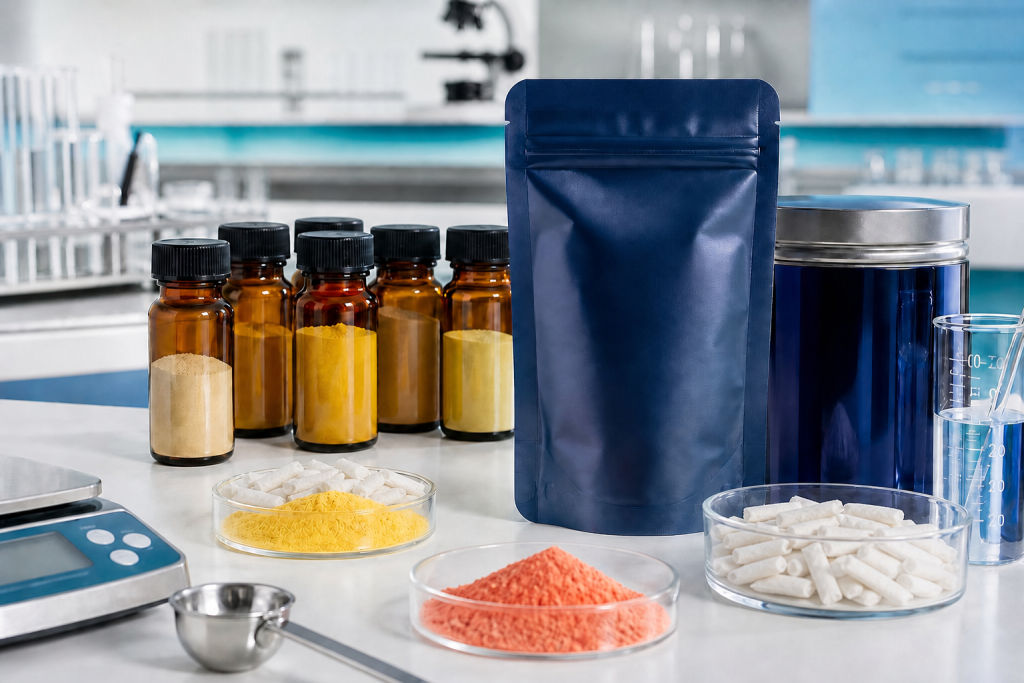
A vitamin B complex oral pouch can fit a daily wellness or caffeine-free lifestyle range, but it should not be built by shrinking a tablet formula into pouch dimensions. Different B vitamins have different forms, target amounts, tastes, stability considerations and upper-intake questions. The finished formula must still leave room for carriers, flavor and a comfortable moisture system.
For an OEM buyer, the most productive starting point is a short nutritional objective and a target market. “All B vitamins at the highest possible amount” is not a manufacturing strategy. A focused specification is easier to test, label and keep consistent.
Choose Forms Before Discussing Flavor
Specify the exact form of each nutrient, not only B6 or B12. Supplier documentation should identify potency, carriers and assay method. Some premixes can simplify uniformity and sourcing, while individual additions provide more control. The right route depends on target amounts, batch size and testing plan.
NIH Office of Dietary Supplements fact sheets are useful technical references. They explain, for example, that vitamin B6 exists in several forms and that excessive long-term intake can create safety concerns; limits also differ between authorities. The NIH vitamin B6 fact sheet and vitamin B12 fact sheet should be read alongside destination-market requirements.
Fit the Serving Into the Pouch
Calculate the complete blend at the intended amount per pouch and suggested daily use. Include overages only when they are technically justified and controlled. A tiny nutrient amount can create blend-uniformity challenges, while a large premix can make the pouch bulky or chalky. The manufacturer should explain how the formula will be blended and sampled for uniformity.
Expect Real Taste-Masking Work
B-vitamin materials can add bitterness, acidity, color or a characteristic vitamin note. Citrus and berry may handle sharpness differently from mint or tropical flavors. Samples must contain the intended vitamin grades and target amounts. Testing a flavored blank first can help select a direction, but it cannot be the final sensory approval.
Stability Is a Formula and Packaging Question
Moisture, oxygen, light and ingredient interactions can affect nutrients and flavor over time. Agree on packaging barrier, storage conditions and a stability plan appropriate to the product and launch schedule. A label claim should be supported through the intended shelf life, not only on the day of manufacture.
Build the Release Specification Early
- Identity and supplier documents for each vitamin or premix
- Target amounts and justified manufacturing tolerances
- Blend and fill-weight uniformity controls
- Microbiological and contaminant testing appropriate to the product
- Finished-product potency testing plan
- Moisture, seal, appearance and count per can
- Retained samples and shelf-life review points
Keep the Energy Story Accurate
B vitamins have established nutritional roles, but that does not mean every B-complex pouch can promise an immediate energy effect or cure fatigue. Review nutrient-content and other claims against the exact amounts and market rules. Do not imply that more is always better, and account for the suggested daily use and other products consumers may take.
LinkBioLabs supports nutritional pouch manufacturing using project-approved vitamins, minerals, carriers and flavors. Send the target market, preferred B-vitamin forms, amount direction, flavor, pouch count and forecast through our contact page to begin an OEM feasibility review.
Related manufacturing references
For a complete OEM review, connect this article with the main product and process pages. Buyers usually need category fit, stock-formula options, custom formulation support, process checks, and a direct project discussion before approving samples.
- Custom oral pouch manufacturing
- Stock formulation options
- Private label pouch project planning
- Formulation and R&D support
- Manufacturing process and quality checks
- Technical manufacturing blog
- Discuss a project
Content review note: technical articles are reviewed for functional oral pouch, ODF, packaging, and OEM procurement relevance.