
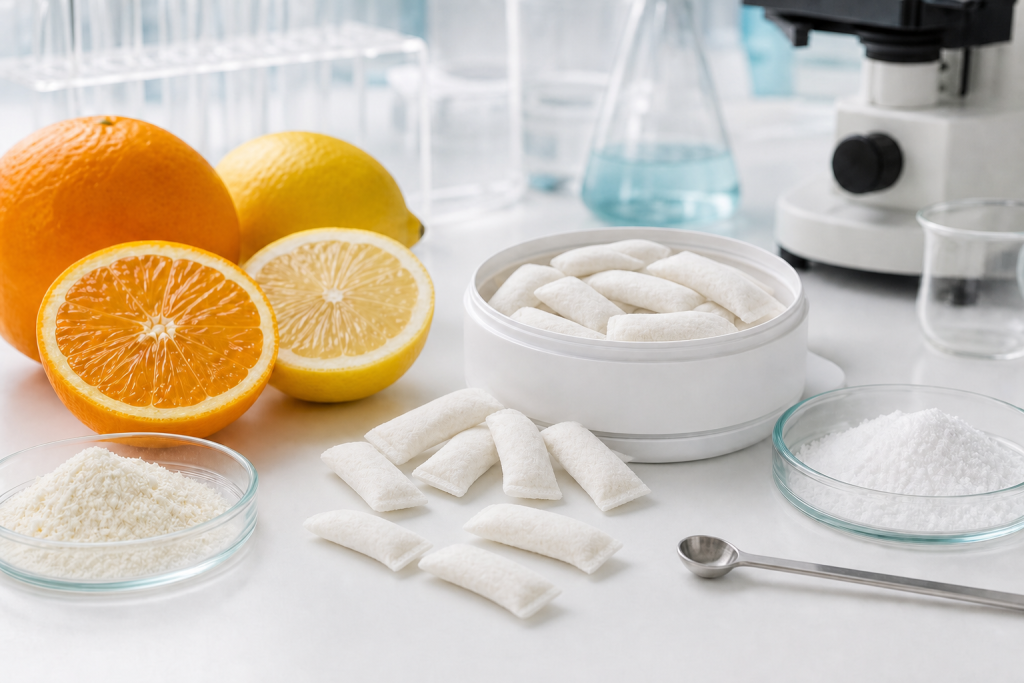
Vitamin C and zinc are familiar ingredients, but familiarity can make an OEM brief deceptively vague. A request for “vitamin C, zinc and orange flavor” does not identify the nutrient forms, elemental zinc amount, serving size, pouch weight or stability target. Those details decide whether the formula will fit, taste acceptable and support the intended label throughout shelf life.
A nutritional pouch should be designed as its own dosage format rather than a tablet formula squeezed into fabric. The ingredient system must leave room for carriers, flavor and moisture while remaining comfortable under the lip and repeatable on a production line.
Specify the Chemical Form of Each Nutrient
Vitamin C may be supplied as ascorbic acid or another permitted source, while zinc is available through several salts and complexes. The selected form changes potency calculations, ingredient weight, acidity, solubility and taste. Request the exact material name, assay, carrier information and supplier specification before sensory approval.
For zinc, distinguish the amount of elemental zinc from the weight of the complete zinc compound. The NIH Office of Dietary Supplements zinc fact sheet summarizes zinc forms, intake reference values and safety considerations. Its information is a technical reference, not a formula recommendation or permission for a finished-product claim.
Calculate the Full Pouch and Daily Use
Start with target amounts per pouch and the proposed number of pouches per day. Then calculate the real ingredient weights using supplier assay values. Add the carrier, sweetener, flavor and processing aids needed for a workable blend. A headline amount that fits on a spreadsheet may produce a pouch that is too large or too acidic once the whole formula is included.
Daily-use planning matters because customers may consume other fortified foods or supplements. Review target amounts, warnings and use directions for the destination market. Avoid assuming that a higher number creates a better product.
Vitamin C Drives the Flavor Conversation
Ascorbic acid can provide a sharp, tart character that pairs naturally with citrus and berry profiles. That does not mean every acid note is pleasant. High acidity can exaggerate dryness or irritation, while zinc materials may add bitterness, chalkiness or a metallic finish. Samples should contain the final nutrient forms at commercial amounts.
A useful sensory check records
- Opening citrus or fruit aroma
- Acidity and sweetness during the first minute
- Metallic, bitter or chalky notes at the midpoint
- Pouch softness and any local irritation
- Flavor finish after the intended use period
- Differences between fresh and stored samples
Moisture and Oxygen Need Early Attention
Vitamin C can be sensitive to oxidation, and formula interactions, moisture, oxygen, heat and packaging all influence stability. A specification measured only on the day of manufacture does not prove that the labeled amount will remain appropriate at expiry. Select the can, liner and storage conditions before formal stability work begins.
The NIH vitamin C fact sheet provides background on vitamin C chemistry and intake. For the commercial pouch, brands still need product-specific testing and market review rather than transferring conclusions from foods, tablets or research preparations.
Build a Test Plan Around the Actual Risks
- Identity and certificate of analysis for both nutrient sources
- Elemental zinc and vitamin C calculations
- Blend and fill-weight uniformity
- Finished-product nutrient assay where appropriate
- Moisture, water activity and microbiological limits
- Seam quality, loose powder and count per can
- Real-time and accelerated stability in the final package
Keep Claims Separate From Ingredient Selection
Using vitamin C and zinc does not automatically substantiate every immunity, illness-prevention or treatment message. Nutrient-content and health-related claims depend on the formula, serving, evidence and market. Review the name, front label, website copy and suggested-use language together before packaging is printed.
Questions to Ask the Manufacturer
- Which vitamin C and zinc forms are proposed, and why?
- What is the elemental zinc amount per pouch and per daily use?
- Can the target amounts fit within the preferred pouch size?
- How will acidity and metallic taste be evaluated?
- Which potency and stability tests are included?
- What changes to nutrient suppliers require new approval?
LinkBioLabs develops nutritional oral pouches with project-approved vitamins, minerals, carriers and flavors. Send the target market, nutrient forms or amount direction, flavor, pouch count and expected order volume through our contact page for an OEM feasibility review.
Related manufacturing references
For a complete OEM review, connect this article with the main product and process pages. Buyers usually need category fit, stock-formula options, custom formulation support, process checks, and a direct project discussion before approving samples.
- Custom oral pouch manufacturing
- Stock formulation options
- Private label pouch project planning
- Formulation and R&D support
- Manufacturing process and quality checks
- Technical manufacturing blog
- Discuss a project
Content review note: technical articles are reviewed for functional oral pouch, ODF, packaging, and OEM procurement relevance.