
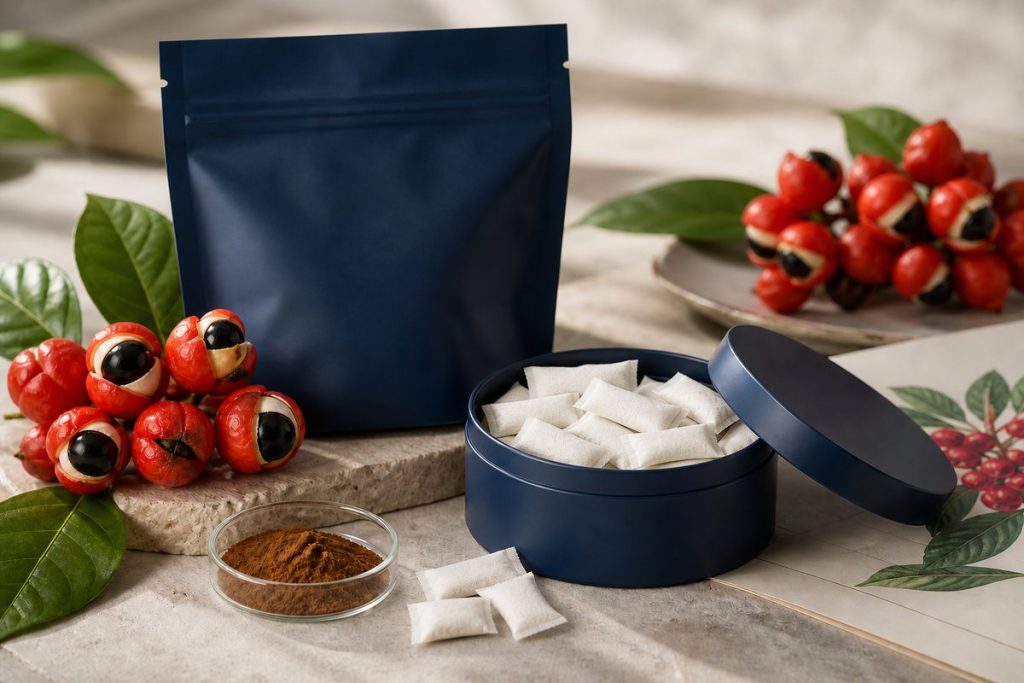
Guarana gives an energy pouch a botanical story that is different from a product built around isolated caffeine alone. That difference can be valuable, but it also adds sourcing and communication questions that should be answered before the first commercial batch.
When a brand approaches a guarana pouch manufacturer, “contains guarana” is not a complete specification. Extract strength, carrier, caffeine contribution, sensory profile and supplier documentation can vary. The formula brief needs to identify the actual material and the role it plays in the finished pouch.
Begin With the Guarana Ingredient Specification
Request a current specification and certificate of analysis for the proposed material. The documents should make it possible to identify the botanical, plant part, extract form, relevant assay, microbiological limits and lot. If an extract is standardized, confirm what the standardization means and how that value is verified.
The manufacturer should also calculate the ingredient’s contribution to total caffeine and align it with any added caffeine source. Botanical language on the front of the can does not remove the need to understand and declare the product accurately.
Decide What “Private Label” Means for This Project
Some private-label programs use a stock guarana formula with custom branding. Others permit changes to strength, flavor, sweetness, pouch size and moisture. A fully custom project can go further, but it will normally require more sampling, documentation and scale-up work.
- Stock formula: fastest starting point and the clearest route for a first market test.
- Modified formula: useful when the brand needs a distinct flavor or serving direction without rebuilding the base.
- Custom formula: appropriate when differentiation justifies a longer development path and a more detailed specification.
Build Flavor Around the Real Extract
Guarana materials can introduce bitterness, dryness or an earthy note. A flavor that works in an unflavored base may behave differently after the extract is added. That is why development samples should use the intended ingredient grade and target level rather than a substitute.
Citrus and tropical profiles can make a botanical energy concept feel bright, while berry and cola directions can provide more body. Mint can work when a clean finish is part of the brand idea. The best choice is the one that remains balanced through the expected use period and after storage—not the one with the strongest opening aroma.
Quality Questions That Separate a Quote From a Plan
- Is the same approved guarana grade reserved for production?
- How is total caffeine calculated and tested?
- What incoming documents are reviewed for every botanical lot?
- How are color or flavor variations between extract lots managed?
- Which moisture, weight and seal checks are recorded in production?
- What stability or compatibility work is appropriate for the formula?
- Can the factory provide batch and export documents required by the buyer?
Keep Claims Grounded
A botanical origin can support an authentic product story, but it should not be turned into unsupported promises. In the United States, FTC guidance makes clear that traditional-use language does not remove the need for substantiation when an advertisement communicates a health benefit. Brand teams should assess both direct statements and the message implied by product names, images and testimonials.
The cleanest approach is to separate verifiable product facts—such as ingredient identity, amount, flavor and pouch count—from performance claims that require scientific and regulatory review. Packaging space is limited, so clarity is usually more persuasive than a crowded panel.
Plan the Commercial Details Before Artwork
Confirm MOQ by flavor and strength, can and lid choices, label material, carton configuration, lead time, testing, shipping marks and required documents. If several markets are planned, decide whether one compliant artwork system can serve them or whether regional versions are needed.
LinkBioLabs supports guarana pouch manufacturing, formulation development and private-label packaging for international brand projects. To receive a useful feasibility review, send the target market, preferred strength direction, flavor references, packaging format and estimated volume through our project contact page.
Related manufacturing references
For a complete OEM review, connect this article with the main product and process pages. Buyers usually need category fit, stock-formula options, custom formulation support, process checks, and a direct project discussion before approving samples.
- Custom oral pouch manufacturing
- Stock formulation options
- Private label pouch project planning
- Formulation and R&D support
- Manufacturing process and quality checks
- Technical manufacturing blog
- Discuss a project
Content review note: technical articles are reviewed for functional oral pouch, ODF, packaging, and OEM procurement relevance.