
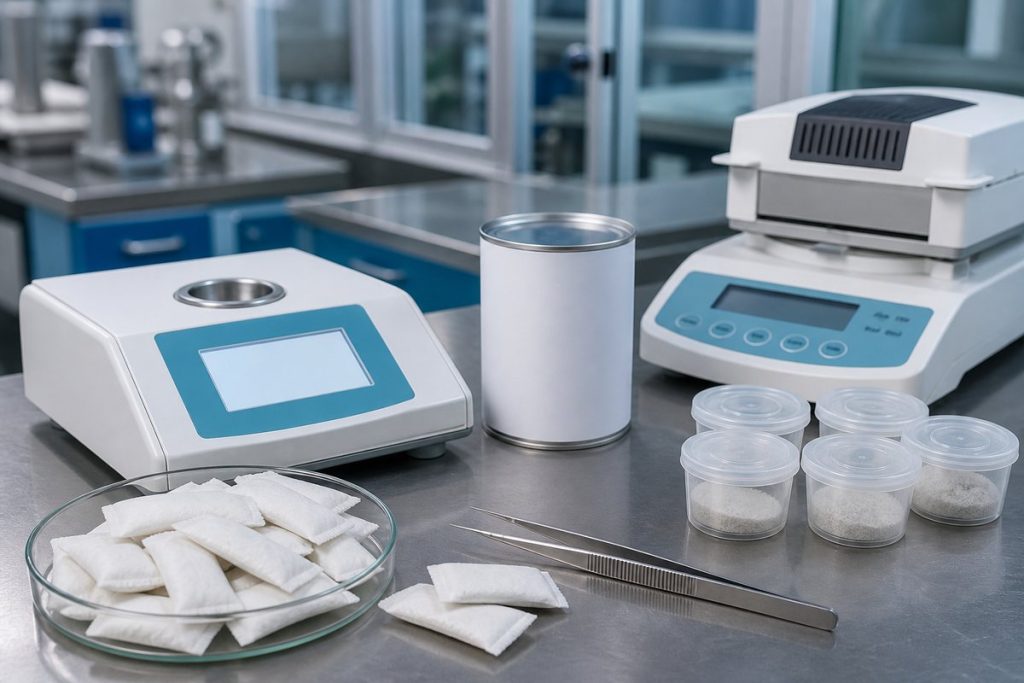
Two oral pouches can contain a similar percentage of water and still behave differently. Moisture content measures how much water is present; water activity describes how available that water is for microbial growth and chemical or physical change. For semi-moist and moist pouch formats, both numbers can matter.
Do Not Treat Moisture and Water Activity as Synonyms
Ingredients bind water differently. Humectants, salts, fibers and sweeteners can change water activity without producing the same change in total moisture. A manufacturer should define which measurement controls processing, which supports release and which is tracked during stability.
The FDA technical guide to water activity in foods explains the relationship between available moisture and microbial growth. Its regulatory examples are not universal specifications for functional pouches; the finished product needs its own risk-based limits.
Build a Representative Sampling Plan
Fresh pouches may not be fully equilibrated, and an open sample can exchange moisture with room air. Define the time after manufacture, number of pouches, sample preparation, instrument temperature and exposure limits. Take samples from more than one point in the batch and retain units in the final package.
Connect the Number to the Formula and Package
- Target and action limits for the approved formula
- Moisture-content method used alongside water activity
- Microbiological specification and test frequency
- Room humidity and process hold-time controls
- Can, liner and closure specification
- Real-time and accelerated stability checkpoints
- Investigation steps for unfavorable trends
Watch the Product Through Shelf Life
Water can migrate among filling, pouch fabric, headspace and packaging. Track softness, flavor release, staining, seam condition and clumping with laboratory values. A product can meet a microbiological limit yet become commercially unacceptable because it dries out or grows too wet.
Ask What Happens Outside the Limit
The response should be more specific than re-testing until a passing number appears. The manufacturer should hold affected material, review sampling and instrument performance, investigate process and packaging records, and document the disposition. Rework or blending decisions need technical and regulatory review.
LinkBioLabs plans moisture format, packaging and testing as connected parts of functional oral pouch manufacturing. Include the desired dry, semi-moist or moist experience and shelf-life target in your project brief.
Related manufacturing references
For a complete OEM review, connect this article with the main product and process pages. Buyers usually need category fit, stock-formula options, custom formulation support, process checks, and a direct project discussion before approving samples.
- Custom oral pouch manufacturing
- Stock formulation options
- Private label pouch project planning
- Formulation and R&D support
- Manufacturing process and quality checks
- Technical manufacturing blog
- Discuss a project
Content review note: technical articles are reviewed for functional oral pouch, ODF, packaging, and OEM procurement relevance.