
Primary target long-tail keyword: how to calculate oral pouch production yield for OEM quotes
Two factories can quote the same order quantity and deliver very different economics. One price assumes theoretical output from purchased ingredients. The other includes fabric threading, feeder adjustment, rejected seams, testing, retains and packaging loss. Only saleable finished cans pay the brand back.
A useful OEM quote separates ordered units, produced units, released units and shipped units. Yield connects those numbers and exposes where a low price may create later charges.
Define yield at more than one stage
Blend yield compares usable blend with dispensed material. Pouch yield compares acceptable filled units with total units made. Packaging yield compares released finished cans with components issued. Final saleable yield includes testing, retains and rejected goods.
Do not compress these into one percentage without definitions. A high filling yield can coexist with poor can yield because count verification or labels fail.
Include setup and line-clearance loss
Fabric is consumed while threading and centering seals. Powder is used while the feeder reaches stable fill weight. Startup pouches may be rejected for seam position, coding or appearance.
Small orders carry this fixed loss across fewer units. That is why a pilot can have a much higher unit cost than a repeat batch even when ingredients and packaging are unchanged.
Price fill-weight variation honestly
Factories target slightly above the declared fill to avoid underweight units. Excess giveaway becomes material cost. Wide feeder variation forces a larger safety margin and can also change active dose if the blend is uniform by concentration.
Review individual weight distribution, not only the average. Process improvement that narrows variation can save more than negotiating a small discount on carrier.
Track seam and fabric rejects
Powder in the seal, web wrinkles, lint, cuts and weak aged seams create rejects. Oily flavors or semi-moist blends may reduce line speed and increase cleaning stops. A fabric grade that is cheaper per roll can produce worse usable yield.
Record rejects by reason and time. A repeating lane defect points to equipment; random dust contamination may point to blend or dosing behavior.
Account for laboratory and retain units
Assay, content uniformity, microbiology, stability and packaging tests consume pouches or whole cans. Retained samples support complaints and shelf-life review but are not available for sale.
Agree sample quantities before the quote. Brands often request extra market samples after production and assume they come from nowhere.
Packaging waste is not only labels
Include can and lid setup, liner rejects, label positioning, print proofs, lot coding, tamper evidence, cartons and damaged components. Custom-printed cans may require supplier overrun or minimum purchases beyond the filling order.
Separate unused packaging inventory from production scrap. The brand may own usable excess components even though they are not in the shipped unit count.
Reconcile every major material
Compare issued, returned, rejected and consumed quantities for actives, blend, nonwoven and packaging. Investigate unexplained loss. Fine caffeine dust on equipment is a dose and worker-control issue, not merely cost.
Set reasonable tolerance by material. Expecting perfect reconciliation is unrealistic, but unexplained gaps should not disappear inside a general factory-loss line.
Compare first-order and repeat-order cost
Development, tooling, setup and testing make the first order different. Repeat orders should show what changes when formula, fabric and artwork are already approved. Ask whether the quote assumes the same supplier lots and batch size.
A low introductory price followed by mandatory add-ons is difficult to budget. Request one-time costs, recurring costs and conditional costs separately.
Ask for the numbers behind saleable output
- Planned blend quantity
- Target pouch count
- Expected setup loss
- Weight giveaway
- Reject allowance
- Testing and retain units
- Packaging overage
- Released can count
- Freight quantity
The goal is not forcing the factory to guarantee zero variation. It is understanding the assumptions used to calculate the order and what happens when actual yield falls outside them.
Define who carries the cost of a yield shortfall
The quotation should state whether the brand receives a fixed shipped quantity, accepts a production tolerance or pays for all materials issued. Each model can work, but the commercial risk is different. A factory cannot promise a precise output while also ignoring normal testing and reject loss.
Agree what happens when released units fall below the lower tolerance. Options include a supplemental run, credit, proportional invoice or use of approved excess components. The answer should be written before raw materials are ordered.
Use yield trends to improve repeat orders
Compare planned and actual loss by batch. Separate startup, weight giveaway, seam rejects, cleaning, tests and packaging waste. A single total yield does not show which corrective action will lower cost.
Share major changes with the brand when they affect future pricing. Better fabric tracking or tighter fill control should improve repeat economics; a new oily flavor may reduce speed and reverse that gain.
Questions Buyers Usually Ask
Why is low-MOQ unit cost higher?
Fixed setup, cleaning, testing and retained-sample losses are divided across fewer saleable units.
Should a quote be based on theoretical pouch count?
Theoretical count is useful for planning, but commercial cost should reflect expected saleable output and defined loss assumptions.
Send target fill weight, order size, package count and testing needs when comparing quotes. LinkBioLabs can separate theoretical output from expected saleable units before purchase approval.
Recommended Blog Images
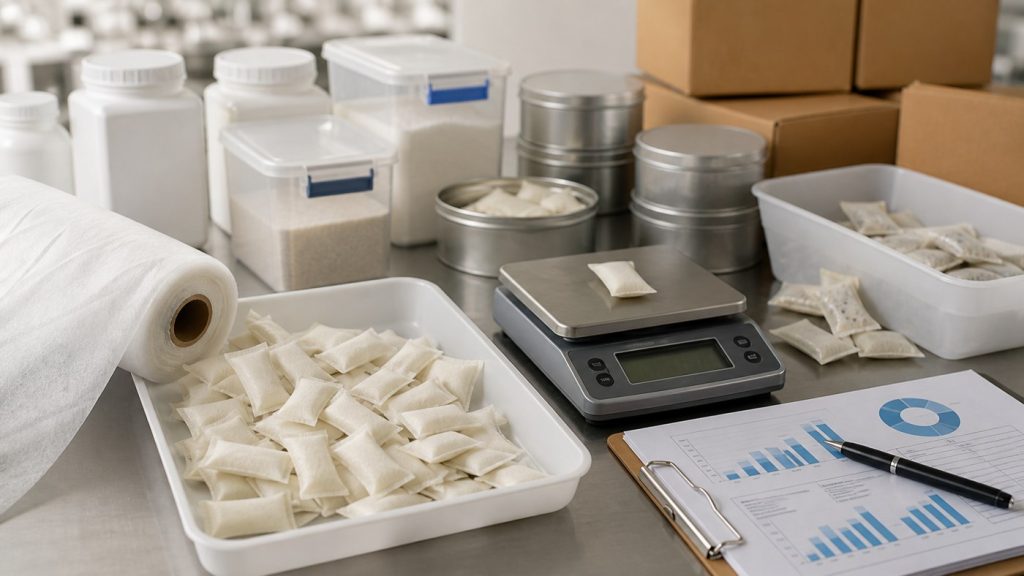
- Production planning scene with fabric, blend, accepted pouches, reject tray, cans and shipping cartons.
- Yield waterfall graphic from issued materials to released saleable cans.
Related manufacturing references
For a complete OEM review, connect this article with the main product and process pages. Buyers usually need category fit, stock-formula options, custom formulation support, process checks, and a direct project discussion before approving samples.
- Custom oral pouch manufacturing
- Stock formulation options
- Private label pouch project planning
- Formulation and R&D support
- Manufacturing process and quality checks
- Technical manufacturing blog
- Discuss a project
Content review note: technical articles are reviewed for functional oral pouch, ODF, packaging, and OEM procurement relevance.