Start with the product decision, not a price request
A weak RFQ usually starts with one sentence: “Please quote caffeine pouches.” That is not enough for a real factory quote. The team receiving it still has to guess the active level, pouch size, flavor load, packaging style, test plan, and whether the buyer expects a stock base or a custom formula. The quote may look fast, but it will be soft. Later, the buyer discovers that flavor minimums, pilot sampling, label changes, or packaging lead time were not included.
A better RFQ opens with the business decision. Say whether the brand is testing a first SKU, extending a beverage line, replacing a gummy, or building a full oral pouch range. Mention whether the pouch is caffeine, guarana, nootropic, oral care, nutritional, or stress relief. A factory can then choose the right conversation path. Stock formulation, modified stock base, and full custom development do not carry the same cost or schedule.
Technical data that changes the quote
The main technical items are simple, but they affect almost every line of the project. Send the target active amount per pouch, expected pouch count per can, target fill weight, preferred pouch size, flavor family, sweetness level, cooling level, and whether the product should be dry or semi-moist. If the active is botanical, provide extract ratio, carrier, assay marker, color, odor, and any known bitter or astringent note.
- Required: active ingredient list, target strength per pouch, flavor direction, pouch count, package format.
- Strongly useful: target market, serving instructions, shelf-life expectation, allergen restrictions, vegan or sugar-free requirements.
- Often missed: sample quantity, decision deadline, artwork status, ingredient restrictions, and whether the buyer needs stability support.
Bulk density and particle size matter more than many buyers expect. A formula may look cheap on paper and run poorly in filling because the powder bridges, dusts, or separates. Low-dose actives need pre-blend work. Heavy botanicals can change mouthfeel. Very strong mint can hide bitterness in a first sample but turn harsh after ten minutes under the lip.
Packaging and artwork details buyers forget
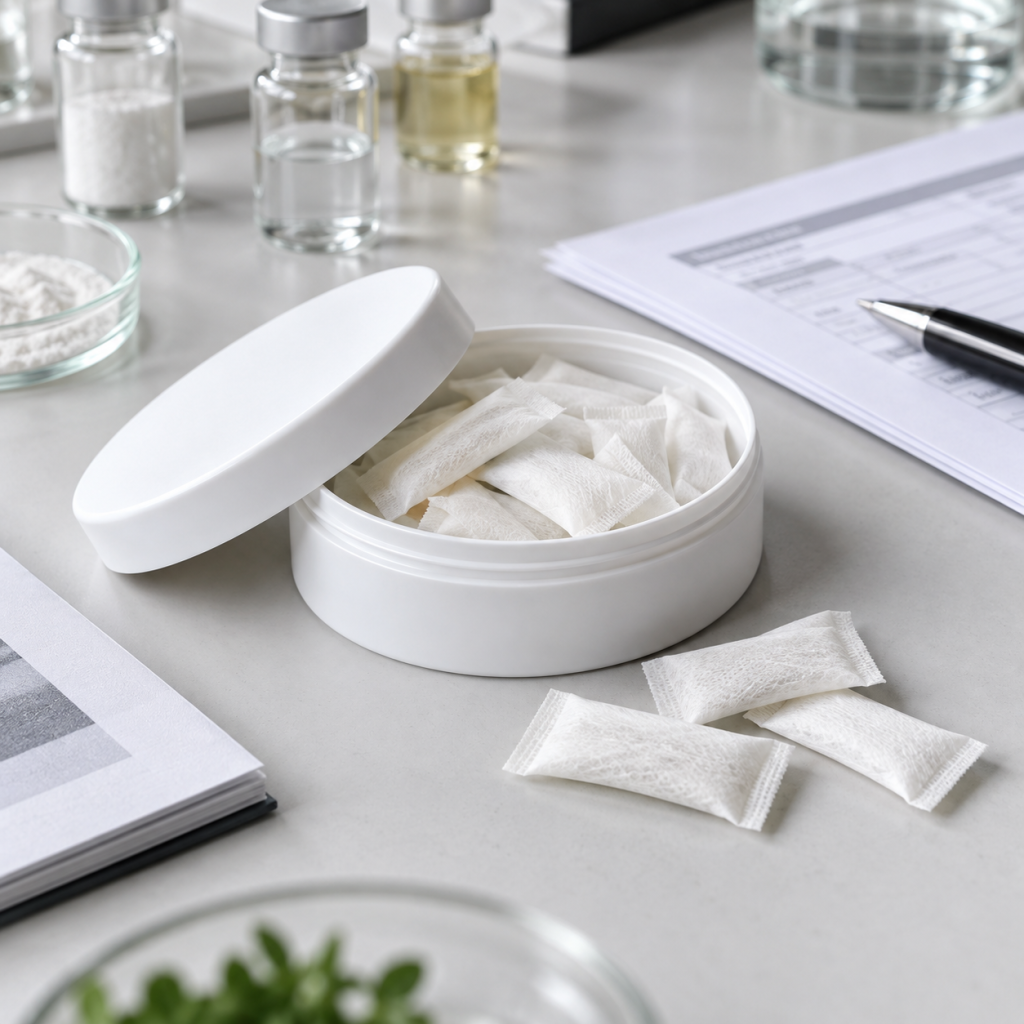
Packaging is not a decoration step after formulation. It changes cost, lead time, and sometimes shelf life. A round can, refill sachet, display box, and export carton each needs separate artwork, material choice, and minimum order discussion. Ask whether the factory can use a stock can for sampling while final printed cans are being prepared. It saves time, but the buyer should understand that the sample pack may not represent the final barrier performance.
Artwork files should not be sent as screenshots. The factory needs editable dielines, color references, barcode placement, net content, ingredient order, warning or usage panels where applicable, and space for lot coding. The worst cases happen when a brand approves formula samples but has not started label review. Production then waits on packaging, not pouches.
Sample approval needs a written gate
Do not approve a pouch sample only because the first taste is acceptable. A practical approval gate covers initial aroma, first-minute taste, five-minute taste, mouthfeel, drip, pouch softness, powder leakage, aftertaste, and can opening experience. For caffeine or guarana pouches, the buyer should also check whether the flavor still feels balanced after a few minutes, not only at first contact.
Factories also need to know who signs off. In small brands, the founder, designer, and sales manager may all comment at different times. That creates circular revisions. Put one person in charge of sample approval and collect comments into one document. Minor flavor changes are normal. Rebuilding the functional blend after packaging is ordered is expensive.
What to send before asking for lead time
Lead time depends on the slowest unresolved item. Formula feasibility, raw material sourcing, flavor matching, pouch material, can artwork, label review, and export documents all sit on the same path. A factory can estimate quickly for stock formulas using available packaging. A custom botanical pouch with new printed cans needs a different schedule.
The best RFQ packet is not long. It is complete. One clean brief, one target product table, one packaging note, and one sample decision rule can remove a week of email guessing. LinkBioLabs usually starts by checking formula route, sample needs, packaging status, and launch market before turning the request into a production plan.
Small details that change factory response
Two RFQs can describe the same product idea and receive very different replies because one includes operating details. Mention whether the brand expects nicotine-free positioning, whether the product is sold as a dietary supplement or general wellness item, whether samples need to be shipped internationally, and whether the first order uses stock cans or custom printed cans. These details help the factory separate technical feasibility from commercial packaging work. They also prevent the classic situation where a buyer compares two prices that do not include the same work.
Frequently asked questions
Can I ask for a quote before the formula is final?
Yes, but the quote should be treated as a planning estimate. A firm quote needs active level, fill weight, packaging format and sample route.
What is the biggest RFQ mistake for oral pouch startups?
The biggest mistake is asking for unit price before defining pouch count, active dose, packaging and sample approval criteria.
Should artwork be ready before sampling?
Artwork does not need to be final for bench samples, but packaging format and label constraints should be discussed early.
{“@context”:”https://schema.org”,”@type”:”FAQPage”,”mainEntity”:[{“@type”:”Question”,”name”:”Can I ask for a quote before the formula is final?”,”acceptedAnswer”:{“@type”:”Answer”,”text”:”Yes, but the quote should be treated as a planning estimate. A firm quote needs active level, fill weight, packaging format and sample route.”}},{“@type”:”Question”,”name”:”What is the biggest RFQ mistake for oral pouch startups?”,”acceptedAnswer”:{“@type”:”Answer”,”text”:”The biggest mistake is asking for unit price before defining pouch count, active dose, packaging and sample approval criteria.”}},{“@type”:”Question”,”name”:”Should artwork be ready before sampling?”,”acceptedAnswer”:{“@type”:”Answer”,”text”:”Artwork does not need to be final for bench samples, but packaging format and label constraints should be discussed early.”}}]}
Reference notes for buyers
This article is written for B2B product development and procurement planning. It is not legal, medical, or regulatory advice.
Related manufacturing references
For a complete OEM review, connect this article with the main product and process pages. Buyers usually need category fit, stock-formula options, custom formulation support, process checks, and a direct project discussion before approving samples.
- Custom oral pouch manufacturing
- Stock formulation options
- Private label pouch project planning
- Formulation and R&D support
- Manufacturing process and quality checks
- Technical manufacturing blog
- Discuss a project
Content review note: technical articles are reviewed for functional oral pouch, ODF, packaging, and OEM procurement relevance.