
Primary target long-tail keyword: oral pouch label adhesive testing for humid shipping
A label approved on a clean room-temperature can may lift after sea freight. Condensation enters the edge, plastic surface energy changes by resin lot, and tightly packed cans rub during vibration.
Buyers should validate the exact can, adhesive, ink, varnish and application process under the expected route. A supplier peel value on stainless steel does not represent a curved polypropylene can.
Confirm the can surface
Lock resin, molding supplier, texture and any release-agent limits. Dust, flavor oil and handling contamination reduce adhesion even when the adhesive is suitable.
Condition before judging
Apply labels at normal production temperature and pressure, then allow the specified dwell before testing. Immediate peel results can misrepresent an adhesive that builds bond over time.
Challenge humidity and condensation
Expose finished cans to warm humidity and controlled cold-to-warm condensation. Inspect edge lift, bubbles, tunneling and adhesive whitening after recovery.
Add curved-surface stress
Small cans continually try to straighten the label. Test the real diameter and overlap, especially at the leading and trailing edges where application tension creates stress.
Test print and varnish together
Ink, laminate and varnish affect stiffness and scuff resistance. Vibration can polish dark colors or transfer ink between neighboring cans while adhesion still passes.
Watch application settings
Roller pressure, web tension, can rotation and label position require a working window. Hand-applied development labels are not evidence for automatic production.
Set visible acceptance criteria
Define maximum edge lift, bubbles, rotation, scuffing and barcode readability before the test. Photograph reference defects so factory and brand judge results consistently.
Can a stronger adhesive solve every lift problem?
No. Dirty surfaces, excessive label stiffness, poor application or incompatible resin may remain the cause.
Should labels be tested after transport simulation?
Yes. Humidity conditioning, vibration and case compression can combine to reveal failures.
Provide can resin, label construction and shipping climate for a packaging compatibility trial.
Recommended Blog Images
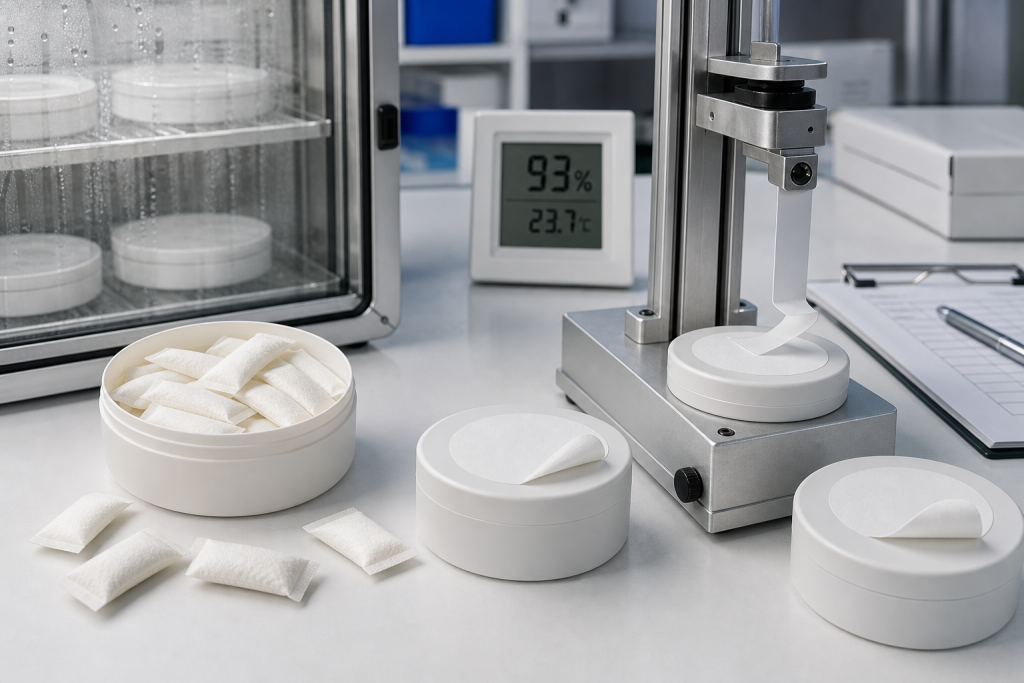
- Humidity chamber and peel fixture with unbranded labeled pouch cans.
- Failure-mode guide for edge lift, bubbles, scuffing and print damage.
Related manufacturing references
For a complete OEM review, connect this article with the main product and process pages. Buyers usually need category fit, stock-formula options, custom formulation support, process checks, and a direct project discussion before approving samples.
- Custom oral pouch manufacturing
- Stock formulation options
- Private label pouch project planning
- Formulation and R&D support
- Manufacturing process and quality checks
- Technical manufacturing blog
- Discuss a project
Content review note: technical articles are reviewed for functional oral pouch, ODF, packaging, and OEM procurement relevance.