
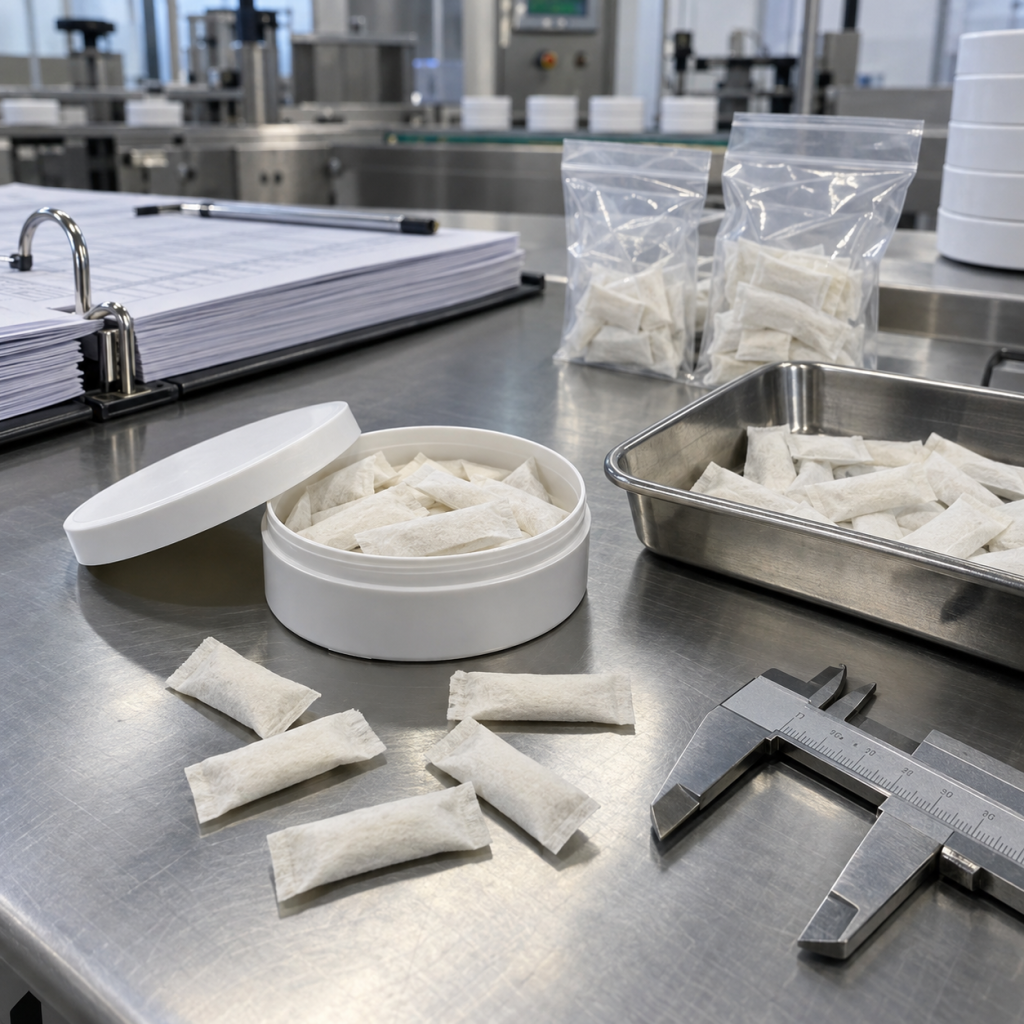
A COA is not the whole batch story
A certificate of analysis is useful, but it is only one page of the batch story. For oral pouches, the buyer also needs evidence that the formula was blended correctly, the pouch weights stayed inside the agreed range, the seams were acceptable, the can count was right, and packaging matched the approved version. A beautiful COA does not explain whether the filling line had weight drift halfway through the run.
Private label buyers sometimes ask for “all QC documents” after production is complete. That is too vague. The better approach is to agree on a release pack before the first purchase order. The factory can then prepare the right records during production instead of recreating a narrative later.
What evidence belongs in a release pack
The release pack should match the risk of the product. A simple stock flavor may need fewer items than a caffeine, botanical or nutritional formula. Still, most functional pouch projects should have a core set of records. Buyers do not need to see every internal line note, but they should receive enough evidence to confirm the lot was controlled.
- Identity and lot traceability: raw material lot list, approved formula version, production date and finished lot number.
- In-process checks: fill-weight checks, pouch appearance checks, seam or leakage observations, pouch count checks.
- Finished-product checks: active assay where applicable, microbial or hygiene-related results, water activity or moisture-related data when relevant.
- Packaging checks: can label version, closure or seal check, carton count and retained sample location.
FDA dietary supplement CGMP material discusses master manufacturing records and complete batch history. Even when a project is outside one exact regulatory category, the same buyer logic applies: the record should show what was intended, what was made, and what was checked.
Packaging records matter for pouches
Functional oral pouches are sensitive to packaging mistakes. The formula may pass, but the wrong can liner, loose closure, weak induction foil, poor label adhesion or missing desiccant can create complaints later. Packaging release should not be reduced to “looks good.” It should include version control and a physical check.
Artwork mix-ups are more common than buyers think, especially when several flavors share the same can color. A practical release pack includes the approved artwork version or a packaging code. The warehouse team should be able to trace which printed component went into which finished lot.
Retained samples protect both sides
Retained samples are not decoration. They give the buyer and factory a reference if a distributor reports clumping, flavor loss, leakage, short count or unusual odor. Keep samples from the finished batch, in final packaging, under defined storage conditions. If only loose pouches are retained, the evidence may not represent the commercial product.
Some complaints are caused by shipping or local warehouse conditions, not factory production. Without retained samples, both sides argue from memory. With retained samples, the factory can compare the complaint unit against the same lot held under known conditions.
How buyers can review without slowing production
Do not build a release system that requires a founder to approve every small line note in real time. Define the evidence pack, acceptance items, and escalation triggers before the run. Routine records can be sent after batch completion. Only exceptions need immediate buyer review.
For LinkBioLabs projects, this discussion usually starts during pilot production. The buyer chooses which finished-product tests matter for the formula, then the release pack follows that decision. A caffeine pouch, oral care pouch and nutritional pouch should not be treated as identical just because the can looks similar.
Exceptions should be written, not explained later
Every factory run has small events: a hopper refill, a short stop, a roll change, a packaging adjustment or a rejected tray. Most are routine. The problem is when an exception affects finished goods and no one records how it was handled. Buyers should agree which events require a deviation note and which remain internal line records. For example, a short fill-weight drift, a can-count correction or a label mix-up should not be explained from memory two months later.
The release pack does not need to be huge. It needs to answer the practical questions a buyer will ask during a complaint: which lot was used, which checks passed, what was rejected, where retained samples are stored, and whether the packaging version matches the approved proof. That is the evidence that keeps a small issue from becoming a supply dispute.
Frequently asked questions
Is a COA enough for an oral pouch production batch?
Usually not. Buyers should also agree on weight, packaging, traceability and retained sample evidence before production.
Should every oral pouch batch have retained samples?
Yes. Finished-pack retained samples help investigate flavor, moisture, leakage, count and shipping complaints.
When should the release pack be defined?
Before the purchase order or pilot batch, so the factory can collect records during production instead of after the fact.
{“@context”:”https://schema.org”,”@type”:”FAQPage”,”mainEntity”:[{“@type”:”Question”,”name”:”Is a COA enough for an oral pouch production batch?”,”acceptedAnswer”:{“@type”:”Answer”,”text”:”Usually not. Buyers should also agree on weight, packaging, traceability and retained sample evidence before production.”}},{“@type”:”Question”,”name”:”Should every oral pouch batch have retained samples?”,”acceptedAnswer”:{“@type”:”Answer”,”text”:”Yes. Finished-pack retained samples help investigate flavor, moisture, leakage, count and shipping complaints.”}},{“@type”:”Question”,”name”:”When should the release pack be defined?”,”acceptedAnswer”:{“@type”:”Answer”,”text”:”Before the purchase order or pilot batch, so the factory can collect records during production instead of after the fact.”}}]}
Reference notes for buyers
- FDA CGMPs for Food and Dietary Supplements
- FDA Small Entity Compliance Guide for Dietary Supplement CGMP
This article is written for B2B product development and procurement planning. It is not legal, medical, or regulatory advice.
Related manufacturing references
For a complete OEM review, connect this article with the main product and process pages. Buyers usually need category fit, stock-formula options, custom formulation support, process checks, and a direct project discussion before approving samples.
- Custom oral pouch manufacturing
- Stock formulation options
- Private label pouch project planning
- Formulation and R&D support
- Manufacturing process and quality checks
- Technical manufacturing blog
- Discuss a project
Content review note: technical articles are reviewed for functional oral pouch, ODF, packaging, and OEM procurement relevance.