
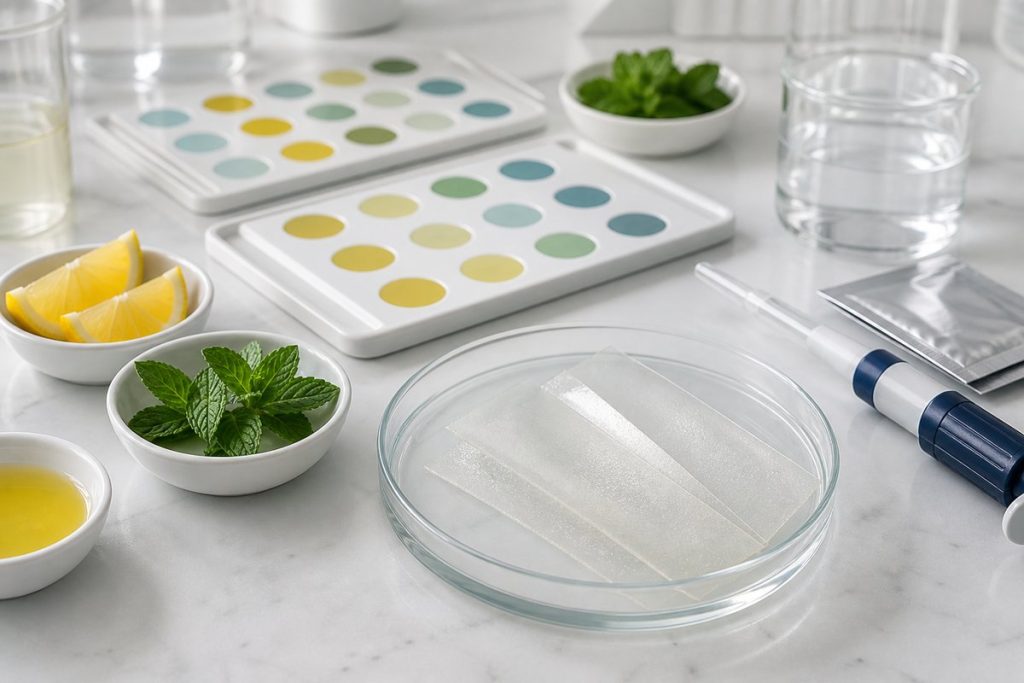
Taste masking is especially visible in an orodispersible film because the entire unit hydrates and disperses in the mouth. A pleasant sachet aroma cannot rescue a film that releases bitterness, acidity or an off-note as soon as it wets. The flavor system must be developed with the actual active, polymer and film thickness.
Identify Where the Unwanted Taste Comes From
The active ingredient may be only one source. Polymers, plasticizers, surfactants, botanical extracts and residual processing notes can contribute bitterness, astringency or aftertaste. Evaluate the complete blank film and the active film separately before deciding which masking approach is needed.
Match the Strategy to Exposure Time
Sweeteners and flavors can balance mild notes, while stronger bitterness may require a permitted technical approach that reduces contact with taste receptors. Any coating, complexation or encapsulation system must remain compatible with casting, uniformity, disintegration, stability and the product’s regulatory category.
A review on ODF quality assessment discusses taste evaluation alongside film performance tests. Published methods are useful starting points; the commercial protocol should be approved for the actual product and intended users.
Use Structured Sensory Work
- Coded samples and controlled serving instructions
- Opening aroma before the film enters the mouth
- Onset and peak of bitterness or acidity
- Sweetness, flavor identity and mouthfeel
- Disintegration sensation and residue
- Aftertaste at fixed time points
- Comparison of fresh and stability samples
Do Not Let Flavor Hide Film Defects
Tackiness, rough edges, slow breakup, particles or excessive saliva response are not flavor problems. Record them separately. A strong mint may distract from poor texture during an early screening but will not make the final product acceptable.
Confirm the Masking System at Scale
Mixing shear, hold time, drying and moisture can change aroma retention and active release. Pilot material should use representative casting and sachet packaging. Compare samples across the web and along the roll, then continue sensory checks during stability.
Claims and Panel Ethics Matter
Sensory participants need an appropriate protocol, ingredient information and exclusion criteria. Palatability results do not substantiate health outcomes. Keep product claims on a separate evidence and regulatory path.
LinkBioLabs develops custom ODF products with formulation, film casting, sensory adjustment, cutting and barrier packaging. Send the active, target amount, preferred flavor, market and volume through our contact page.
Related manufacturing references
For a complete OEM review, connect this article with the main product and process pages. Buyers usually need category fit, stock-formula options, custom formulation support, process checks, and a direct project discussion before approving samples.
- Custom oral pouch manufacturing
- Stock formulation options
- Private label pouch project planning
- Formulation and R&D support
- Manufacturing process and quality checks
- Technical manufacturing blog
- Discuss a project
Content review note: technical articles are reviewed for functional oral pouch, ODF, packaging, and OEM procurement relevance.