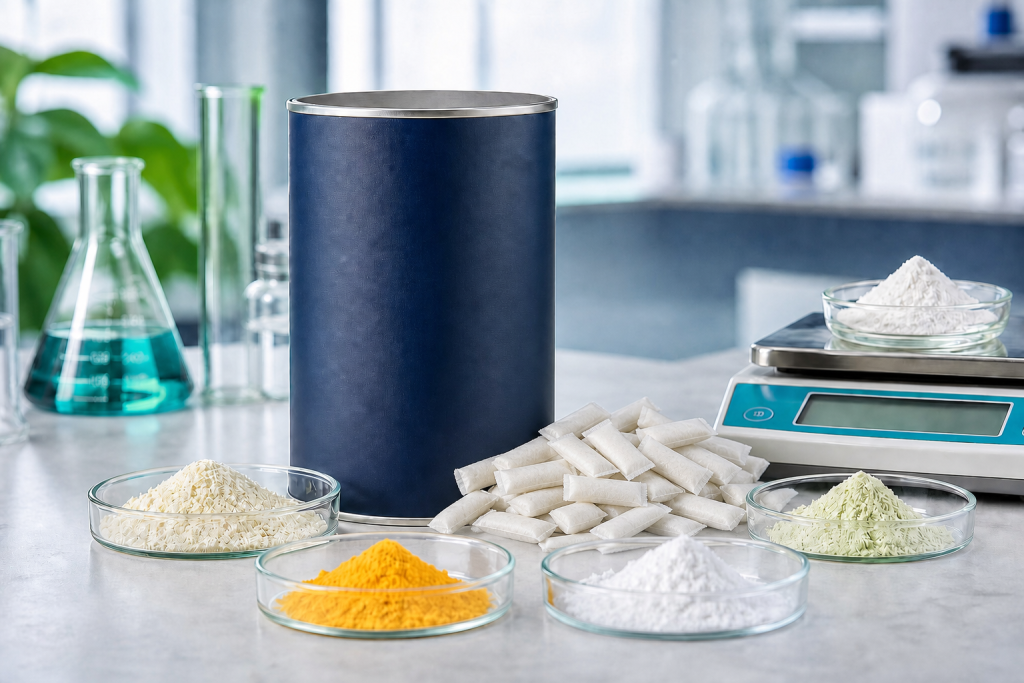
Nutritional pouches can turn a familiar wellness ingredient into a portable format, but they should not be treated as miniature capsules. The pouch has limited capacity, consumers experience the flavor directly, and every material affects texture and moisture. A realistic OEM project begins by deciding what the format can deliver well.
For brands comparing a nutritional pouch manufacturer, the most useful question is not “How many ingredients can you add?” It is “Can this formula be produced, tested and enjoyed consistently at commercial scale?”
Choose One Clear Nutritional Job
A tight concept is easier to formulate and easier to explain. A vitamin-led daily pouch, a mineral concept or a broader wellness blend may each be possible, but they create different dose, taste and labeling requirements. The active story should fit the physical pouch and the intended use occasion.
Large ingredient panels can look impressive while forcing each material to a token level. They also increase sourcing, testing, incompatibility and claim risk. Begin with the smallest formula that honestly supports the brand idea.
Run a Feasibility Screen Before Ordering Samples
- Amount: does the intended serving fit within the target pouch weight?
- Taste: can bitterness, acidity or mineral notes be balanced without excessive sweetness?
- Particle properties: will the material create grittiness, dust or uneven distribution?
- Moisture: is the ingredient likely to absorb water or destabilize the base?
- Compatibility: could ingredients interact during processing or storage?
- Evidence and claims: does support match the exact ingredient form, amount and intended wording?
- Market status: is the ingredient and proposed use appropriate in the destination market?
Translate the Formula Into a Production Specification
Once a sample is approved, the OEM manufacturer should document ingredient identities and quantities, blending order, target pouch weight, acceptable variation, moisture parameters, sensory description, seal and appearance requirements, count per can, packaging components and release tests. This specification is more valuable than relying on a sample alone.
Testing should be risk-based and agreed before production. Depending on the formula and market, the plan may cover identity, potency, microbiological quality, contaminants, moisture or other attributes. Brands should confirm which tests are performed on ingredients, which on the finished lot and which documents accompany shipment.
Build a Label From Verified Facts
Ingredient names, amounts, serving directions and claims should come from the final approved formula—not an early concept deck. FDA’s U.S. dietary supplement labeling guide identifies required statements such as product identity, net quantity, nutrition information, ingredient list and responsible business details. Requirements differ by category and country, so a qualified reviewer should approve the exact artwork.
Allow space for legibility. A crowded small can is not improved by shrinking important text. Outer cartons or inserts may help organize information, but they do not necessarily replace what must appear on the immediate package.
Understand MOQ and Cost by SKU
MOQ can be driven by the production run, custom ingredients, labels, cans or cartons. Ask for the minimum per formula, flavor, strength and artwork version. Also separate one-time development or plate costs from recurring unit costs.
A useful commercial comparison includes ingredient grade, testing scope, pack count, packaging specification, overage policy, freight terms and payment schedule. Two quotes with the same price per can may include very different work.
A Simple OEM Launch Sequence
- Submit the target market and product brief.
- Complete formula and regulatory feasibility review.
- Approve ingredient sources and specifications.
- Evaluate samples using written sensory criteria.
- Lock the formula, tests and finished-product specification.
- Complete label review before printing.
- Approve production and packaging samples.
- Release the lot against agreed requirements.
- Collect market feedback before expanding the range.
Working With LinkBioLabs
LinkBioLabs supports nutritional pouch and functional oral pouch programs across formulation, flavor development, pouch production and private-label packaging. Our factory team can evaluate a stock, modified or custom route based on your timing and differentiation needs.
To prepare an actionable quotation, send your target market, ingredient direction, desired pouch count, packaging references, estimated quantity and launch date through our contact page. You can also review our contract manufacturing service and broader oral pouch capabilities.
Related manufacturing references
For a complete OEM review, connect this article with the main product and process pages. Buyers usually need category fit, stock-formula options, custom formulation support, process checks, and a direct project discussion before approving samples.
- Custom oral pouch manufacturing
- Stock formulation options
- Private label pouch project planning
- Formulation and R&D support
- Manufacturing process and quality checks
- Technical manufacturing blog
- Discuss a project
Content review note: technical articles are reviewed for functional oral pouch, ODF, packaging, and OEM procurement relevance.