
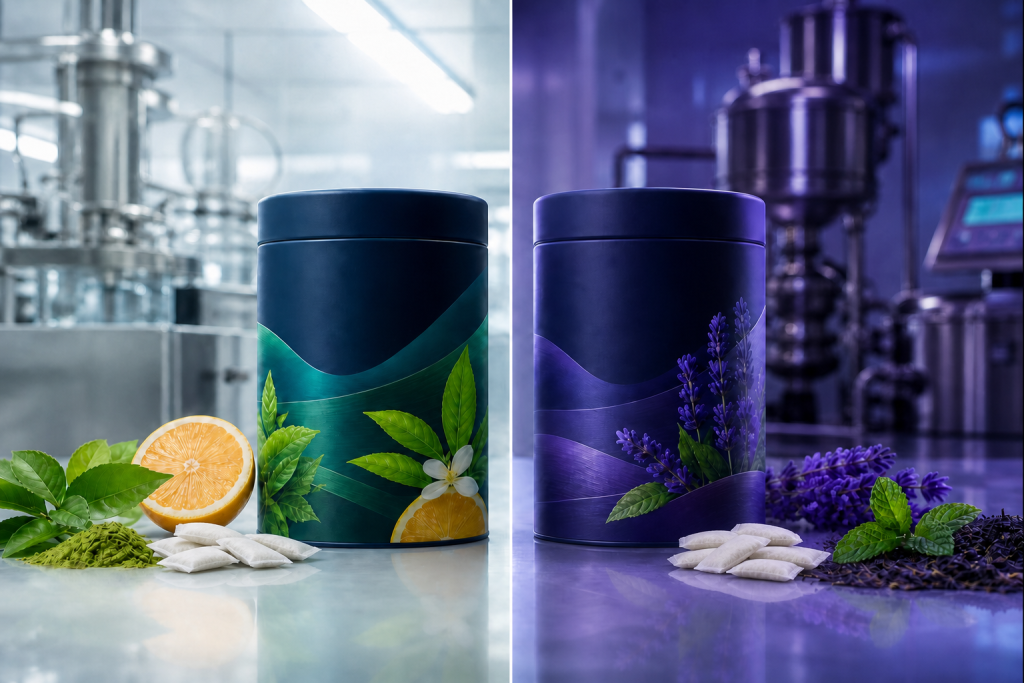
Focus and calm products may sit next to each other in a brand portfolio, but they should not be developed from the same vague “wellness blend” brief. A nootropic pouch needs a clear use occasion and sensory identity. A stress relief pouch needs equally careful positioning, especially because calm, sleep, anxiety and treatment language can imply very different claims.
A contract manufacturer can help translate a concept into a workable pouch, but the brand should arrive with priorities. Limited pouch volume forces trade-offs between ingredient levels, carrier materials, flavor, moisture and comfortable use.
Write the Consumer Moment in One Sentence
Before discussing ingredients, describe the moment the product is designed around. A focus pouch might be intended for a work session or travel. A calm-positioned pouch might be designed as part of an evening routine without being presented as a treatment. This sentence guides formula complexity, flavor intensity, packaging language and SKU architecture.
Screen Ingredients for Pouch Compatibility
Ingredients selected from capsules or drink powders do not always transfer neatly into an oral pouch. Taste, particle size, hygroscopicity, solubility, color and dose all matter. Some actives may need too much space; others may create a strong bitterness or unstable moisture profile.
- Confirm the exact ingredient form and supplier specification.
- Check whether the proposed amount fits the target pouch weight.
- Review taste and mouthfeel at the intended level, not a token amount.
- Assess interactions with sweeteners, flavors and the pouch base.
- Plan identity, assay or other testing appropriate to the material and market.
- Remove ingredients that add label complexity without supporting the central product idea.
Separate Focus and Calm Through Sensory Design
A focus-oriented product often benefits from a clean, direct profile such as mint, citrus or a crisp fruit note. Calm and stress relief concepts may use softer berry, tea, vanilla or botanical directions. These are design conventions, not rules. What matters is that the flavor supports the intended moment and remains pleasant throughout use.
Strength of flavor also affects perception. An aggressive cooling system can make a calm concept feel contradictory, while an overly mild focus pouch may feel unfinished. Request timed sensory notes during sampling: opening, early release, midpoint and finish.
Claims Need Their Own Workstream
Words such as “supports focus” or “helps manage occasional stress” may be regulated differently depending on product category and market. Stronger wording, product names and even imagery can imply treatment or guaranteed performance. FTC guidance emphasizes that advertisers are responsible for express and implied claims and should possess adequate substantiation before advertising.
The manufacturing brief should therefore include an early claims review. Do not wait until cans are printed. Formula evidence, ingredient evidence and finished-product claims are not interchangeable, and disclaimers do not automatically cure a misleading overall message.
Use a Sensible SKU Strategy
Launching focus and calm together can create a coherent day-to-evening range, but every additional flavor and strength increases minimum runs, artwork versions, inventory and testing. A focused first launch often produces better learning than a large family of similar SKUs.
- One clearly defined focus formula with one or two flavors
- One clearly defined calm formula with distinct packaging cues
- Shared can dimensions and carton formats where practical
- Separate specifications and batch records for every formula
- A planned review point before expanding strengths or flavors
What to Request From the Contract Manufacturer
Ask for a written development scope, sample-round limits, ingredient specifications, proposed finished-product tests, acceptance criteria, MOQ by SKU, packaging lead times and change-control process. Also ask how the factory protects formula confidentiality and retains approval and production samples.
LinkBioLabs provides custom and private-label nootropic pouch manufacturing and can evaluate related stress relief pouch concepts. Our contract manufacturing team works across formulation, flavor, pouch format, packaging and production planning to create a commercially realistic program.
Related manufacturing references
For a complete OEM review, connect this article with the main product and process pages. Buyers usually need category fit, stock-formula options, custom formulation support, process checks, and a direct project discussion before approving samples.
- Custom oral pouch manufacturing
- Stock formulation options
- Private label pouch project planning
- Formulation and R&D support
- Manufacturing process and quality checks
- Technical manufacturing blog
- Discuss a project
Content review note: technical articles are reviewed for functional oral pouch, ODF, packaging, and OEM procurement relevance.