Low MOQ private label oral pouches are attractive to a new brand for a simple reason: the first production run carries the most uncertainty. Flavor preferences, price tolerance and repeat-purchase behavior are still assumptions. Ordering less inventory can protect cash, but only if the smaller run is designed around the way a factory actually buys materials and schedules production.
A genuine low-MOQ program is not a full custom project made miniature. It normally works because the manufacturer limits variables: an established base formula, standard pouch material, available cans and a controlled list of flavors. Understanding those boundaries helps a buyer save money without ending up with a generic product by accident.
Why the MOQ Is Not One Number
Production equipment has a minimum efficient batch, but that is only one part of the calculation. Printed packaging suppliers may have their own minimums. A special botanical extract may need to be purchased by the carton. Laboratory tests have a fixed cost whether a run fills two thousand cans or twenty thousand. Setup, line clearance and cleaning time also remain relatively constant.
Ask the manufacturer to separate the minimum for formula, flavor, strength, label version and can color. This exposes where combinations multiply. Five thousand cans may sound manageable until the buyer learns that the minimum applies to each flavor rather than the whole order.
Three Routes to a Smaller First Run
1. Start with a stock formulation
A proven stock base avoids a long formulation cycle and usually uses ingredients already in the factory supply chain. The brand can still differentiate through flavor, naming and design, but should review the formula and market requirements rather than assuming stock means universally compliant.
2. Use pressure-sensitive labels on standard cans
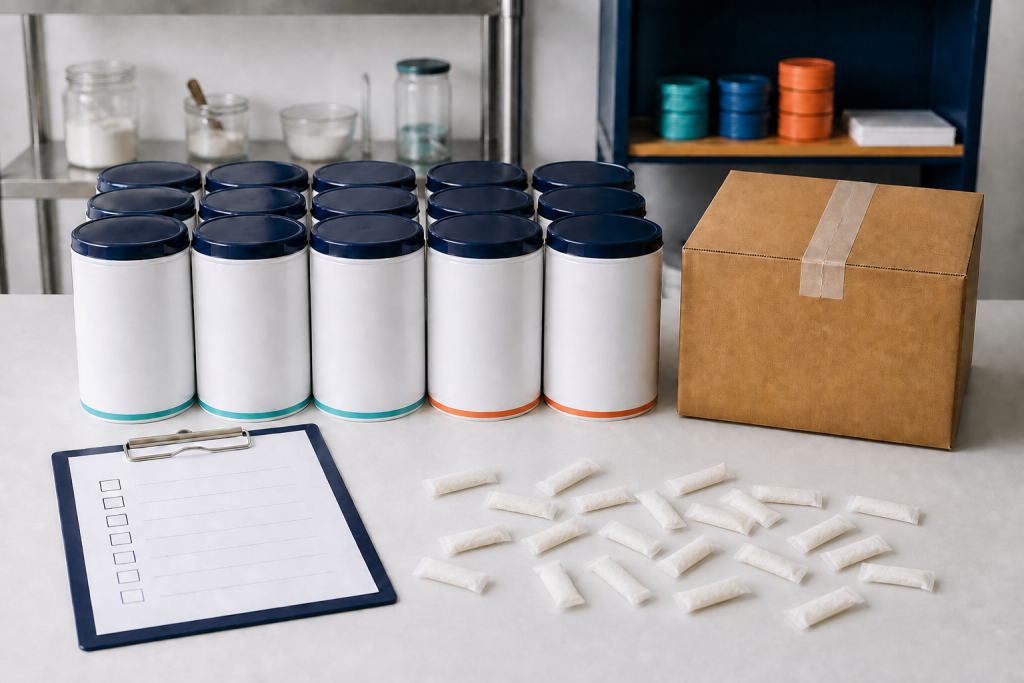
Labels often have a lower practical entry quantity than custom printed cans. They also make artwork corrections less painful. The trade-off is a different visual finish and an additional application step, so request a labeled production sample before approving the full run.
3. Launch fewer SKUs
One formula in two clearly different flavors produces better market learning than six similar flavors ordered in tiny quantities. Keep can size, pouch count and carton format common where possible. Add variants after sales data shows what deserves another production slot.
Where a Low MOQ Can Create Hidden Cost
- Testing per unit: fixed laboratory fees are spread across fewer cans.
- Packaging surplus: labels or cartons may have a higher supplier minimum than the pouch run.
- Freight: small shipments can have a high cost per kilogram or per can.
- Development: repeated sample rounds consume time even when the final order is small.
- Reorders: a fast sell-through can create a stock gap if lead time was ignored.
- Too many versions: separate strengths, languages and artwork files each add control work.
What to Lock Before Paying the Deposit
The commercial invoice should match an approved specification. Confirm the exact formula or stock-formula code, flavor, target pouch weight, pouches per can, packaging components, label version, carton quantity, testing, acceptable quantity tolerance, production lead time and shipping term. Keep the approved sample and final artwork version in the same project record.
Also ask what happens if a component becomes unavailable. A low-MOQ order should not grant automatic permission to substitute an ingredient, can, label material or pouch paper. A written change-approval process protects both the brand and factory.
Do Not Save Money by Skipping Claims Review
Small runs still reach real consumers. Product names, packaging and social posts can communicate health claims even when the label uses careful wording. The U.S. Federal Trade Commission advises marketers to consider both express and implied messages and to hold appropriate substantiation before advertising. Its Health Products Compliance Guidance is a useful starting point for U.S.-focused brands.
A Better Question Than “What Is Your Lowest MOQ?”
Ask: “What is the smallest order you can make repeatedly with this formula, packaging and testing plan?” The answer is more valuable because a successful launch needs a second batch. A one-off minimum that cannot be reordered on similar terms is not a supply strategy.
LinkBioLabs offers stock, modified and custom oral pouch formulations for brands at different launch stages. Share the intended market, preferred product type, number of SKUs, packaging plan and first-year forecast through our contact page. We can then identify which variables fit a lower-entry route and which ones require a larger production commitment.
Related manufacturing references
For a complete OEM review, connect this article with the main product and process pages. Buyers usually need category fit, stock-formula options, custom formulation support, process checks, and a direct project discussion before approving samples.
- Custom oral pouch manufacturing
- Stock formulation options
- Private label pouch project planning
- Formulation and R&D support
- Manufacturing process and quality checks
- Technical manufacturing blog
- Discuss a project
Content review note: technical articles are reviewed for functional oral pouch, ODF, packaging, and OEM procurement relevance.