Primary target long-tail keyword: low MOQ oral pouch manufacturing hidden costs
A low minimum order can reduce inventory risk. It does not remove fixed manufacturing costs. The first quotation may cover filled cans while leaving out sample revisions, special ingredients, line setup, analytical testing, printed packaging and international freight.
Startup brands should calculate the cost of the first released, saleable batch—not the quoted price per can. That distinction prevents a common surprise: a “cheap” 1,000-can project that costs twice the original budget before it reaches a warehouse.
Formula route changes the real starting cost
A stock formula uses an existing base and documented process. A modified white label may change strength, sweetener or flavor. Fully custom work adds ingredient qualification, compatibility trials and process development. Suppliers sometimes quote all three under the same low-MOQ headline.
Ask how many sample rounds are included, how much material is supplied and whether freight is extra. Confirm whether the fee covers sourcing, flavor revisions, pilot equipment and a written specification. “Free development” usually means a limited stock-sample service.
Ingredient minimums may exceed one production run
A small batch might use two kilograms of a custom botanical extract while the ingredient supplier sells a 20-kilogram carton. Someone must buy and store the balance. The same issue appears with custom flavors and specialty sweeteners.
Request a list of project-specific material minimums, expiry periods and ownership. If the brand pays for unused material, define storage and what happens when the formula changes. Expired flavor inventory is a quiet but frequent repeat-order cost.
A supplier substitution is not a simple financial decision. A new guarana or tea extract can change caffeine assay, color, taste and stability, requiring new evaluation.
Production setup loss is proportionally large
The line needs material to establish fill weight, web tracking, seal temperature and stable speed. Cleaning and reconciliation also consume time. These losses do not shrink in proportion to the order.
Twenty kilograms of setup and retained material is minor on a large batch. On a small order it can materially change unit cost. Fine caffeine blends may require a separate pre-blend and more cleaning. Fabric lint can stop sensors and increase rejects if the cheapest nonwoven is used.
Clarify whether the order quantity means units requested, units produced or units released. Ask how underrun and overrun are invoiced.
Testing is usually divided into several charges
Microbiology, caffeine assay, water activity, pouch weight, seam inspection and stability are different activities. A raw-material certificate does not demonstrate active uniformity in the finished pouch.
Low-dose API uneven blending is one area not worth ignoring. Average can weight cannot show whether pouches from the end of the run contain the same caffeine as those at the beginning.
Ask which tests apply per batch, per flavor and per strength. If an external laboratory must develop an extraction method for a botanical matrix, include that cost before the commercial order.
Packaging often costs more than expected
Plain cans with digital labels support smaller orders. Direct printing, custom colors and molded details require larger commitments. The packaging MOQ may be several times the number of finished cans.
- Include unused cans and labels
- Print setup and proofing
- Application waste
- Tamper-evident components
- Cartons and dividers
- Lot coding
- Storage of excess packaging
A startup likely to revise claims should avoid buying a year of printed cans. Neutral components are less glamorous but protect cash during market testing.
Freight is based on cartons, not formula weight
Pouch cans contain air. International freight is driven by carton volume, gross weight, route and service. Air shipping can erase the saving from a low-volume run.
Request final carton dimensions, units per carton, pallet plan and Incoterm. Add customs clearance, duties, importer services and local delivery. If product notification or local testing is required, place it in the budget before artwork is printed.
Small projects still need change control
Changing caffeine amount, serving instructions or ingredient source can make labels obsolete. A distributor may later request a different language or warning. Keep artwork version-controlled and delay production printing until formula and market review are complete.
Also ask who owns approved artwork, flavor references and specifications. Recreating these files during a supplier change adds time and cost.
Calculate two unit costs
First-order unit cost includes development, special material minimums, testing, packaging setup and launch freight. Repeat-order unit cost removes costs that do not recur but must add replacement ingredients, packaging and updated freight.
Divide by released saleable units, not the optimistic order quantity. Add a modest contingency for one sample or artwork revision. This number is more useful for retail pricing than the factory headline quote.
Questions Buyers Usually Ask
What is the biggest hidden cost in a low-MOQ pouch project?
Custom packaging and unused ingredient minimums are frequent leaders, followed by testing and international freight.
Is a stock formula always cheaper?
Usually at the first order, but only if its dose, flavor and market documentation fit the brand. A poor stock match creates reformulation or slow-moving inventory later.
Send LinkBioLabs the expected first order, target market, formula route and packaging preference. We can separate one-time development costs from repeat-order costs so the launch budget reflects finished goods that can actually be sold.
Recommended Blog Images
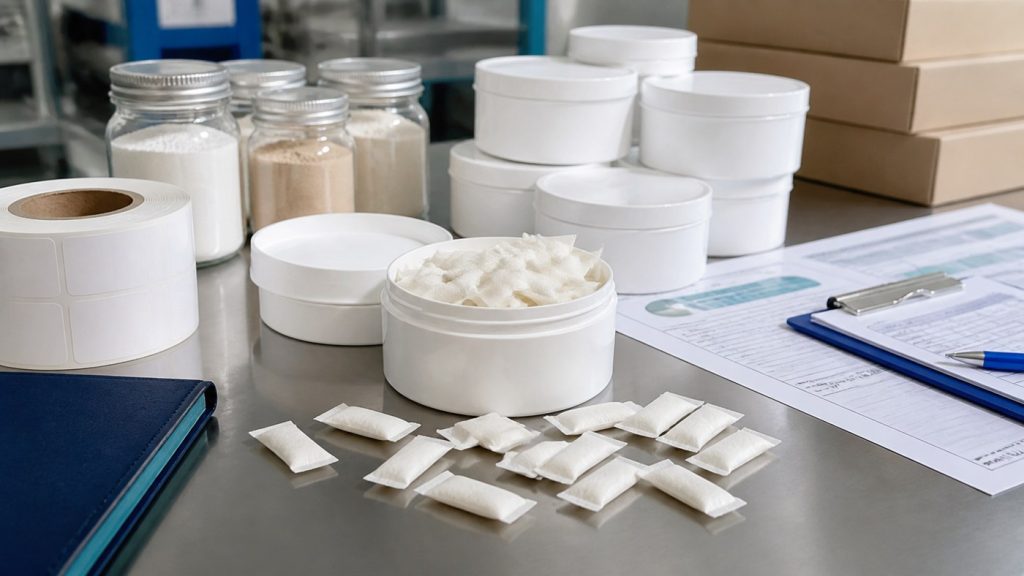
- Factory planning photograph with small-batch pouches, blank cans, label rolls, testing paperwork and cartons.
- Cost-stack infographic separating development, materials, setup, testing, packaging, freight and importing.
Related manufacturing references
For a complete OEM review, connect this article with the main product and process pages. Buyers usually need category fit, stock-formula options, custom formulation support, process checks, and a direct project discussion before approving samples.
- Custom oral pouch manufacturing
- Stock formulation options
- Private label pouch project planning
- Formulation and R&D support
- Manufacturing process and quality checks
- Technical manufacturing blog
- Discuss a project
Content review note: technical articles are reviewed for functional oral pouch, ODF, packaging, and OEM procurement relevance.