
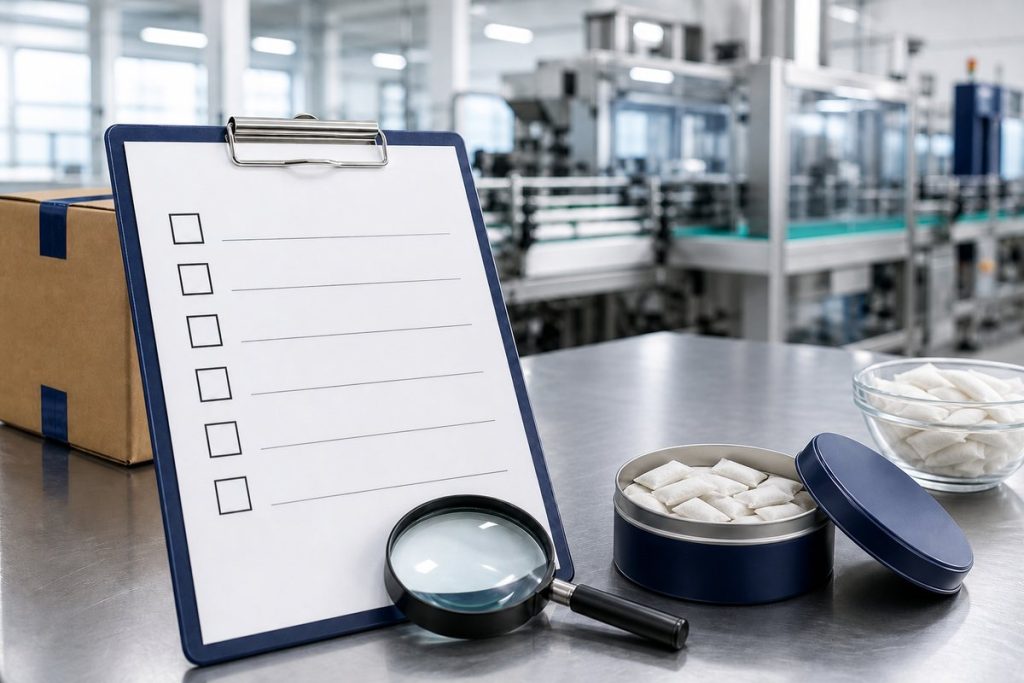
Finding an oral pouch manufacturer is easy. Finding one that can turn a promising brief into a repeatable commercial product takes more work. A buyer needs to look beyond a sample can and understand how the factory controls raw materials, pouch construction, flavor, filling, sealing, packaging and release testing.
This guide is written for brand owners, distributors and product teams comparing factories for energy pouches, caffeine pouches, guarana pouches, nootropic pouches, oral care pouches, nutritional pouches and stress relief pouches. It focuses on the questions that reveal how a manufacturer actually works.
Start With the Manufacturing Model
The first conversation should establish whether the project is white label, private label or fully custom. A white-label program normally starts with an existing formula and offers a shorter route to sampling. Private-label manufacturing may add choices such as strength, flavor, pouch weight and branded packaging. A custom contract-manufacturing project starts with a more detailed product brief and usually needs additional development and validation.
None of these routes is automatically better. The right choice depends on launch timing, order volume, target market and the amount of differentiation the brand needs. A capable manufacturer should explain the trade-offs clearly rather than steering every buyer toward the same package.
Eight Questions to Ask an Oral Pouch Factory
- Which steps are completed in-house? Ask who handles formulation, blending, pouch filling, sealing, canning, labeling and final inspection.
- How are incoming ingredients checked? Specifications, supplier documentation, identity controls and lot traceability should be part of the answer.
- How is an approved sample transferred to production? The factory should record the formula, process settings and sensory target used during approval.
- What in-process checks are recorded? Useful checkpoints include fill weight, moisture, seal integrity, pouch appearance and count per can.
- How are finished lots released? Agree on the tests, documents and acceptance criteria before the purchase order is placed.
- What is the realistic MOQ? Confirm whether it applies per formula, per strength, per flavor or per packaging design.
- Who owns the artwork and formula? Commercial terms should state what can be reused and what remains confidential.
- What export support is available? Ask about packing lists, commercial invoices, certificates, carton marks and destination-specific documents.
Evaluate the Pouch, Not Only the Ingredient List
A functional oral pouch is a small delivery system. Its performance depends on the relationship between the active ingredients, carrier materials, flavor system, sweetener, pH, moisture and pouch paper. A formula that looks strong on a spreadsheet can still feel dry, release flavor too quickly or create an uneven sensation in use.
During sampling, compare pouch softness, seam quality, dusting, aroma when the can opens, flavor development over time and the consistency between individual pouches. Ask the manufacturer which attributes can be adjusted and which are constrained by the selected formula or pouch size.
Review Quality and Regulatory Responsibilities Early
Product classification and labeling depend on the formula, claims and destination market. For products marketed as dietary supplements in the United States, FDA identifies 21 CFR Part 111 as the applicable dietary-supplement CGMP framework, while other food requirements may also apply. The brand remains responsible for confirming the correct category and requirements for its market.
Claims deserve the same early attention. The U.S. Federal Trade Commission states that health-related advertising must be truthful, not misleading and supported by appropriate evidence. A manufacturer can support documentation and production, but the brand should arrange qualified regulatory review before printing packaging or launching advertising.
Look for Commercial Fit as Well as Factory Capability
Good manufacturing partnerships are built on response time, documentation discipline and honest planning. Ask who will manage the project, how changes are approved and how delays or out-of-spec results are communicated. The most useful factory answer is often a realistic limitation followed by a workable alternative.
LinkBioLabs supports functional oral pouch development from early sampling through packaging and commercial production. Brands can explore our oral pouch manufacturing capabilities, review private-label options or send a project brief for a manufacturing review.
A Short Buyer Checklist Before Requesting a Quote
- Target country or region
- Product category and intended positioning
- Preferred ingredients and serving direction
- Pouch weight, moisture and flavor references
- Can count and packaging format
- Expected order quantity by SKU
- Desired sample and launch dates
- Required testing and documents
A detailed brief produces a more useful quotation and exposes unanswered questions while they are still inexpensive to solve. That is the real purpose of a factory checklist: not to create paperwork, but to make the first production run more predictable.
Related manufacturing references
For a complete OEM review, connect this article with the main product and process pages. Buyers usually need category fit, stock-formula options, custom formulation support, process checks, and a direct project discussion before approving samples.
- Custom oral pouch manufacturing
- Stock formulation options
- Private label pouch project planning
- Formulation and R&D support
- Manufacturing process and quality checks
- Technical manufacturing blog
- Discuss a project
Content review note: technical articles are reviewed for functional oral pouch, ODF, packaging, and OEM procurement relevance.