
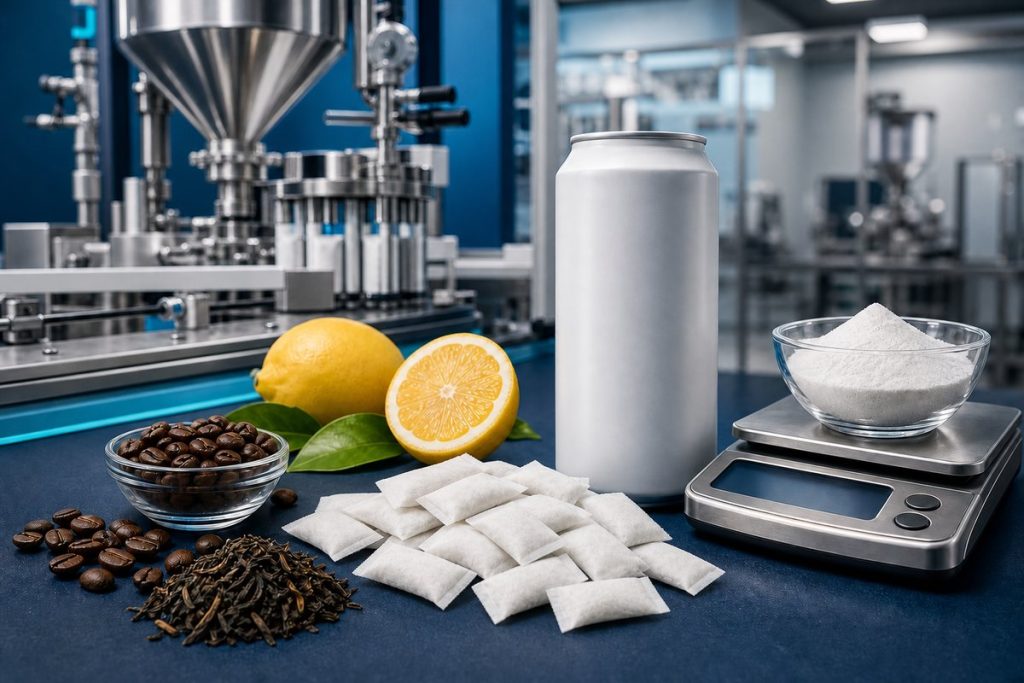
An energy pouch looks simple at retail: a small pouch, a clear strength and a convenient can. Behind that format is a chain of decisions that must work together. The caffeine source affects bitterness, the serving target affects flavor design, and the moisture system affects both mouthfeel and ingredient release.
For brands comparing an energy pouch manufacturer or caffeine pouch factory, the strongest starting point is a disciplined product brief—not a long list of trendy ingredients. A useful brief explains who the product is for, when it is intended to be used and what the brand wants the experience to feel like.
Define Strength in the Context of the Whole Product
Strength should be discussed per pouch and per suggested use, along with the number of pouches in a can. It also needs to account for other caffeine sources consumers may use during the day. EFSA notes that caffeine intake up to 400 mg per day does not generally raise safety concerns for healthy adults, except pregnant women, while a 100 mg dose close to bedtime may affect sleep in some adults. That is useful context, not a formula recommendation; the appropriate specification and warnings depend on the market and consumer group.
A manufacturer should be able to prepare trial strengths, explain practical fill tolerances and arrange the agreed assay or finished-product testing. The declared amount, manufacturing target and release specification should be aligned before production.
Choose the Energy Story Before Building the Flavor
Straight caffeine positioning
A caffeine-led product gives buyers an immediately recognizable active. It also puts the declared strength at the center of the pack, so accurate blending, sensible warnings and restrained claims matter.
Multi-ingredient energy positioning
An energy pouch can combine caffeine with vitamins, amino acids or botanical ingredients when the formulation and target-market rules permit. Each addition consumes limited pouch space and can change bitterness, color, moisture behavior and cost. More ingredients do not automatically make a better pouch.
Flavor as part of performance
Citrus, mint, berry and tropical profiles are common starting points because they can support a clean or lively sensory direction. The right choice depends on the base. Sampling should assess the first minute, the middle of use and the finish—not only the aroma of a newly opened can.
What Happens During Factory Scale-Up
- The approved formula is converted into a controlled batch instruction.
- Raw-material lots and quantities are recorded for traceability.
- Blending sequence and time are set to support uniform distribution.
- Pouch fill weight and sealing parameters are checked during the run.
- Finished pouches are inspected for appearance, leakage and count.
- Samples are retained and the agreed release tests are completed.
- Cans, labels, cartons and shipping cases are reconciled against the order.
Scale-up is where vague sample approval causes problems. Brands should approve a written sensory target and measurable specifications, not simply send a message saying that sample B tastes best. A retained approval sample also gives both sides a practical comparison point.
Packaging Must Carry the Same Discipline
Energy products often use bold design, but the information hierarchy still needs to be easy to understand. The identity of the product, amount per serving, directions, warnings, ingredient information, net contents and responsible business details must be developed for the intended market. Avoid placing artwork orders until regulatory copy has been reviewed.
For U.S. dietary supplements, FDA lists five core label statements, including a statement of identity, net quantity, nutrition labeling, ingredient list, and the name and place of business of the manufacturer, packer or distributor. Other information may be required depending on the product. A destination-market specialist should review the final panel.
Questions for a Caffeine Pouch Manufacturer
- Can you develop multiple trial strengths without changing the pouch experience?
- How do you control blend uniformity and fill-weight variation?
- Which finished-product tests can be provided?
- Can flavor and sweetener systems be adjusted after stability review?
- What is the MOQ per strength, flavor and label design?
- How are approved samples retained and compared with production?
LinkBioLabs develops custom and private-label caffeine pouches and broader energy pouch programs. Our project team can review strength, flavor, pouch format, packaging and order requirements together so that the commercial plan matches the product brief.
Related manufacturing references
For a complete OEM review, connect this article with the main product and process pages. Buyers usually need category fit, stock-formula options, custom formulation support, process checks, and a direct project discussion before approving samples.
- Custom oral pouch manufacturing
- Stock formulation options
- Private label pouch project planning
- Formulation and R&D support
- Manufacturing process and quality checks
- Technical manufacturing blog
- Discuss a project
Content review note: technical articles are reviewed for functional oral pouch, ODF, packaging, and OEM procurement relevance.