
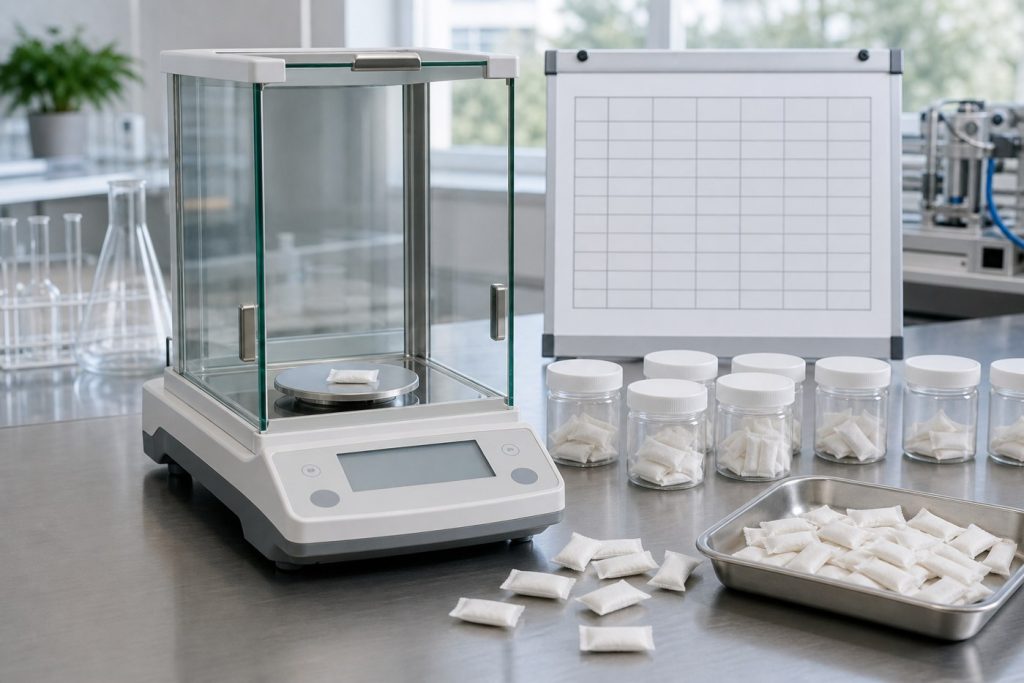
Average batch assay cannot show whether every pouch is comparable. Low-dose actives can segregate during mixing, transfer or filling, particularly when particle size and density differ from the carrier. Consistency therefore needs controls from raw-material selection through packaged sampling.
Characterize the Materials
Record assay, particle-size distribution, density, flow, moisture and electrostatic behavior for critical ingredients. A new supplier grade may require process review even when the chemical name is unchanged.
Use a Validated Addition Strategy
Geometric dilution, a qualified premix or staged addition can reduce local concentration differences. The method should define sequence, equipment load, time and acceptable hold or transfer conditions.
Prevent Segregation After Mixing
A uniform blender sample may not remain uniform in a hopper. Control drop height, vibration, long holds and refilling practices. Sample from more than one location and point in the run.
Connect Weight and Assay Controls
- In-process pouch-weight checks
- Blend samples where technically justified
- Finished-pouch composite or individual testing
- Beginning, middle and end-of-run sampling
- Defined acceptance criteria and investigation rules
- Retention samples in final packaging
Use Fit-for-Purpose Methods
The assay must be specific enough for the matrix and sensitive at the intended amount. Extraction recovery, sample preparation and laboratory variability matter. Agree on how results are reported and rounded before production.
Investigate Trends, Not Only Failures
Drift within specification may warn of segregation, feeder changes or room-condition effects. Trend batches and equipment settings so corrective work begins before an out-of-specification result.
Frequently Asked Questions
Does exact pouch weight prove exact active content?
No. Weight control is important, but blend uniformity and active testing are separate questions.
How many pouches should be tested?
Sampling should be risk-based and supported by the process, batch size, method and market requirements; there is no universal number for every product.
Planning a functional pouch or ODF project? Share the target market, formula direction, pack format and forecast through our contact page. LinkBioLabs can review stock, modified and fully custom manufacturing routes.
Related manufacturing references
For a complete OEM review, connect this article with the main product and process pages. Buyers usually need category fit, stock-formula options, custom formulation support, process checks, and a direct project discussion before approving samples.
- Custom oral pouch manufacturing
- Stock formulation options
- Private label pouch project planning
- Formulation and R&D support
- Manufacturing process and quality checks
- Technical manufacturing blog
- Discuss a project
Content review note: technical articles are reviewed for functional oral pouch, ODF, packaging, and OEM procurement relevance.