
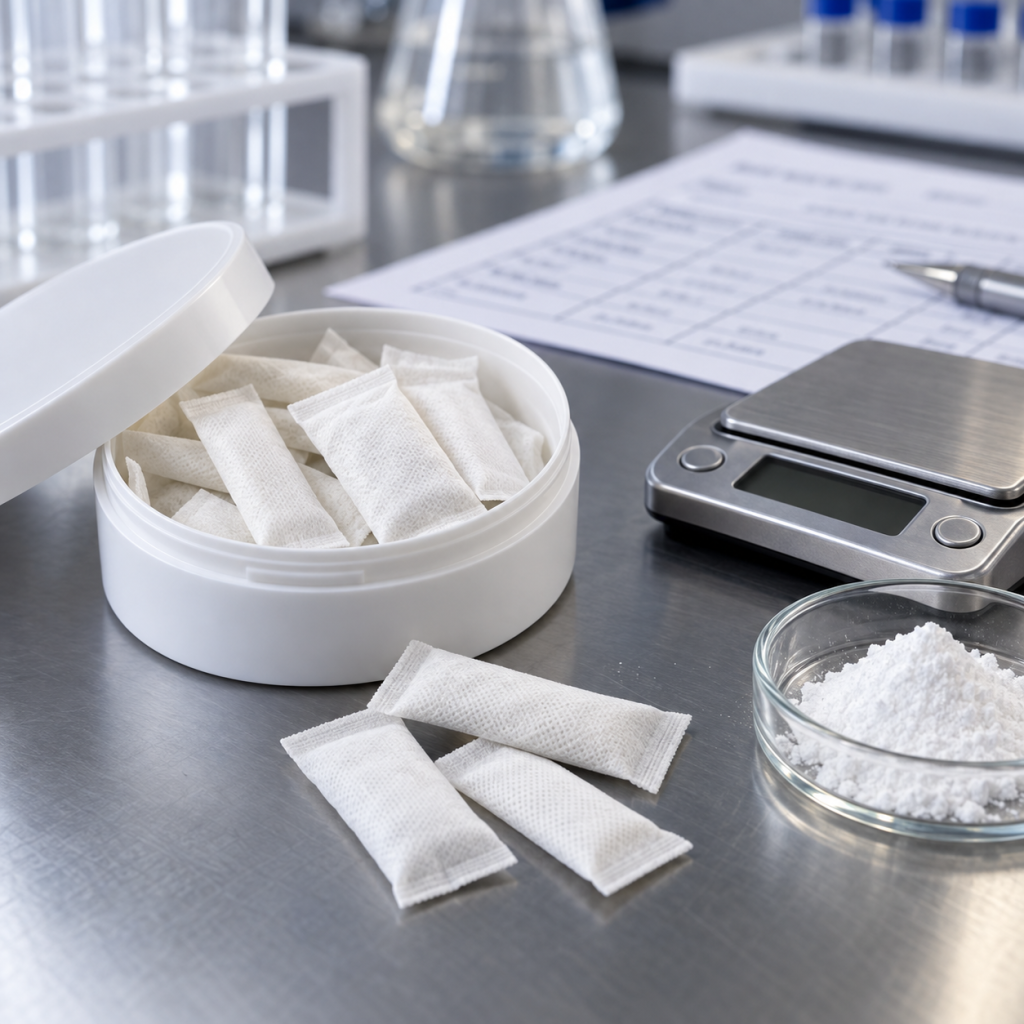
Dose planning starts outside the pouch
A caffeine pouch is small, so brands sometimes treat the serving decision as a packaging question. It is not. The first calculation should include coffee, tea, energy drinks, pre-workout products, caffeine gum, tablets, and guarana ingredients that may add more caffeine. If the customer already uses caffeine throughout the day, a pouch that looks moderate on its own may still push the total higher than intended.
FDA consumer information cites 400 mg per day as an amount not generally associated with negative effects for most adults, while noting that sensitivity varies. EFSA has also discussed 200 mg single doses for healthy adults. These are not private label targets. They are reference points. A brand still needs to decide its user, occasion, warning approach, and market-specific review.
Per pouch strength is only one variable
The number printed per pouch does not describe the whole product experience. Fill weight, caffeine particle size, carrier system, moisture level, pouch fabric, pH direction, flavor intensity, and use time all affect how the pouch feels. A 40 mg pouch with fast wetting may feel sharper than a higher-dose pouch with slower release and a smoother flavor system. Buyers should test the intended use time, not only the assay result.
- Planning range: low, medium and high concepts should be sampled separately instead of scaling one flavor blindly.
- Use condition: decide whether the pouch is positioned for morning, work, travel, sport-adjacent use or beverage brand extension.
- Formula risk: high caffeine load increases bitterness, dust control pressure and blending sensitivity.
Guarana complicates the calculation because the extract may contain naturally occurring caffeine. The RFQ should state whether the declared caffeine comes only from added caffeine, from guarana, or from total caffeine by assay. That decision affects label review and buyer expectations.
Label wording should match real use
Serving language needs to be written before mass production, not after the finished goods are packed. Brands should decide whether one pouch equals one serving, how long the pouch is intended to be used, whether more than one pouch is discouraged within a certain period, and how other caffeine sources are addressed. The wording should be practical enough for a consumer to follow.
Do not let marketing copy outrun the formula. Phrases that imply treatment of fatigue, disease, or medical conditions create a different risk profile than ordinary structure, function or energy-positioning language. Even when a phrase seems common in the market, it still needs review. The factory can help organize formulation facts, but the brand should review claims with its own regulatory adviser for the target market.
Factory checks behind dose confidence
Caffeine is usually easy to weigh. Keeping it uniform pouch by pouch is the harder part. Fine powder can dust during handling. A low percentage active can segregate if the carrier and active do not share compatible particle behavior. In real filling, vibration, hopper level, and powder flow can shift unit weight. A good production plan checks pre-blend method, fill weight, active assay, and retained samples.
For strong caffeine concepts, the sensory panel should score bitterness onset, cooling, throat feel, drip and aftertaste. The factory should also watch whether the flavor masks the first two minutes but collapses later. That is common when the top-note aroma is strong and the base sweetness system is weak.
How to brief the first caffeine sample
A good sample brief names the dose concept, the flavor system, the desired use occasion, the planned pouch count per can, and the markets where the product may launch. It should also say whether the brand wants a cautious adult-use product, an energy-drink style extension, or a stronger niche product for experienced users. The formula work is different.
For LinkBioLabs projects, the first caffeine sample is usually more useful when buyers approve two or three strengths at once. It shows where bitterness, mouthfeel and label planning begin to strain. The strongest sample is not always the one that survives commercial review. Often the best launch SKU is the one that tastes repeatable, packs cleanly, and can be explained clearly on the label.
Do not let flavor hide a dosage problem
Strong cooling and heavy sweetener can make a caffeine sample feel acceptable for the first trial, but they do not solve serving-size planning. The brand still needs to decide how many pouches may be used in a day, whether the product is meant for caffeine-sensitive adults, and how it sits beside coffee or energy drinks. In pilot work, LinkBioLabs normally reviews taste and dose together. A formula that only works by overpowering bitterness may become tiring after repeated use, and that shows up quickly in a basic sensory hold.
Frequently asked questions
Should a caffeine pouch label show caffeine per pouch?
Many brands choose to show caffeine amount clearly because buyers and consumers compare total caffeine exposure. Market-specific label review is still needed.
Can guarana pouches use the same serving plan as caffeine pouches?
Not automatically. Guarana extract may contribute caffeine and botanical taste, so total caffeine and extract standardization need separate review.
Is the strongest caffeine pouch always better for launch?
No. Stronger formulas can create bitterness, dusting and claim concerns. A moderate, stable product may be easier to scale and repeat.
{“@context”:”https://schema.org”,”@type”:”FAQPage”,”mainEntity”:[{“@type”:”Question”,”name”:”Should a caffeine pouch label show caffeine per pouch?”,”acceptedAnswer”:{“@type”:”Answer”,”text”:”Many brands choose to show caffeine amount clearly because buyers and consumers compare total caffeine exposure. Market-specific label review is still needed.”}},{“@type”:”Question”,”name”:”Can guarana pouches use the same serving plan as caffeine pouches?”,”acceptedAnswer”:{“@type”:”Answer”,”text”:”Not automatically. Guarana extract may contribute caffeine and botanical taste, so total caffeine and extract standardization need separate review.”}},{“@type”:”Question”,”name”:”Is the strongest caffeine pouch always better for launch?”,”acceptedAnswer”:{“@type”:”Answer”,”text”:”No. Stronger formulas can create bitterness, dusting and claim concerns. A moderate, stable product may be easier to scale and repeat.”}}]}
Reference notes for buyers
This article is written for B2B product development and procurement planning. It is not legal, medical, or regulatory advice.
Related manufacturing references
For a complete OEM review, connect this article with the main product and process pages. Buyers usually need category fit, stock-formula options, custom formulation support, process checks, and a direct project discussion before approving samples.
- Custom oral pouch manufacturing
- Stock formulation options
- Private label pouch project planning
- Formulation and R&D support
- Manufacturing process and quality checks
- Technical manufacturing blog
- Discuss a project
Content review note: technical articles are reviewed for functional oral pouch, ODF, packaging, and OEM procurement relevance.