
Explore 14 oral pouch product directions for private-label development. Each category begins with an ingredient and packaging brief; the exact formula, claims and destination-market requirements are confirmed for the project.
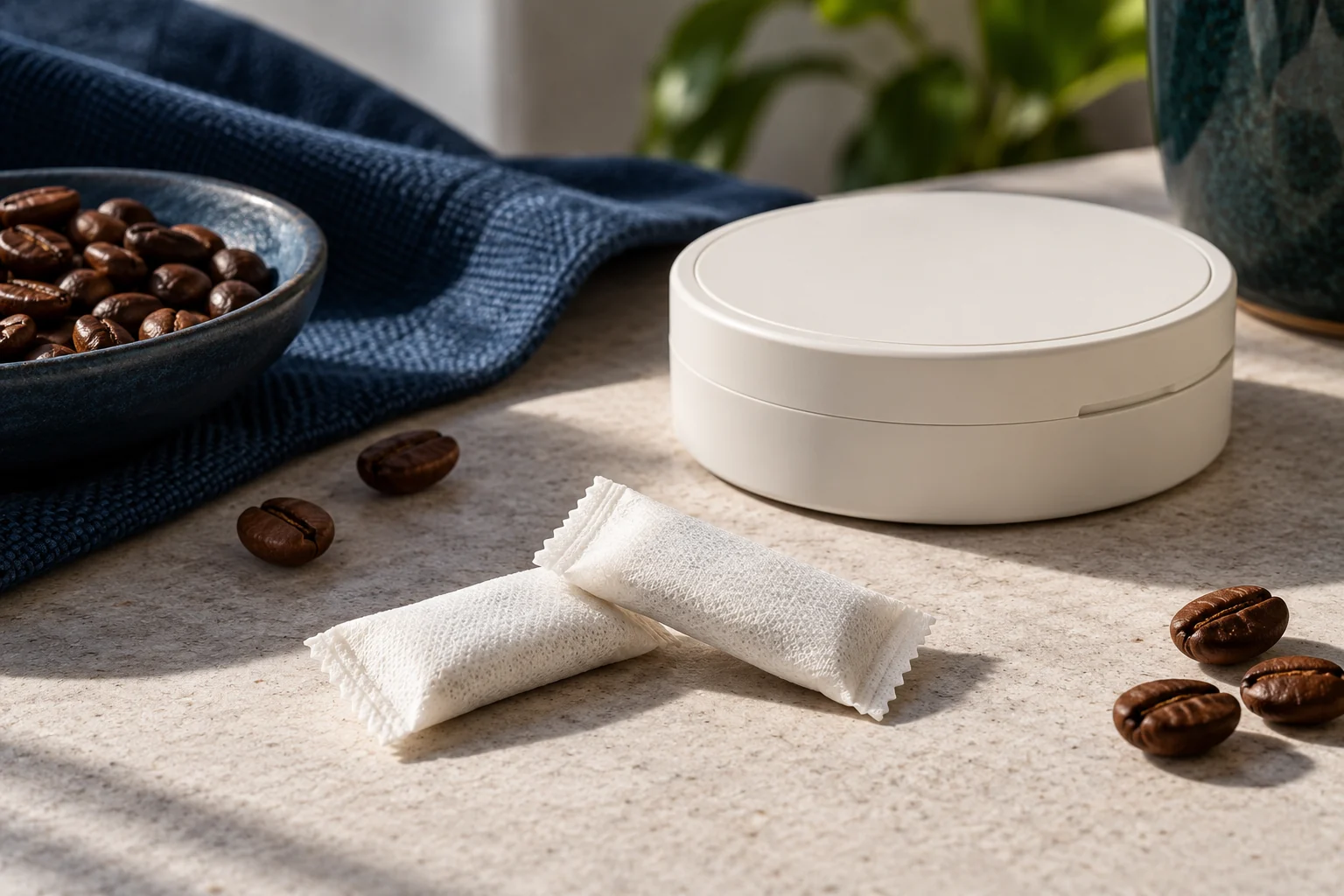
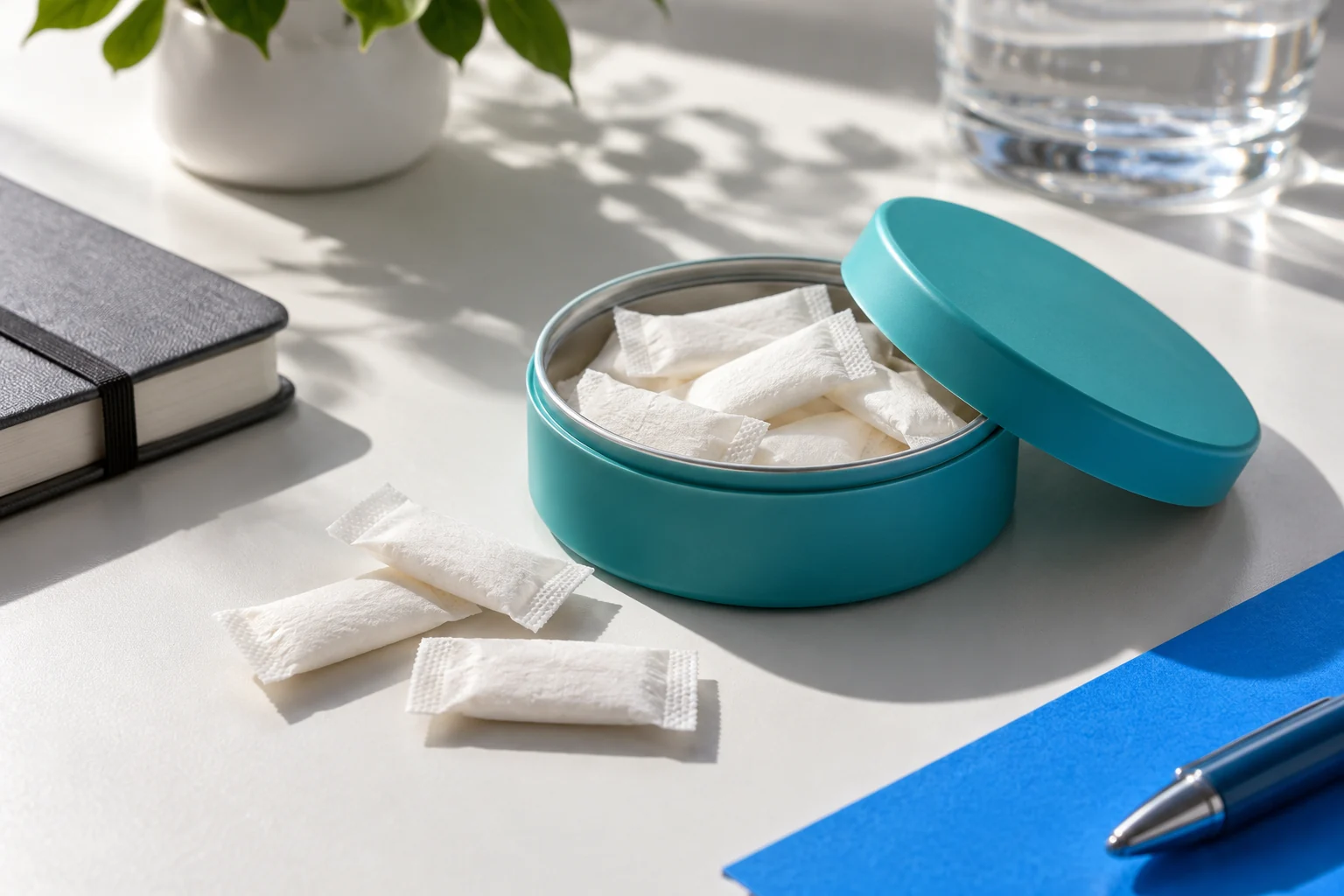
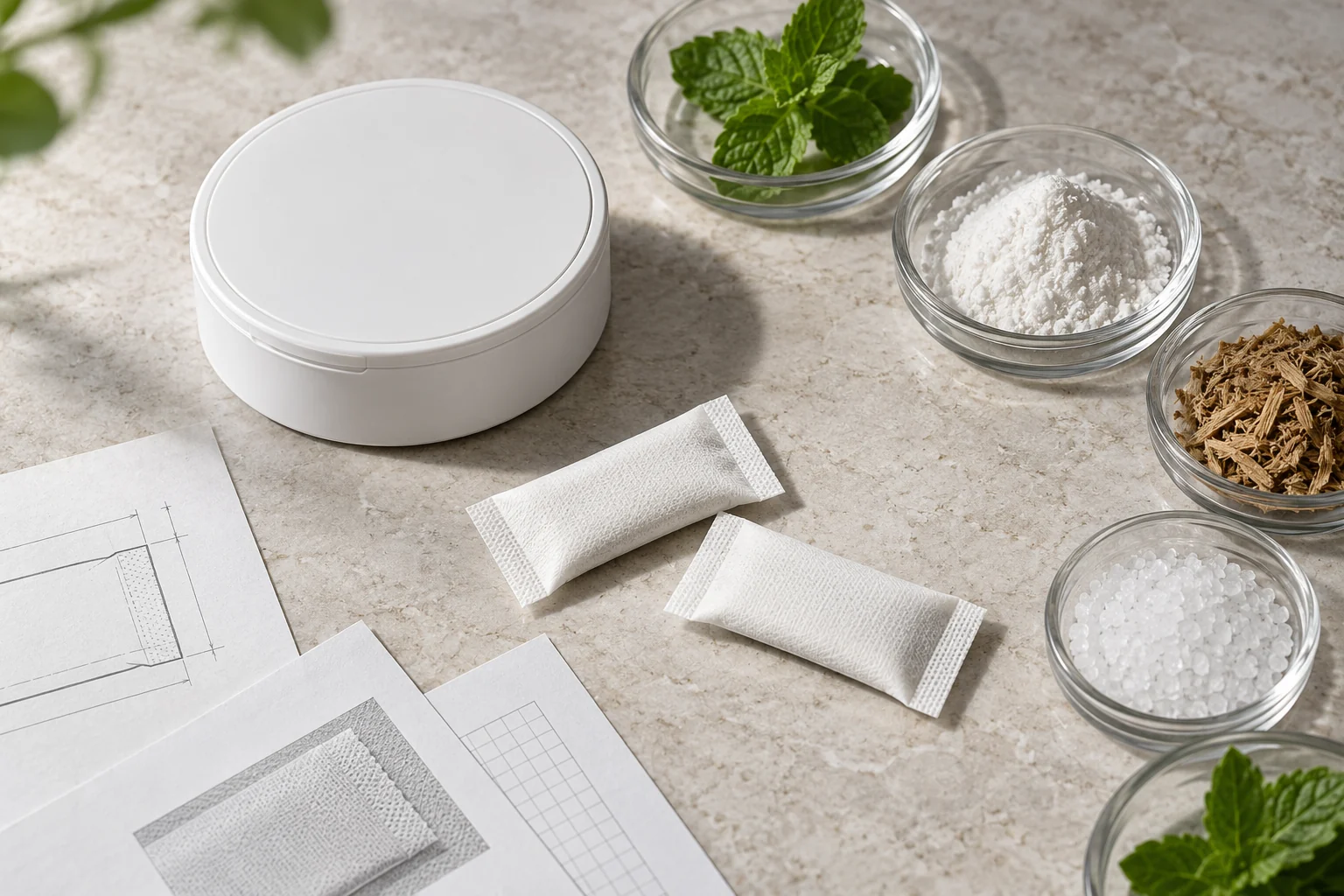
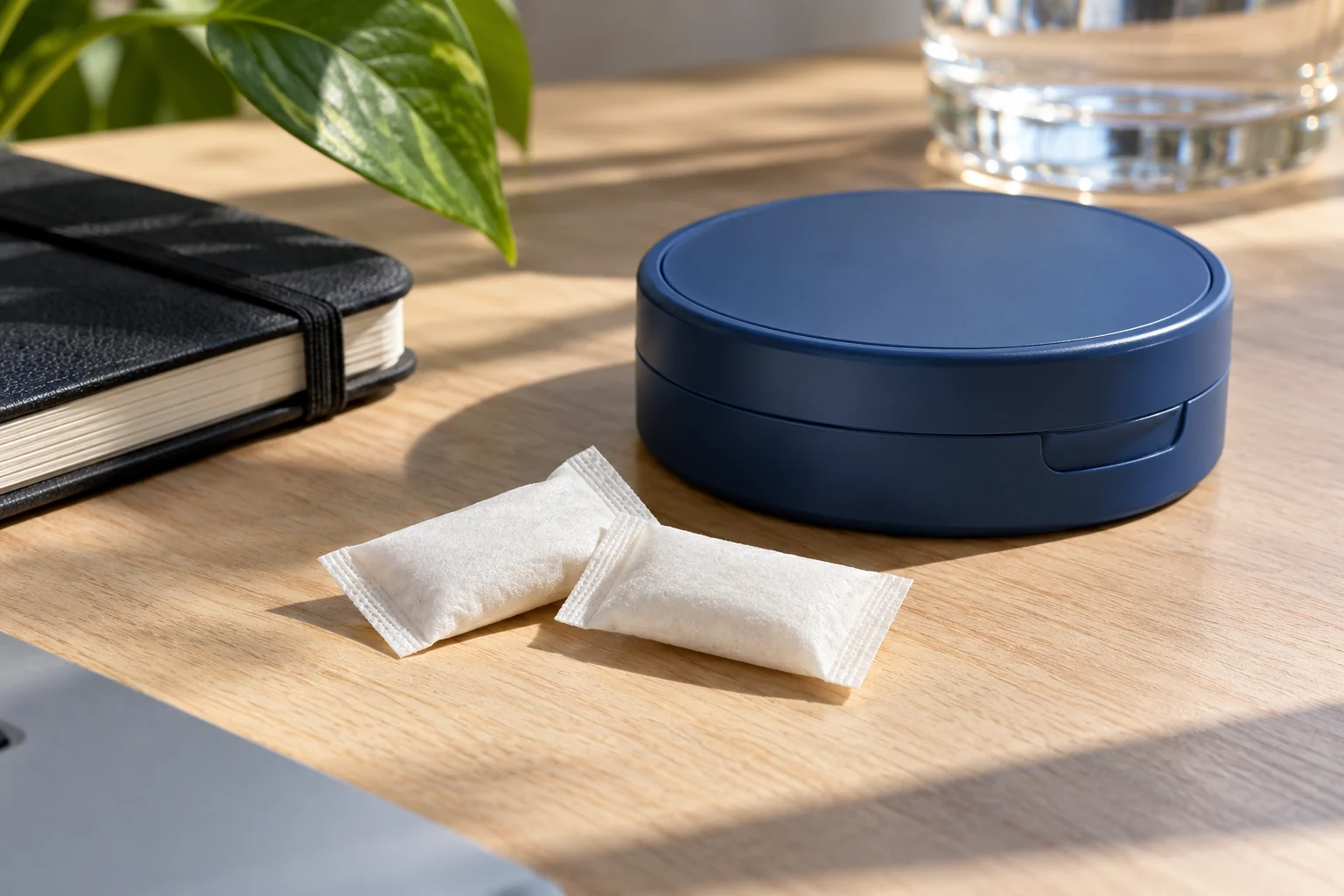
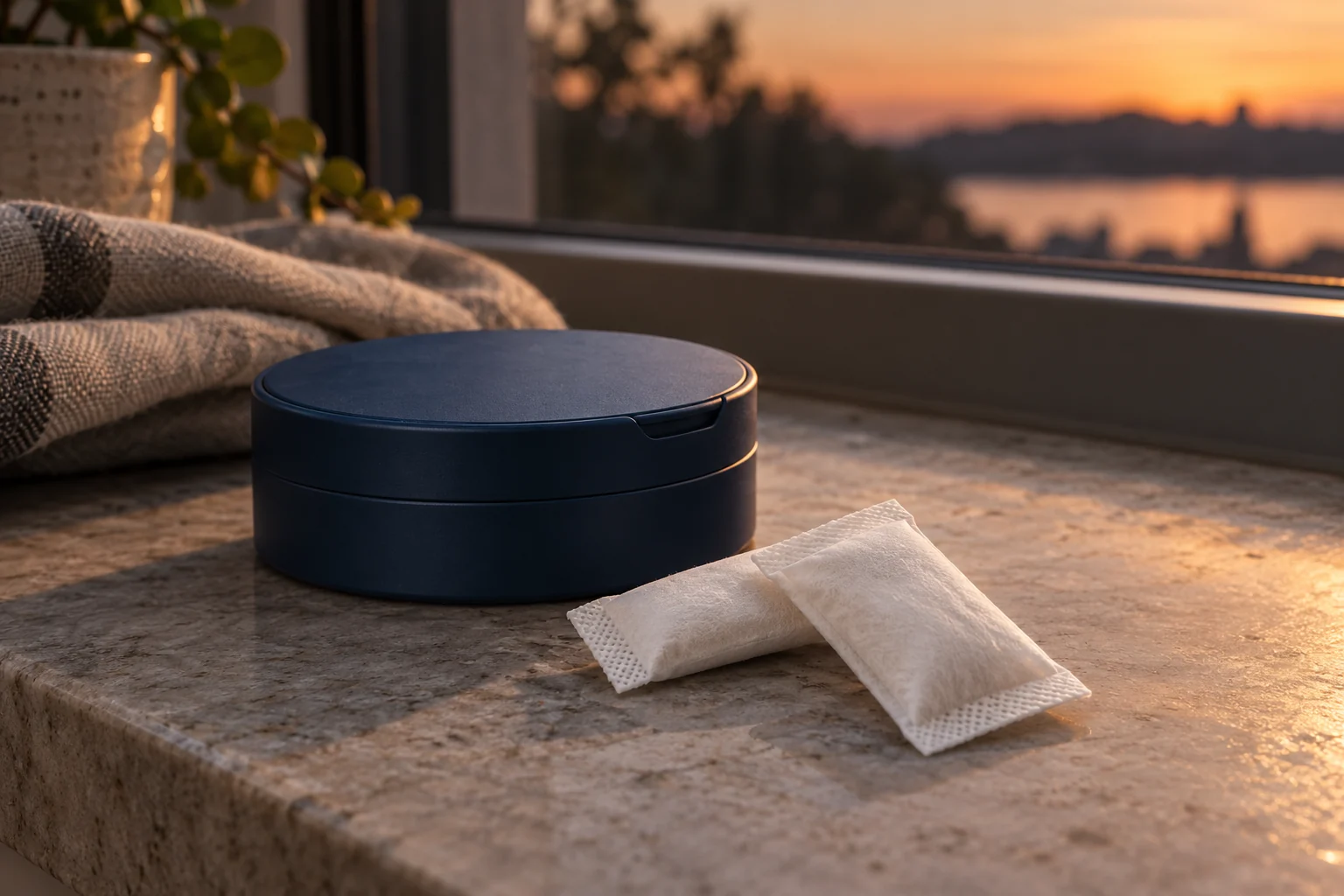
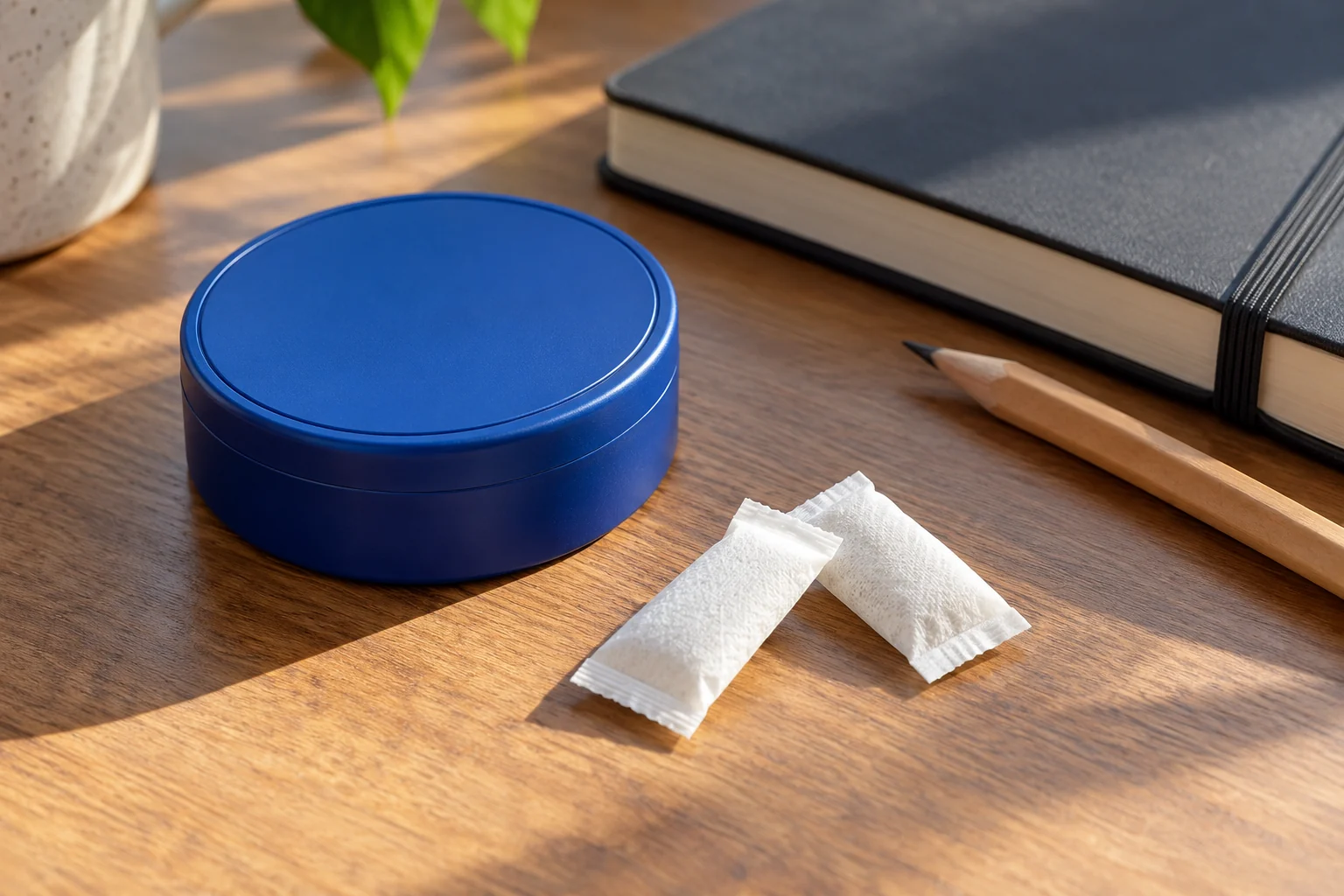
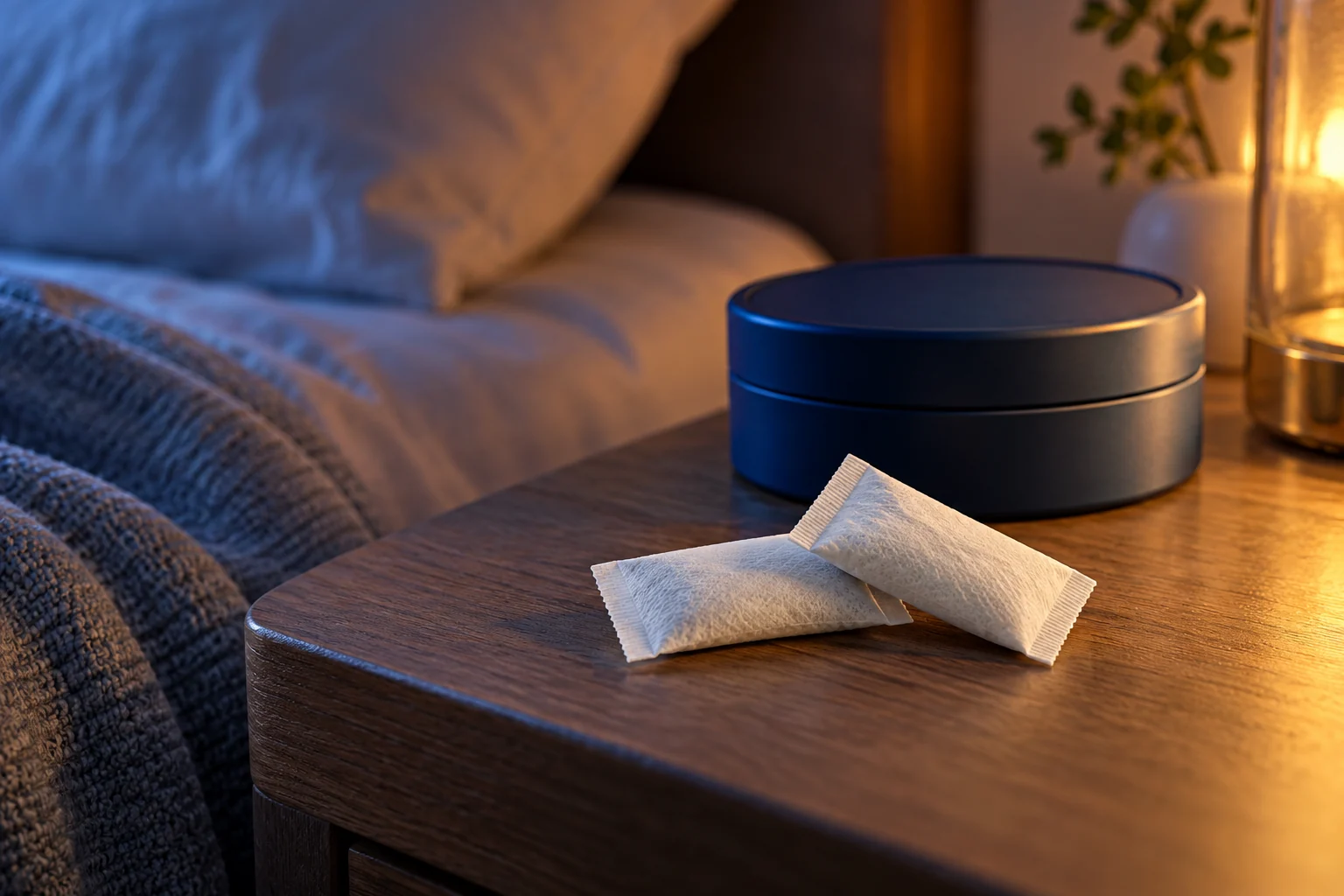
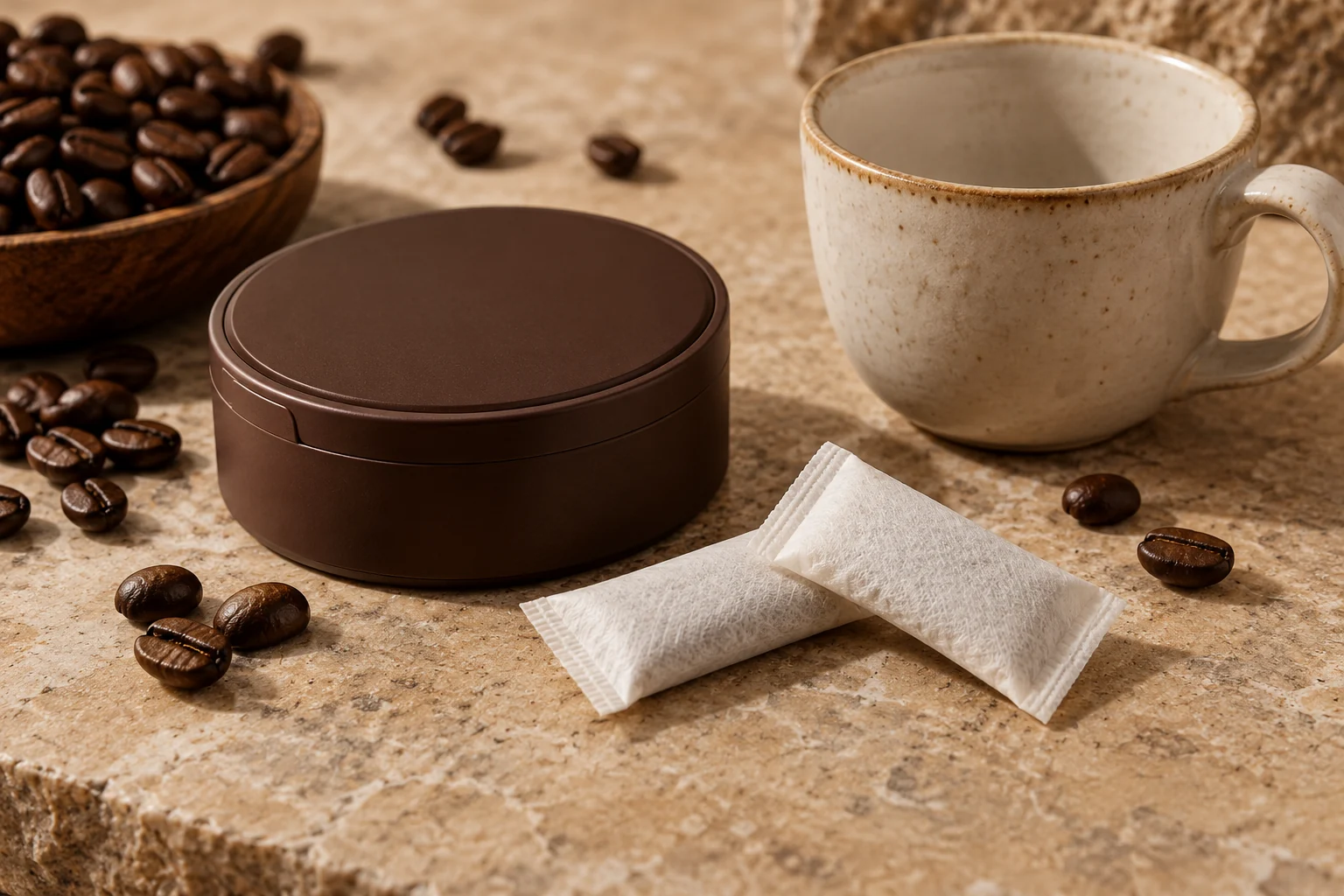
The images are independently generated editorial concepts of slim, white, rectangular nonwoven pouches. They are not photographs of a supplied formula, test batch or branded retail product.
ORAL POUCH CATEGORY 01
Caffeine Pouches
咖啡因口含袋
A defined caffeine ingredient and a measured amount per finished pouch make this a clear single-active brief. Coffee flavor is optional; caffeine content and flavor are separate specification fields.
What to define in the OEM brief
Record the caffeine source, intended amount per pouch, target weight, flavor and reporting units. If a plant extract contributes caffeine, include that contribution in the finished-product assay plan.
- Finished-pouch caffeine assay
- Individual-pouch weight variation
- Label and market review
ORAL POUCH CATEGORY 02
Energy Pouches
能量口含袋
Energy is a positioning category rather than a single formula. A brief may consider caffeine, guarana or a caffeine-free concept; these alternatives need different test and label plans.
What to define in the OEM brief
Decide whether the product contains stimulants before choosing flavor, warning language and serving presentation. A guarana ingredient description alone does not establish total caffeine exposure.
- Active-source and total-caffeine accounting
- Taste balance and release profile
- Market-specific claim review
ORAL POUCH CATEGORY 03
Functional Pouches
功能性口含袋
Functional pouches are a format platform for distinct ingredient briefs. The category name does not define a health outcome, a standard formula or a permitted claim.
What to define in the OEM brief
Start with a named ingredient and a measurable finished-pouch specification. Then decide whether the material is suitable for a moist oral environment and which use statements are supportable in the target market.
- Ingredient identity and supplier file
- Moisture and fabric compatibility
- Finished-product claim review
ORAL POUCH CATEGORY 04
Nootropic Pouches
益智口含袋
Nootropic is a consumer-facing category name, not proof of a cognitive effect. Ingredient choices and label language require separate review.
What to define in the OEM brief
A development brief should identify each proposed active, its finished-pouch level and the evidence behind any wording. Taste, solubility and pouch weight can limit what a small format can carry.
- Ingredient and assay specification
- Sensory and mouthfeel trial
- Evidence-aligned wording
ORAL POUCH CATEGORY 05
Nutritional Pouches
营养口含袋
Nutritional pouches can be planned around a stated nutrient or ingredient blend, but the on-pack declaration should follow the actual finished product.
What to define in the OEM brief
Confirm which nutrients remain stable through filling, storage and expected use. The pouch fabric, flavor system and can barrier all affect a formulation that absorbs moisture.
- Nutrient identity and declared basis
- Stability and moisture study
- Label units and serving definition
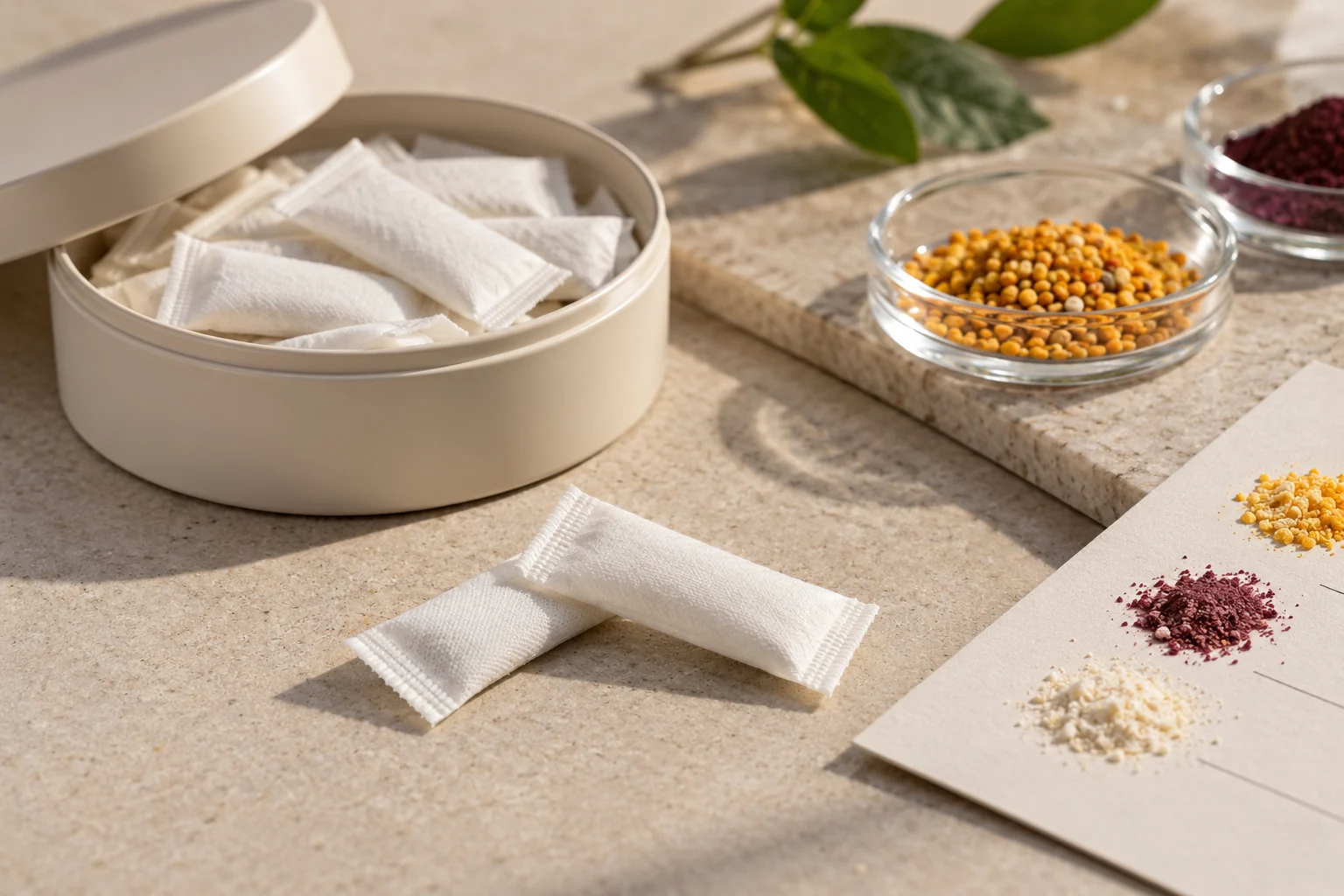
ORAL POUCH CATEGORY 06
Vitamin Pouches
维生素口含袋
Vitamin pouches call for a named vitamin and a verified amount, rather than a generic multivitamin promise. Different vitamins have different handling and stability questions.
What to define in the OEM brief
Choose the intended vitamin forms first, then agree assay timing and label units. A colorful flavor concept does not establish nutrient content or availability in a finished pouch.
- Vitamin form and supplier evidence
- Finished-product assay at release and shelf life
- Declared amount and market review
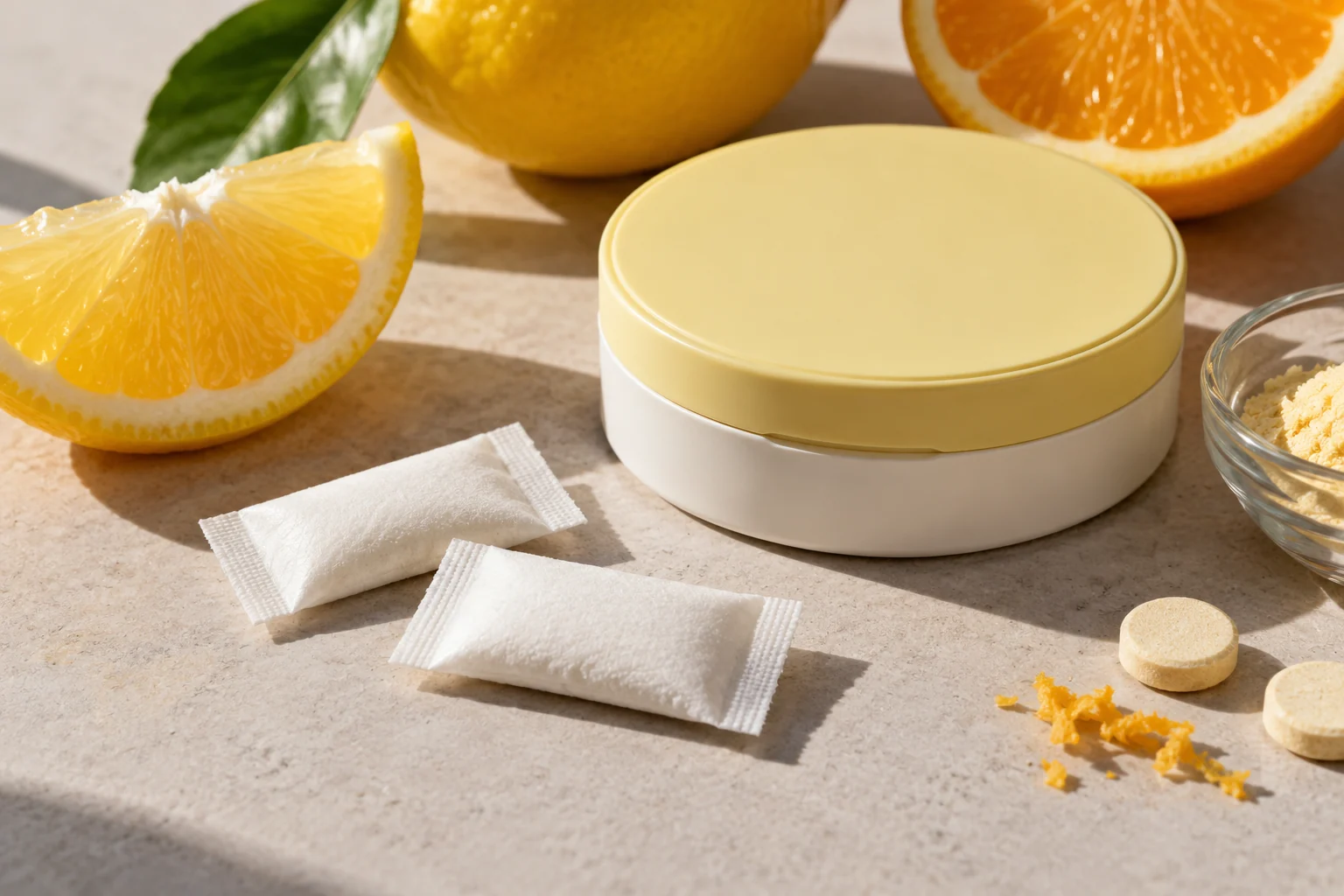
ORAL POUCH CATEGORY 07
Oral Care Pouches
口腔护理口含袋
Oral care concepts may prioritize clean mouthfeel, breath freshness and ingredient taste. These sensory goals should not be confused with treatment claims.
What to define in the OEM brief
Specify sweetener, flavor and acidity alongside the pouch fabric and residence time. If an ingredient such as xylitol is proposed, review its amount and the exact claim separately.
- Mouthfeel and flavor release
- Ingredient compatibility
- Dental or disease-claim boundary
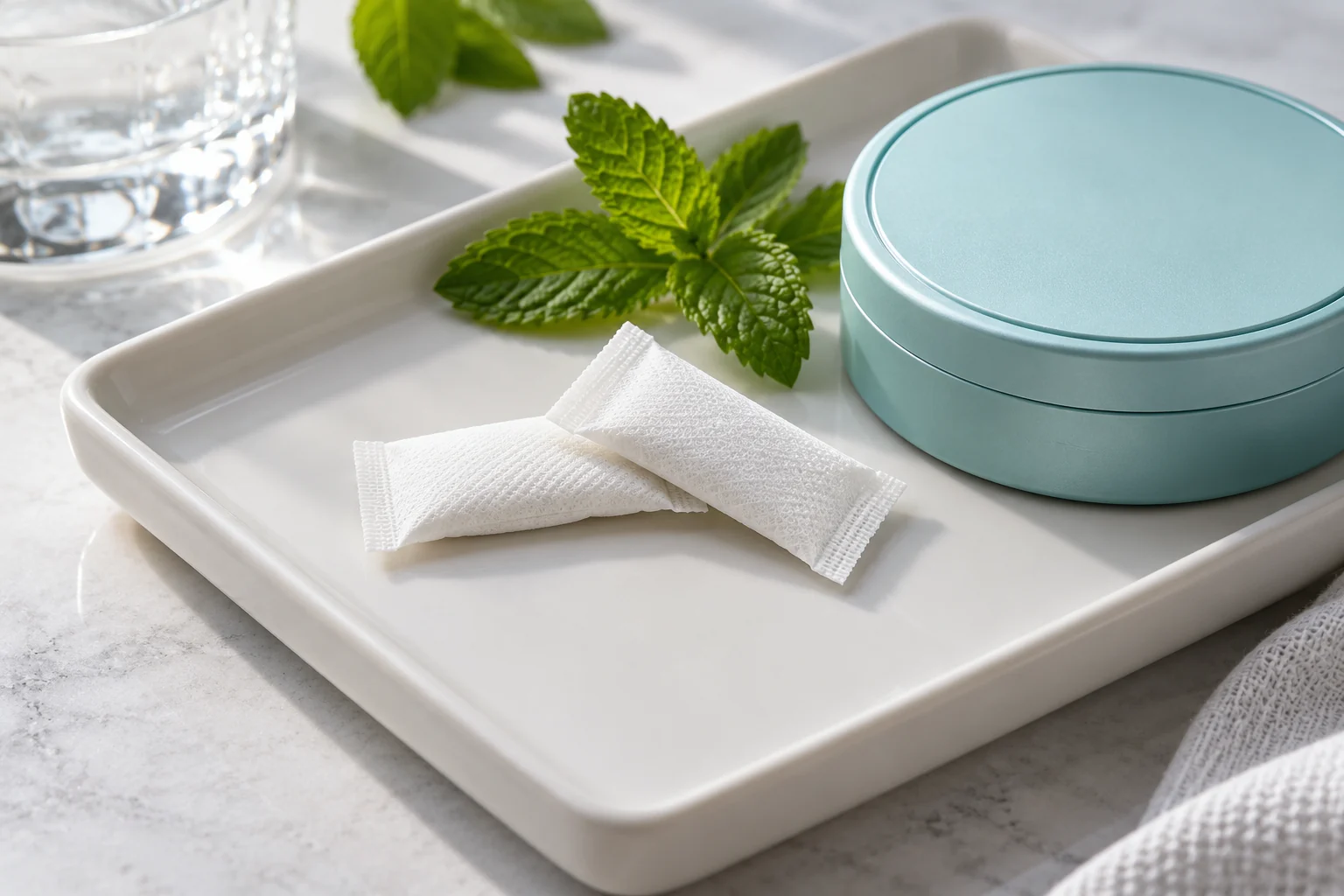
ORAL POUCH CATEGORY 08
Stress Relief Pouches
舒压口含袋
Stress relief is a product-positioning brief that needs careful wording. A calming flavor or botanical image does not demonstrate relief of anxiety.
What to define in the OEM brief
Define the proposed ingredient, expected sensory profile and permitted market wording before artwork begins. Review any stimulant in the same formula against the intended positioning.
- Ingredient evidence and amount
- Sensory profile without treatment promises
- Market claim and warning review
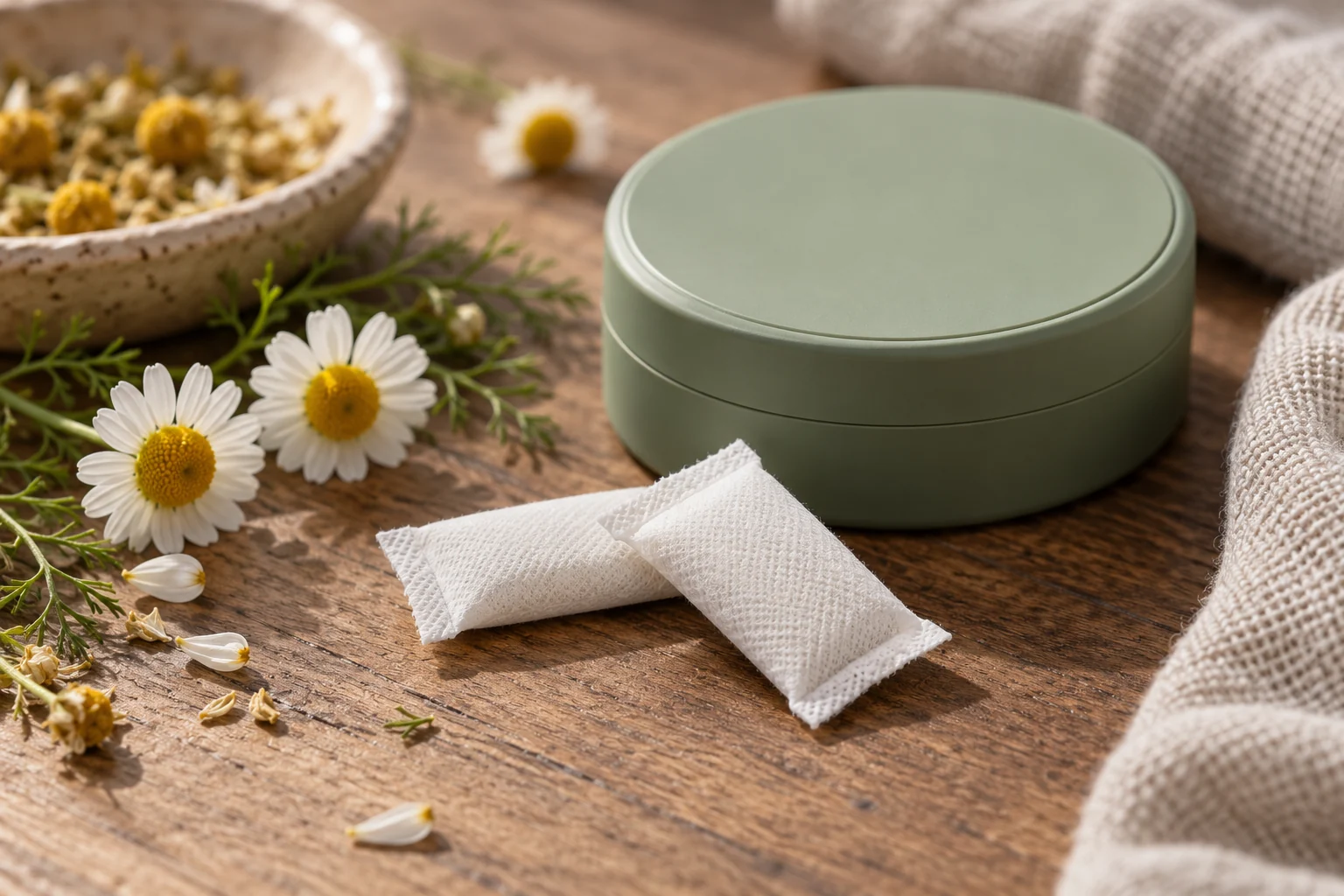
ORAL POUCH CATEGORY 09
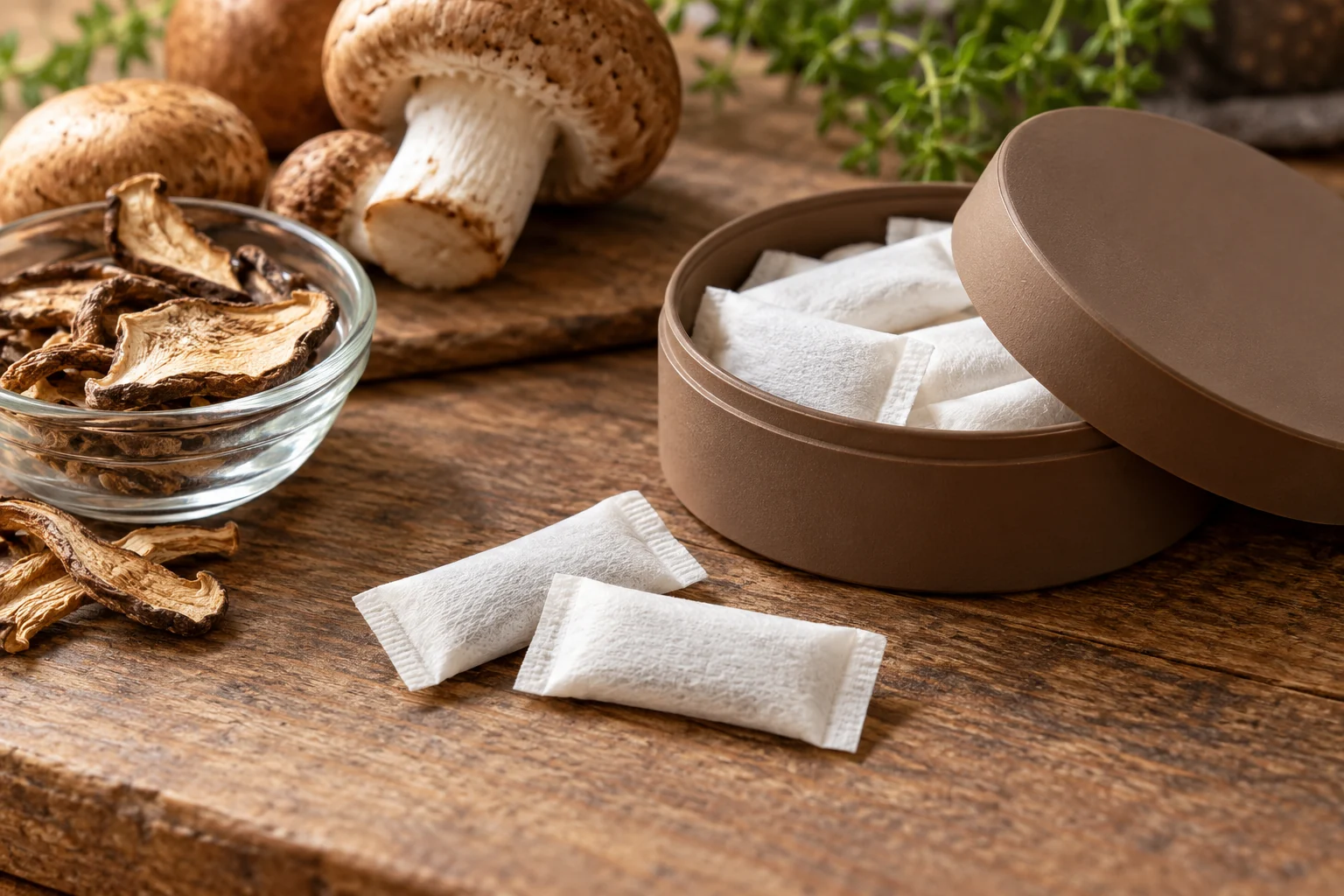
Mushroom Pouches
蘑菇口含袋/功能性菌菇口含袋
Mushroom pouches need species-level identification; “mushroom extract” is too broad for a useful manufacturing specification. The image is a concept and does not identify the species used.
What to define in the OEM brief
State the species, fruiting-body or mycelium basis, extraction method and any proposed marker. Review identity and contaminant documentation before flavor masking or packaging is finalized.
- Species and material traceability
- Extract identity and contaminant testing
- Flavor and color stability
ORAL POUCH CATEGORY 10
Melatonin Pouches
褪黑素口含袋
Melatonin is a specific ingredient concept, not a generic sleep promise. Whether and how it may be sold in pouch form varies by destination market.
What to define in the OEM brief
Confirm product classification, permitted amount, directions and warnings with the responsible market adviser before development is treated as launch-ready. The finished product needs a controlled melatonin assay and suitable stability evidence.
- Market classification and suitability
- Finished-pouch assay and variation
- Directions, warnings and claims
ORAL POUCH CATEGORY 11
Guarana Pouches
瓜拉纳口含袋
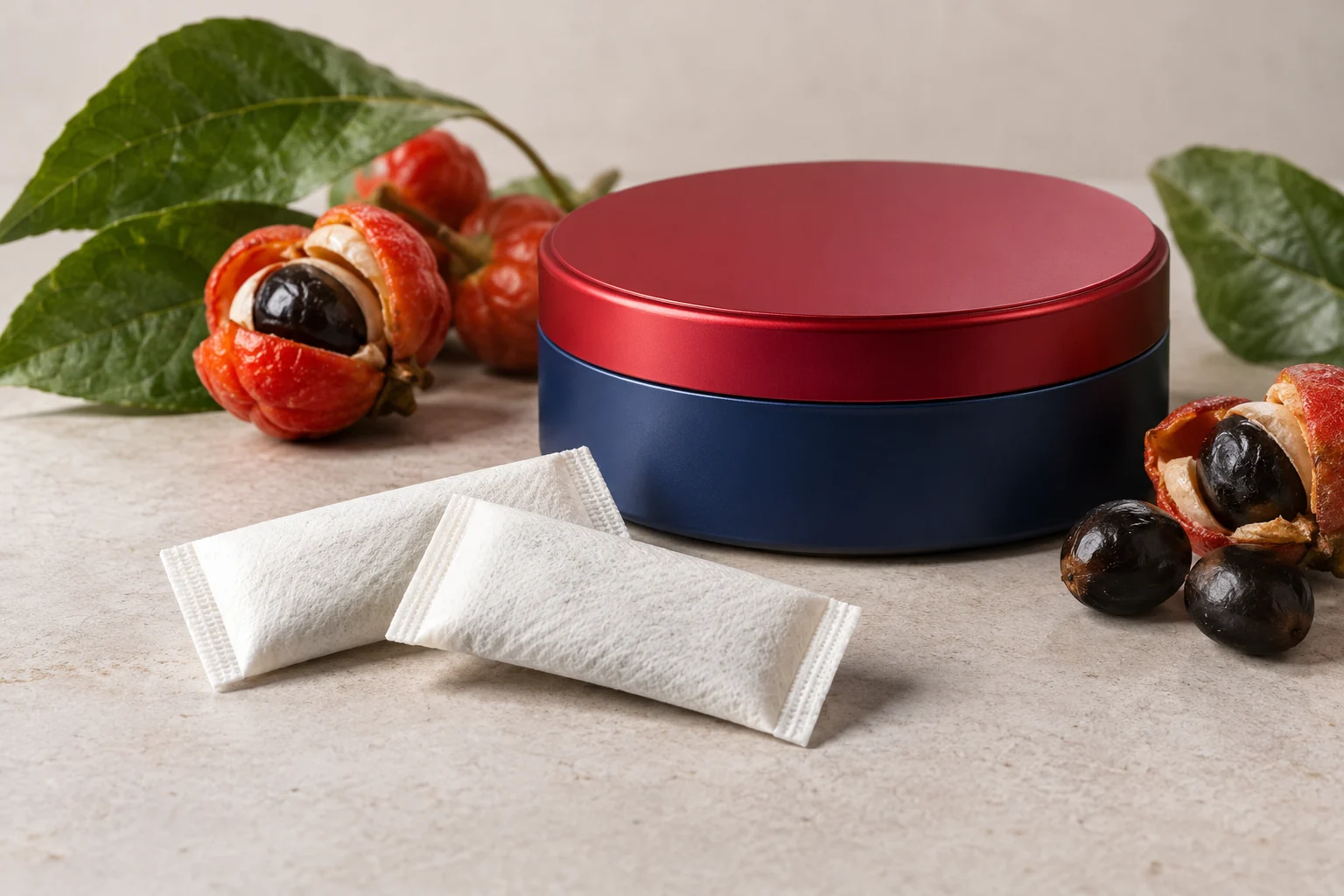
Guarana is a botanical source that may contribute caffeine. Specify the extract and its caffeine contribution instead of relying on the ingredient name alone.
What to define in the OEM brief
Record the botanical identity, extract ratio if relevant and total caffeine per finished pouch from all sources. Compare supplier documents with a finished-product test plan.
- Botanical identity and supplier lot
- Total caffeine accounting
- Flavor and label alignment
ORAL POUCH CATEGORY 12
Focus Pouches
专注口含袋
Focus describes a use occasion, not a verified performance result. Both stimulant and non-stimulant concepts require ingredient-level definition.
What to define in the OEM brief
Choose the proposed formula first and then assess whether its sensory cues, directions and evidence fit the planned wording. Avoid promising a measurable attention benefit from a visual design.
- Formula and ingredient evidence
- Caffeine disclosure if applicable
- Claim-to-evidence review
ORAL POUCH CATEGORY 13
Sleep Pouches
助眠口含袋
Sleep pouches are an evening-positioned category that may or may not contain melatonin. The two names should not be treated as synonyms.
What to define in the OEM brief
Decide the active approach and the destination market before choosing a nighttime label. Where melatonin is considered, review its legal status and warnings; a caffeine-free brief still needs an ingredient and claim review.
- Formula and stimulant screen
- Destination-market classification
- Clear directions and warnings
ORAL POUCH CATEGORY 14
Coffee Pouches
咖啡口含袋
Coffee pouches may describe coffee flavor, coffee-derived ingredients or both. A coffee-tasting pouch does not necessarily contain caffeine.
What to define in the OEM brief
State whether the brief uses coffee powder, extract, flavor or an added caffeine source. Measure caffeine when the product or its label depends on that amount; review aroma stability in the proposed pouch and can.
- Coffee ingredient versus flavor declaration
- Caffeine amount if present
- Aroma and moisture stability
From category idea to a product brief
Choose the ingredient, target market, finished-pouch weight, flavor, count per can and desired packaging style. Then agree the measurable specification, sample plan, label review and stability work before print production. For finished oral pouch orders, the stated minimum is 3,000 cans per SKU and 9,000 cans per total order; one SKU at 9,000 cans can meet those numerical minimums.
Frequently asked questions
Are energy, caffeine and guarana pouches the same formula?
No. Caffeine names an ingredient, guarana names a botanical that may contribute caffeine, and energy describes positioning. Specify the actual ingredients and total caffeine per finished pouch.
Do sleep pouches always contain melatonin?
No. Sleep is a category concept; melatonin is one specific ingredient. Any melatonin proposal needs destination-market classification, directions and warning review.
Are the pictured pouches existing stock products?
No. The unique images illustrate a compact, white nonwoven pouch shape. The exact fill, fabric, dimensions, can and label are determined in the approved project specification.
What is the minimum order for finished pouch products?
The stated minimum is 3,000 cans per SKU and at least 9,000 cans for the total order. This does not require three SKUs; confirm the final project scope before ordering.