Primary target long-tail keyword: caffeine residue cleaning validation for oral pouch production lines
A mixer can look clean while caffeine remains in a gasket, discharge valve or vacuum hose. The next low-caffeine or caffeine-free SKU then receives carryover that no flavor inspection can detect.
Cleaning validation must recover and measure the target residue from the actual equipment surfaces. A white-glove check and clear rinse water are useful inspections, not quantitative proof.
Select the worst case
Consider dose, batch concentration, dustiness, solubility, stickiness and equipment contact. The highest label claim is not always the hardest product to clean.
Map hidden contact points
Include shaft seals, screens, transfer bins, flexible connectors, filler hoppers and vacuum tools. Flat stainless panels are usually the easiest and least informative locations.
Prove swab recovery
Spike known caffeine onto representative steel, plastic and gasket materials, then recover it with the proposed swab and solvent. Use the result when interpreting routine samples.
Set a justified limit
Connect the acceptance limit to the next product, batch size, shared surface and safety assessment. “Not detected” is incomplete without method detection capability.
Challenge normal cleaning
Validate the written time, concentration, temperature, dismantling and operator technique. A special engineering clean cannot support a shorter routine procedure.
Handle positive findings
Hold subsequent product, reclean, expand sampling and investigate the location. Retesting an easier surface until it passes is not corrective action.
Revalidate changes
New equipment, larger batches, revised formula, stronger caffeine grade or different detergent can change the cleaning challenge. Route these changes through quality review.
Can caffeine odor show whether the line is clean?
No. Caffeine residue is not reliably assessed by smell or visual inspection.
Is rinse testing enough?
Not when inaccessible surfaces retain powder; targeted surface swabs may be necessary.
Provide the shared-equipment route and next-product dose for a carryover validation map.
Recommended Blog Images
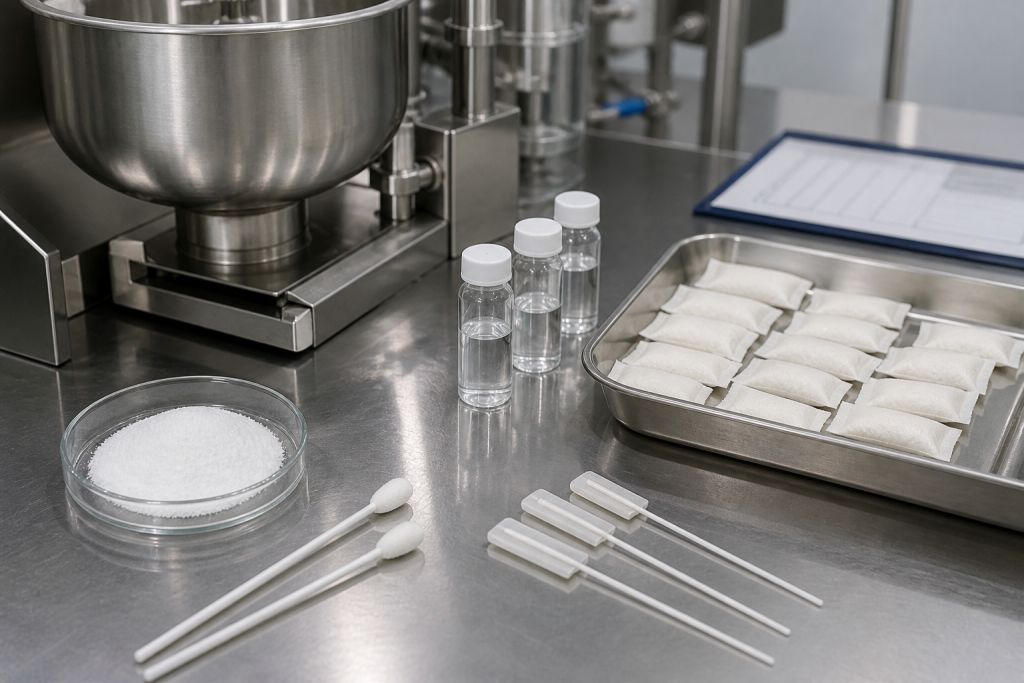
- Clean mixer, targeted swabs, rinse vials and finished slim pouches.
- Equipment map highlighting hard-to-clean caffeine residue points.
Related manufacturing references
For a complete OEM review, connect this article with the main product and process pages. Buyers usually need category fit, stock-formula options, custom formulation support, process checks, and a direct project discussion before approving samples.
- Custom oral pouch manufacturing
- Stock formulation options
- Private label pouch project planning
- Formulation and R&D support
- Manufacturing process and quality checks
- Technical manufacturing blog
- Discuss a project
Content review note: technical articles are reviewed for functional oral pouch, ODF, packaging, and OEM procurement relevance.