
Primary target long-tail keyword: nonwoven wicking rate testing for functional oral pouches
Two fabrics can share the same basis weight and fiber declaration yet feel completely different in use. One wets quickly and releases mint in the first minute. Another stays dry, then suddenly delivers a concentrated bitter note. Air permeability and tensile strength do not describe that liquid-transfer behavior.
Wicking work connects the nonwoven to the formula. The test should compare liquid entry, spreading, retention and wetback using controlled specimens, then confirm the result in finished pouches with realistic saliva exposure and use time.
Define the behavior the product needs
An energy pouch may target a clear early flavor signal. A long-use nootropic formula may need slower, steadier wetting. Oral-care products can prioritize a clean surface and low fiber release.
Write the desired timeline before selecting fabric. “Fast absorption” is not automatically good if it creates harsh caffeine release or a soggy pouch after five minutes.
Control specimen direction and side
Nonwoven production can create machine and cross-direction differences. Surface treatment may also make one face behave differently from the other.
Mark roll direction and the intended product-facing side. Randomly rotated coupons can add variation that the supplier never sees in its standard report.
Use a relevant test liquid
Water is repeatable but does not fully represent saliva, salts or the finished formula. Use it for screening, then add a justified simulated medium or product-specific comparison.
Control liquid temperature and volume. A large droplet can flood every fabric and hide meaningful differences in early strike-through.
Measure more than the first wet spot
Record time to initial penetration, spreading area, uptake and re-wet under a defined load. Fast strike-through with high wetback can leave the outer surface unpleasantly wet.
Photograph at fixed time points. Visual spreading patterns often reveal channels caused by bonding points or fiber orientation that one stopwatch number misses.
Condition fabric before testing
Humidity changes fiber and surface behavior. Store samples under defined conditions and keep them protected from flavor vapor, dust and handling oils.
Compare multiple positions across the roll and more than one roll. A single center coupon does not represent edge variation or supplier-lot drift.
Test the filled pouch
Carrier particle size, humectant and compression change the route liquid takes after it crosses the fabric. A coupon ranking can reverse after filling.
Use the intended dimensions, fill weight and seam. Overfilled pouches press powder tightly against the fabric and may wet faster while feeling harder.
Link wicking to release and bitterness
Take timed sensory notes for aroma, sweetness, cooling, active bitterness and texture. A fast fabric can expose a weak masking system that seemed acceptable in a slower prototype.
Where appropriate, pair sensory work with a focused release method. Neither test alone describes the complete consumer experience.
Inspect wet strength and lint
The fabric must stay intact after wetting and movement. Rub or flex conditioned samples and inspect for fuzz, split bonds and loose fibers.
A soft hand feel can come from low bonding that later sheds lint. Supplier tensile data on dry material does not replace wet finished-pouch evaluation.
Lock useful fabric criteria
- Fiber composition
- Basis weight and thickness
- Roll direction
- Conditioning method
- Strike-through time
- Spreading or uptake
- Wetback
- Wet strength
- Lint inspection
- Finished-pouch sensory timeline
Do not approve a substitute from basis weight alone. Recheck liquid behavior, sealing and sensory performance before any alternate roll enters commercial production.
Questions Buyers Usually Ask
Is the fastest-wicking nonwoven best for oral pouches?
No. Excessively fast wetting can cause harsh release, surface wetness and shorter comfortable use. The target must match the formula.
Can supplier fabric data predict finished-pouch performance?
It helps screen materials, but fill composition, compression, dimensions and seams require testing in the finished format.
Send the current fabric specification, formula moisture and desired use timeline if the pouch wets too slowly, becomes soggy or releases bitterness too early.
Recommended Blog Images
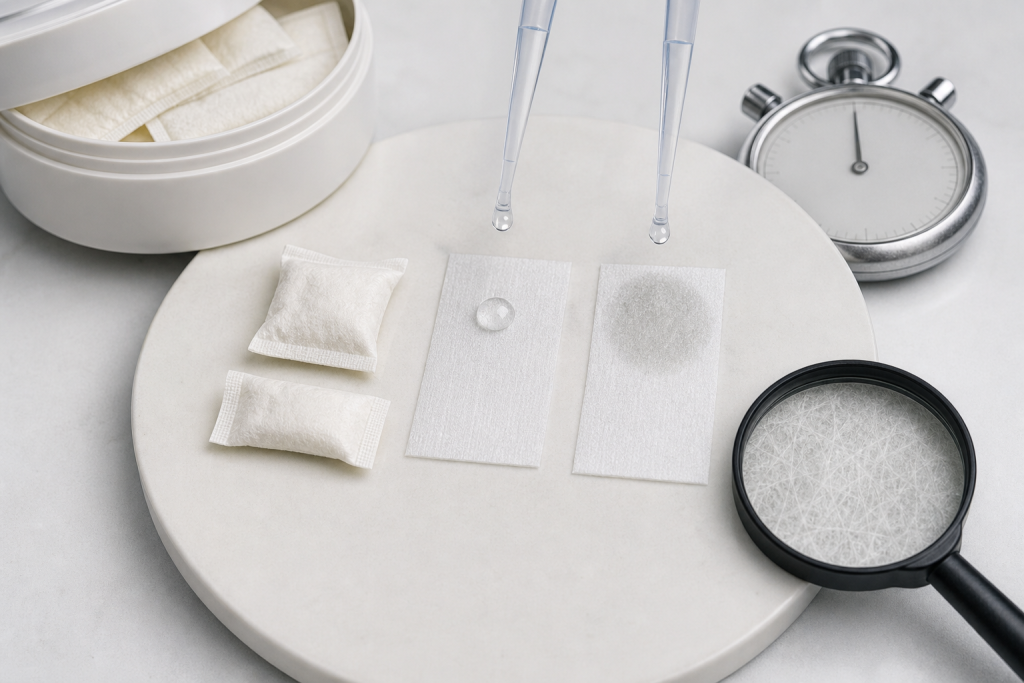
- Laboratory close-up of realistic pouches, nonwoven coupons, controlled droplets and fiber magnification.
- Wetting timeline graphic linking strike-through, flavor release, wetback and wet strength.
Check bonding pattern and usable area
Embossed or thermally bonded points do not absorb like open fiber regions. A fabric with a high bonded area can show slower spreading even when fiber chemistry matches another grade. Measure the finished pouch area available for liquid transfer after the seams are formed. Small changes in pouch width can shift the ratio of open fabric to sealed edge.
Compare fresh and aged fabric
Surface treatments may change during storage, particularly after exposure to flavor vapor or heat. Retain unused roll material and finished pouches from the same lot. Repeat coupon and finished-format tests at stability intervals. If aged pouches wet slowly while retained raw fabric remains stable, migration from the formula is more likely than a supplier fabric defect.
Watch converting and roll handling
Excessive tension, heat or contact with dusty rollers can alter the surface before filling. Sample fabric at startup, after a splice and near the end of a long run. Keep roll wraps closed until use and identify partial rolls. Operators should not reverse the web to solve tracking unless the qualified product-facing side and sealing behavior remain correct.
Include a familiar control fabric in every comparison. The control helps distinguish a true material change from daily variation in liquid temperature, operator timing or coupon preparation. Without it, a small apparent improvement may be test noise.
Record how quickly the filled pouch returns liquid under light pressure. A fabric may absorb quickly yet release excessive moisture back to the surface, producing a wet and slippery consumer experience.
Related manufacturing references
For a complete OEM review, connect this article with the main product and process pages. Buyers usually need category fit, stock-formula options, custom formulation support, process checks, and a direct project discussion before approving samples.
- Custom oral pouch manufacturing
- Stock formulation options
- Private label pouch project planning
- Formulation and R&D support
- Manufacturing process and quality checks
- Technical manufacturing blog
- Discuss a project
Content review note: technical articles are reviewed for functional oral pouch, ODF, packaging, and OEM procurement relevance.