Primary target long-tail keyword: oral pouch allergen changeover cleaning validation for OEM manufacturing
A “free from” formula can inherit allergen residue from the product made before it. Protein powder remains behind a mixer seal, soy-derived lecithin dust sits in a transfer bin, or the correct blend enters a line fitted with the previous SKU label roll. None of these failures is solved by a precautionary statement alone.
For contract manufacturing, allergen control starts with the site ingredient map and continues through scheduling, line clearance, cleaning and verification. Buyers need evidence for the actual shared equipment, not a generic sanitation certificate.
Build the allergen map before quoting
List intentional allergens in actives, carriers, flavors and processing aids. Review subcomponents rather than trusting the marketing name of a premix. A flavor can contain a carrier that is not obvious from the front specification.
Map storage, weighing, mixing, transfer, filling and packaging routes. Shared scoops, vacuums and mobile bins often create more risk than the main stainless mixer.
Distinguish allergen cleaning from flavor cleaning
A line can smell neutral while allergenic protein remains. Conversely, a mint odor may persist after protein is removed. Organoleptic inspection is not an allergen test.
Select the cleaning chemistry and physical action for the residue and equipment. Dry wiping may spread fine protein dust. Wet cleaning introduces its own drying and microbiological controls.
Use scheduling as a control
Where practical, run non-allergen products first and allergen-containing products later. Group similar formulas to reduce changeovers and unnecessary exposure. Scheduling reduces risk but does not eliminate the final cleaning requirement.
Rework needs strict identity control. Material from an allergen-containing batch should never enter an unrelated formula because the color or flavor appears similar.
Identify the hardest locations
Swab easy flat steel only and the validation will pass. Inspect gaskets, shaft seals, discharge valves, screen frames, flexible connectors, hopper corners and filler parts where powder packs under pressure.
Disassemble to the level used in the written cleaning procedure. A validation that requires special dismantling every operator cannot repeat is not a sustainable routine control.
Choose a target and an analytical tool
Use a method appropriate to the allergen or a justified general protein approach. State recovery, detection capability, swab area and acceptance rule. Negative is meaningless without method context.
Include positive or recovery work on relevant surfaces. Textured plastic, fabric and scratched polymer can release residue differently from polished stainless steel.
Validate worst-case conditions
Select a difficult formula based on protein level, stickiness, particle size and equipment contact, not simply the highest production volume. Allow the maximum permitted dirty hold before cleaning.
Challenge the minimum cleaning time and normal operator technique. A perfect laboratory-style clean does not demonstrate the routine process used between commercial batches.
Control tools and airborne dust
Dedicate or clearly identify brushes, scoops and vacuum attachments where needed. A cleaned mixer can be recontaminated by the vacuum used on the previous allergen batch.
Botanical and protein powders travel beyond direct contact surfaces. Inspect nearby ledges, control panels and packaging areas, then define how the room is released.
Add label and component line clearance
Allergen control includes the correct printed can, label and carton. Remove previous packaging, reconcile quantities and verify the new bill of materials before startup.
A formula can be manufactured correctly and still be misbranded by one leftover label roll. Keep line-clearance evidence with the batch record.
Turn validation into routine verification
- Approved cleaning procedure
- Equipment parts included
- Cleaning agents and concentration
- Dirty and clean hold limits
- Swab locations
- Test method
- Acceptance criteria
- Corrective action
- Revalidation triggers
Repeat validation after equipment, formula, allergen profile or cleaning changes. Routine visual checks and scheduled analytical verification show that the validated state is being maintained.
Questions Buyers Usually Ask
Is “may contain” labeling a substitute for allergen controls?
No. FDA states advisory labeling should not replace CGMP measures intended to prevent allergen cross-contact.
Does a negative surface swab prove the whole line is clean?
Only if sampling locations, method recovery and the validated cleaning process adequately represent the equipment and residue risk.
Provide the ingredient allergen declarations and shared-equipment route before sampling. LinkBioLabs can identify changeover risks while the formula and production sequence are still adjustable.
Recommended Blog Images
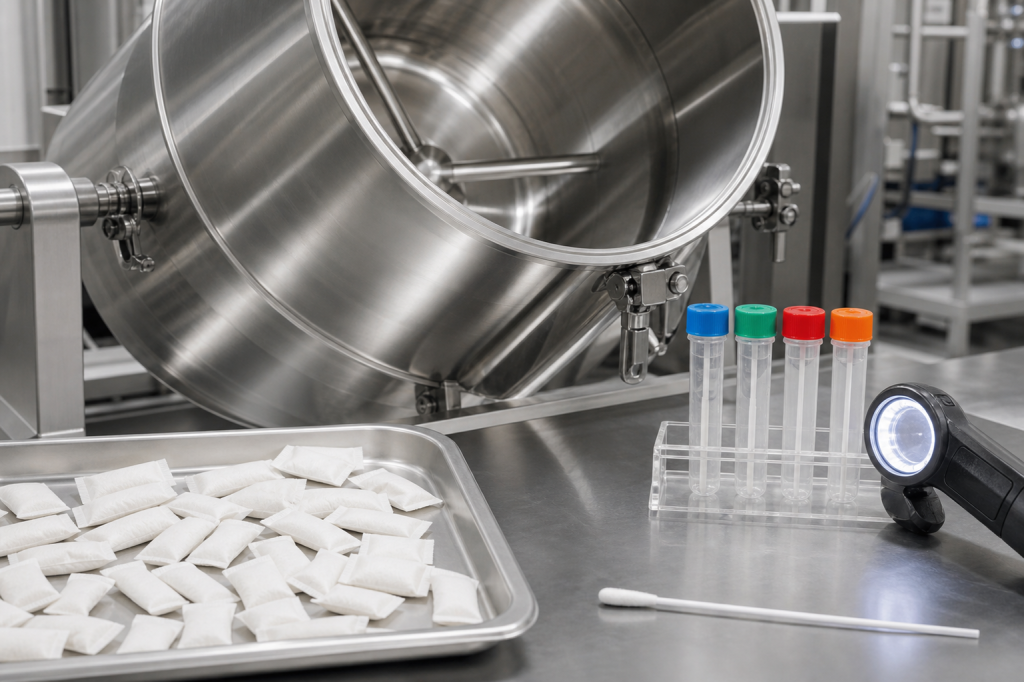
- Factory cleaning-validation photograph with stainless mixer, targeted swabs and finished slim pouches.
- Allergen route map covering storage, weighing, mixing, filling, tools and labels.
Include suppliers and formula revisions
Supplier declarations need version control. A premix that was previously free from a major allergen may change carrier, processing aid or manufacturing site without changing its commercial name. Purchasing should route updated statements to quality and formulation before the material is released. The change review must decide whether labels, production sequence or cleaning validation are affected.
Set action rules for a positive result
A positive verification swab should stop release of the next product. Reclean the affected equipment, expand sampling around the location and investigate why the validated procedure failed. Do not simply swab an easier surface until a negative result appears. Define how potentially affected blend and packaged units are identified, held and dispositioned.
Train for the actual line
Operators need photographs of dismantling points, tool identity and line-clearance expectations. Generic annual allergen training will not show where powder hides under a specific hopper gasket. Observe routine changeovers periodically and record departures from the procedure. Validation proves the method can work; trained execution proves it continues to work on busy production days.
Related manufacturing references
For a complete OEM review, connect this article with the main product and process pages. Buyers usually need category fit, stock-formula options, custom formulation support, process checks, and a direct project discussion before approving samples.
- Custom oral pouch manufacturing
- Stock formulation options
- Private label pouch project planning
- Formulation and R&D support
- Manufacturing process and quality checks
- Technical manufacturing blog
- Discuss a project
Content review note: technical articles are reviewed for functional oral pouch, ODF, packaging, and OEM procurement relevance.