
Primary target long-tail keyword: oral pouch sensory panel protocol for private label product approval
Most pouch tasting is too short and too social. One person opens a can, says the mint is strong and passes it around a meeting. Nobody records when bitterness appeared, whether the pouch softened or how long the aftertaste remained.
A simple sensory protocol turns opinion into development data. It does not need a large consumer study, but it does need coded samples, consistent timing, defined attributes and a decision rule.
Write the decision the panel must support
The panel may select a flavor, compare active grades, approve a pilot or review stability. Each question needs different samples and references.
Do not combine five formulation changes in one comparison. If sweetness, fabric and moisture all move, the panel cannot identify the cause.
Use coded and randomized samples
Hide supplier and formula identity with neutral codes. Randomize order to reduce first-sample and expectation bias.
Balanced serving order matters when strong mint or bitter botanicals carry over. Give sufficient rest and water between samples.
Control the use conditions
Specify pouch placement, use time, eating or drinking restrictions and room condition. Panelists should not chew or move the pouch differently unless that behavior is part of the question.
Record adverse discomfort and allow removal. Sensory work is not a challenge to tolerate a bad sample.
Score a timeline, not one number
Use checkpoints such as one, five, ten and twenty minutes. Score wetting, aroma, sweetness, bitterness, cooling, texture, astringency and aftertaste separately.
An opening score can hide late caffeine bitterness or a dry botanical finish. The intended consumer use time determines the final checkpoint.
Train with practical references
Give panelists examples of low and high cooling, metallic taste, astringency and chalkiness. Shared language improves repeatability.
References should be relevant to the product. A textbook definition does not help a buyer distinguish harsh mint from acid bite.
Separate preference from technical quality
A panelist may dislike berry but still judge that it is clean, stable and free from metallic finish. Record liking and attribute intensity separately.
Technical panels guide formulation. Consumer preference studies answer a different market question and may require a larger audience.
Control carryover and fatigue
Limit the number of strong samples in one session. Cooling agents and bitterness reduce sensitivity for later units. Split large sets across days.
Use a defined palate reset and record sample order. Random variation that follows order is often fatigue, not formulation.
Use the same protocol in stability
Evaluate stored samples against a suitable reference using the same time points. Smell the can headspace and liner separately when aroma loss is suspected.
Blind the storage condition where possible. Knowing a sample is aged makes panelists search for defects.
Set an approval rule before tasting
- Required attributes
- Maximum bitterness or irritation
- Use-time target
- Panel size
- Handling of outliers
- Reference sample
- Decision threshold
- Retest rule
- Document owner
Do not redefine success after seeing results because artwork is waiting. Record formula, lot, date and panel conditions with the decision.
Build a score sheet that produces formulation actions
Use anchored scales with clear endpoints, not open comment boxes alone. Separate aroma, sweetness, acidity, cooling, bitterness, astringency, softness, powder leakage and aftertaste. Add a comment field for unexpected observations.
Ask one focused comparison question per session. A panel cannot reliably choose flavor, fabric, dose and package together when all samples differ.
Handle panel disagreement properly
Review individual patterns before deleting an outlier. One participant may be unusually sensitive to cooling or metallic taste, while another may not follow the procedure. Document the reason for excluding data.
If trained panelists split into two consistent groups, the product may have a polarization risk rather than a bad panel. Repeat with a targeted design or move the question to consumer research.
Use reference samples without freezing the formula forever
Keep approved production retains under controlled storage and record their age. Refresh the reference when stability changes become noticeable. Comparing new production with an old oxidized reference rewards the wrong profile.
Include a known defect reference where practical, such as excessive cooling or late bitterness. It helps train new panelists and verifies sensitivity.
Connect sensory results to production data
When beginning and end samples taste different, compare fill weight, moisture, active content, flavor addition and hopper hold. Sensory drift can reveal segregation before the average assay fails.
Retain coded samples until the data review is complete. Do not discard the physical evidence immediately after the session.
Questions Buyers Usually Ask
How many people are needed for an internal pouch panel?
There is no universal number; use enough trained participants for repeatable development decisions and define the rule before testing.
Can an internal sensory panel prove consumer preference?
No. It supports technical formulation decisions; market preference normally needs a separate consumer study.
Send the formula stage, use time, flavor family and current approval problem for a sensory plan. LinkBioLabs can build a coded timeline that produces actionable formulation feedback.
Recommended Blog Images
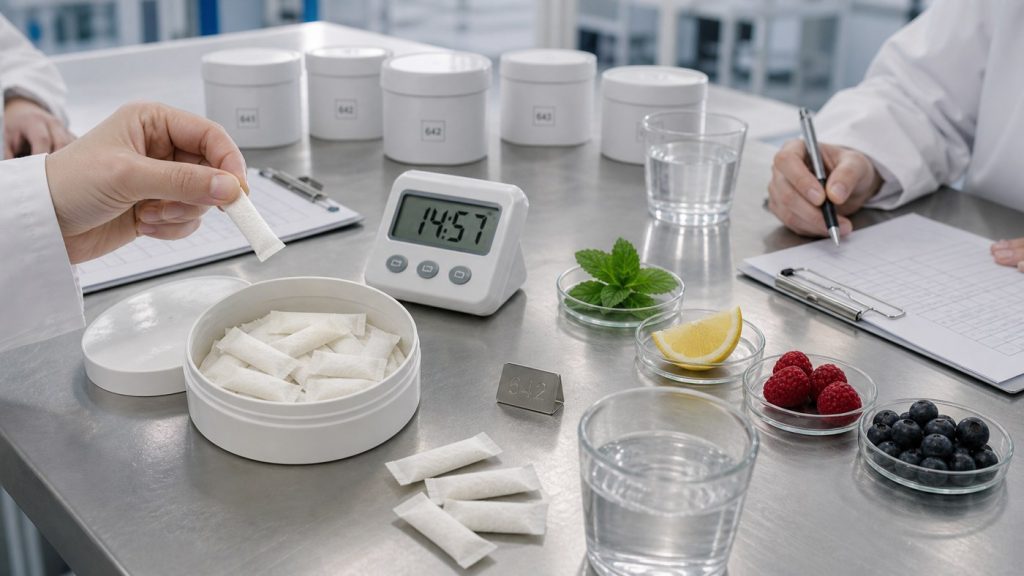
- Coded cans, timer, score sheets, water and realistic pouches in a clean panel room.
- Sensory timeline graphic for wetting, flavor, cooling, bitterness, texture and finish.
Separate Preference from Defect Detection
A panel score should distinguish personal preference from a manufacturing defect. One tester may dislike peppermint, but that is not the same as detecting solvent-like flavor, seam roughness or delayed bitterness. Give panelists separate fields for liking and defect intensity. This simple separation produces clearer reformulation priorities and stops a popular flavor from hiding genuine leakage, dust or mouthfeel problems.
Related manufacturing references
For a complete OEM review, connect this article with the main product and process pages. Buyers usually need category fit, stock-formula options, custom formulation support, process checks, and a direct project discussion before approving samples.
- Custom oral pouch manufacturing
- Stock formulation options
- Private label pouch project planning
- Formulation and R&D support
- Manufacturing process and quality checks
- Technical manufacturing blog
- Discuss a project
Content review note: technical articles are reviewed for functional oral pouch, ODF, packaging, and OEM procurement relevance.