
Primary target long-tail keyword: vitamin and mineral compatibility testing for nutritional oral pouches
A vitamin and mineral blend can meet every incoming certificate and still lose quality inside a pouch. Vitamin C reacts with moisture and oxygen. B vitamins bring color and odor. Zinc exposes metallic bitterness. Trace minerals can accelerate oxidation at levels too small to see in the formula.
Compatibility work should happen before the brand approves flavor and packaging. Otherwise every later failure looks like a masking problem when the real issue is an active-active or active-excipient interaction.
Start from the daily serving, not a wish list
Calculate active mass per pouch and expected daily use. High label doses may not fit a comfortable pouch after carriers, flavors and overages are included.
Remove decorative ingredients that contribute little at the proposed amount. A crowded formula is harder to mix, taste-mask and stabilize.
Review chemical forms
Ascorbic acid and buffered vitamin C salts behave differently in pH and taste. Mineral citrate, gluconate and oxide forms differ in mass, solubility and metallic character. The nutrient name alone is not a formulation specification.
Lock the exact grade and assay basis. Changing salt form alters both label calculation and the grams placed in each pouch.
Control moisture before chasing stability
Hygroscopic minerals and vitamin premixes can absorb room humidity, clump and increase reaction rates. Measure incoming moisture and water activity where relevant, then set handling limits.
Semi-moist formats need extra screening. A formula can feel soft and pleasant while active degradation accelerates in the available water.
Watch mineral-catalyzed oxidation
Trace metals may accelerate loss of sensitive vitamins or flavors. Supplier purity, chelation and contact with processing surfaces influence risk. Adding antioxidant by habit does not guarantee protection.
Run compatibility sets that remove or isolate suspect minerals. This is faster than reformulating the complete product after a failing stability interval.
Expect color and odor changes
Riboflavin and botanical premixes can stain nonwoven. B-vitamin odor may become more obvious as mint top notes fade. Brown spots are commercially unacceptable even when assay passes.
Photograph samples under controlled light and score headspace odor separately. Color limits should be defined before branded packaging creates pressure to accept the result.
Mask metallic taste in layers
Zinc and other minerals can create metallic, drying or chalky sensations. Sweetness alone often makes the contrast sharper. Use acid balance, cooling, aroma and mouthfeel together.
Run timed panels. Metallic finish may appear after ten minutes, long after a quick development tasting ends.
Prevent low-dose premix segregation
Trace nutrients differ in density and particle size from carrier. Use a controlled premix and sample beginning-to-end filling. A pooled batch assay cannot confirm each pouch.
Track fill weight with active results. Machine variation and blend nonuniformity need different corrective actions.
Use stability-indicating tests
Finished-product testing should measure relevant nutrients and degradation where methods exist, not only total blend weight. Include moisture, texture, color, flavor and package condition.
Accelerated screening finds weak combinations, but real-time data are needed for the declared shelf life. Test the final can, liner and closure.
Set realistic overages and limits
- Nutrient form and supplier
- Assay basis
- Daily serving
- Premix process
- Moisture limits
- Sensory profile
- Color limits
- Stability method
- Change notification
Overage should be justified from processing and stability evidence. Excess active is not a substitute for understanding why the formula loses potency.
Study pairs before testing the full formula
When a complex blend discolors or loses potency, use controlled pair studies: vitamin with carrier, vitamin with mineral, active blend with flavor and formula with or without moisture. These comparisons narrow the cause faster than changing several ingredients together.
Keep the same packaging and storage condition across sets. A clean result in glass does not exclude a reaction involving the can liner or headspace.
Check analytical method suitability
Minerals, flavors and botanical color can interfere with vitamin methods. Confirm extraction recovery and specificity in the finished pouch matrix. A method developed for tablets may not recover the same nutrient from fibrous carrier and nonwoven.
Review units and nutrient basis carefully. Salt weight, elemental mineral and declared vitamin activity are not interchangeable. Calculation errors can look like laboratory failure.
Control premix shelf life
Commercial vitamin-mineral premixes may age before they reach pouch production. Define storage, open-container exposure and retest or expiry. Once a barrier bag is opened, humidity and oxygen exposure can differ from the supplier shelf-life condition.
Use first-in, first-out control and record remaining material. Do not mix old and new lots merely to consume inventory unless the approved process and traceability support it.
Questions Buyers Usually Ask
Can all vitamins and minerals be combined in one oral pouch?
Not always. Dose mass, taste, interaction, moisture and stability can make a smaller formula more practical.
Will adding more vitamin compensate for shelf-life loss?
Only justified overage should be used; excessive addition can worsen taste, safety margins and regulatory compliance.
Provide nutrient forms, target dose, serving, moisture style and market when reviewing compatibility. LinkBioLabs can screen the highest-risk interactions before flavor and package approval.
Recommended Blog Images
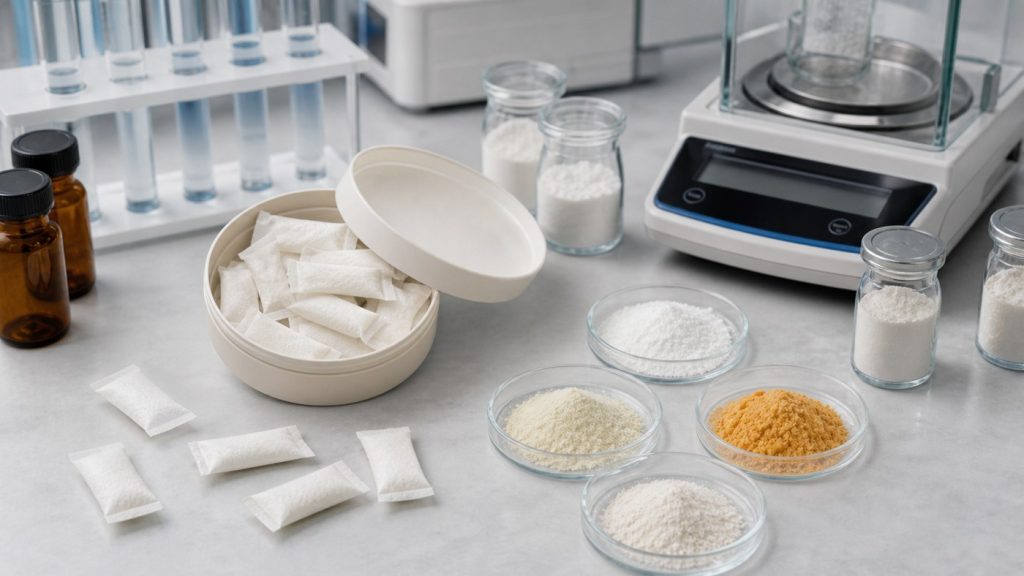
- Lab photograph of vitamin and mineral grades, stability vials, balance and slim pouches.
- Compatibility matrix for oxidation, moisture, color, taste and dose uniformity.
Set Acceptance Limits Before the Pilot Batch
Ask the manufacturer to define release limits before ingredients are ordered, not after the first samples arrive. Useful limits include blend assay, pouch weight variation, water activity, color shift and retained potency. A formula that passes initial taste review can still fail after eight weeks if iron, vitamin C and botanical acids were never challenged together. Written limits make reformulation decisions faster and prevent subjective approval of a visibly unstable blend.
Related manufacturing references
For a complete OEM review, connect this article with the main product and process pages. Buyers usually need category fit, stock-formula options, custom formulation support, process checks, and a direct project discussion before approving samples.
- Custom oral pouch manufacturing
- Stock formulation options
- Private label pouch project planning
- Formulation and R&D support
- Manufacturing process and quality checks
- Technical manufacturing blog
- Discuss a project
Content review note: technical articles are reviewed for functional oral pouch, ODF, packaging, and OEM procurement relevance.