
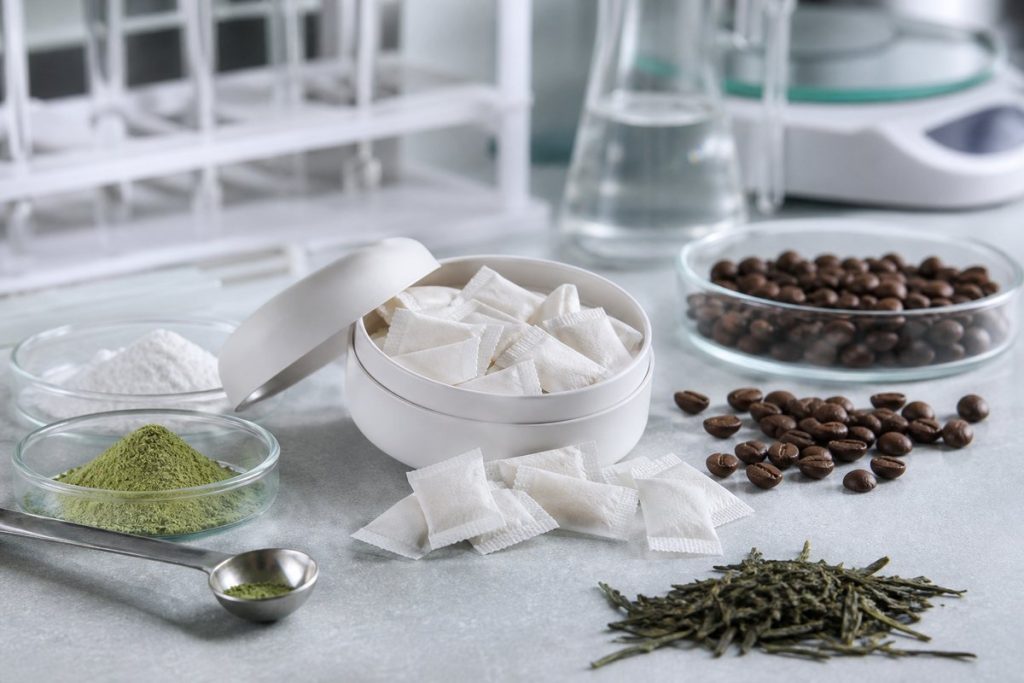
Caffeine and L-theanine are often paired in focus-positioned products, but putting both names on a brief is not a complete formula. The manufacturer still needs exact ingredient grades, amounts per pouch, daily-use direction, flavor target and a plan for controlling two low-dose materials through blending and filling.
The practical starting point is the experience the brand wants to create. A crisp daytime focus pouch, a coffee-inspired product and a light tea concept may use the same headline ingredients yet require different moisture, flavor and strength decisions.
Specify Two Ingredients, Not One Blend
Request the identity, assay, carrier system, particle properties and supplier documents for caffeine and L-theanine separately. If theanine is described as tea-derived, confirm that the production grade supports that description. Premixes can simplify handling, but their ratio and carrier content must be visible in the specification.
Published studies have used different amounts, populations and endpoints. A systematic review of caffeine and L-theanine research provides useful context while also noting limitations. It does not validate every pouch ratio or authorize broad attention claims.
Fit the Ratio Into a Comfortable Pouch
Calculate the complete ingredient weight at the intended amount per pouch. The actives, carriers, flavor, sweetener and moisture system all compete for space. Confirm whether the desired ratio works in the selected 0.20–0.60 g format rather than increasing pouch size after packaging has been ordered.
Develop Flavor Around the Full Formula
Caffeine bitterness and theanine background notes should be evaluated together. Tea-citrus, mint, berry and coffee directions can work differently at the same active levels. Record opening aroma, first-minute bitterness, cooling, midpoint balance and finish. Approve samples stored in the proposed can, not only fresh laboratory pouches.
Uniformity and Release Controls
- Approved grade and amount for both ingredients
- Documented addition order and mixing time
- Blend or finished-product uniformity plan
- Target pouch weight, moisture and tolerance
- Caffeine assay and other agreed release tests
- Retained samples from pilot and production batches
Keep Positioning Within the Evidence
Focus, calm and productivity language can imply outcomes beyond the ingredient list. Review the complete label and website against the selected amounts, evidence and destination-market rules. Do not transfer conclusions from a particular beverage or capsule study to a pouch without a qualified assessment.
LinkBioLabs develops nootropic and focus pouches through stock, modified and custom routes. Send the target market, ingredient ratio, caffeine strength, flavor and forecast through our contact page for a feasibility review.
Related manufacturing references
For a complete OEM review, connect this article with the main product and process pages. Buyers usually need category fit, stock-formula options, custom formulation support, process checks, and a direct project discussion before approving samples.
- Custom oral pouch manufacturing
- Stock formulation options
- Private label pouch project planning
- Formulation and R&D support
- Manufacturing process and quality checks
- Technical manufacturing blog
- Discuss a project
Content review note: technical articles are reviewed for functional oral pouch, ODF, packaging, and OEM procurement relevance.