
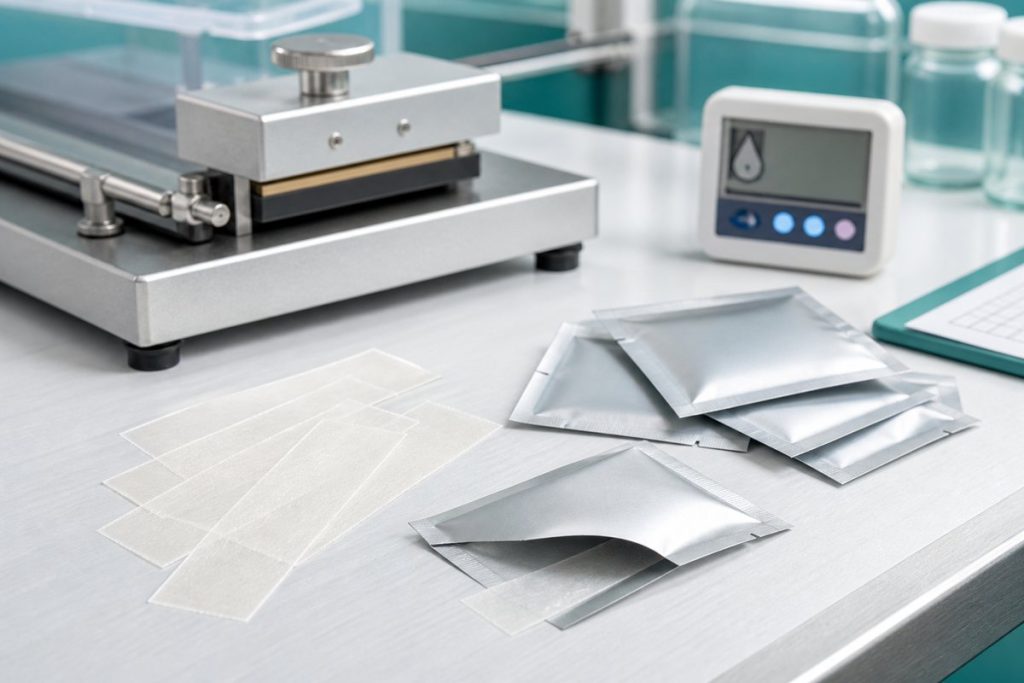
An orodispersible film may weigh very little, but its package does serious work. Thin films can respond quickly to humidity, heat and handling. The sachet has to protect one dose, open cleanly, present the film without damage and keep printed information legible throughout distribution.
For brands, packaging should be selected while the formula is being developed. Choosing a foil structure after stability work has started can force new studies, new machine trials or a change in the claimed shelf life. The film and sachet are one finished system.
Start With the Product’s Sensitivities
Ask which changes are most likely: moisture uptake, drying, oxidation, flavor loss, ingredient degradation, sticking or brittleness. The answer guides the required water-vapor and oxygen barrier, light protection and storage statement. A high-barrier structure is useful only if seals, edges and opening features are also controlled.
ODF research reviews note that many films are hygroscopic and that single units are commonly enclosed in pouches or sachets. The open-access review Orodispersible Films: Current Innovations and Emerging Trends describes industrial casting steps and downstream unit-dose packaging considerations.
Specify the Laminate, Not Just “Foil”
Packaging suppliers combine printable, barrier and sealant layers for different purposes. Ask the converter or manufacturer to identify the approved structure, thickness and sealant side. If the laminate changes, barrier, machinability and seal performance may change even when the outside looks identical.
Match the Seal to the Film and Line
Seal temperature, dwell time and pressure must close the sachet without damaging the contents or creating channels. Film dust, curl or poor placement can interfere with the seal area. Define sachet dimensions, seal width, tear feature and acceptable wrinkles or contamination before artwork is finalized.
- Laminate construction and approved supplier
- Water-vapor and oxygen barrier data where relevant
- Sachet dimensions and seal width
- Seal range and integrity test method
- Film placement and allowable movement
- Tear notch or easy-open design
- Print registration, lot code and expiry area
Test Opening as a Product Attribute
A sachet can pass a laboratory seal check and still frustrate users. Confirm that it opens without excessive force, uncontrolled tearing or damage to the strip. The film should be removable with normal handling and should not remain stuck inside the package. Accessibility and child-safety needs depend on the market and intended user, so they should be reviewed explicitly.
Run Stability in the Printed Commercial Pack
Use the final or production-representative laminate, dimensions and sealing process for stability samples. Check film appearance, moisture, mechanical condition, disintegration, ingredient content and flavor at planned intervals. Inspect the sachet for delamination, pinholes, seal change and ink or code legibility.
If a supplier, sealant layer or sachet size changes, document the difference and assess whether existing stability evidence still applies. A packaging substitution should not be approved solely because both materials are described as aluminum foil.
Artwork Needs Manufacturing Space
Keep critical text, codes and registration marks away from seals, notches and cut zones. Confirm front and back orientation, unwind direction and variable-data location with the packaging line. Request a dieline from the actual supplier rather than resizing artwork from an unrelated sachet.
Buyer Questions Before Approval
- Which barrier properties are required for this formula?
- Will stability samples use the final printed laminate?
- How is seal integrity checked during production?
- Can the user remove the film without damage?
- What artwork zones are reserved for seals and coding?
- How are laminate or converter changes controlled?
- Which packaging records accompany the finished batch?
LinkBioLabs provides unit-dose packaging support for ODF product development, including project-specific sachet planning, film cutting and commercial scale-up. Send the film specification, target market, desired shelf life, artwork status and order forecast through our contact page to review the packaging route.
Related manufacturing references
For a complete OEM review, connect this article with the main product and process pages. Buyers usually need category fit, stock-formula options, custom formulation support, process checks, and a direct project discussion before approving samples.
- Custom oral pouch manufacturing
- Stock formulation options
- Private label pouch project planning
- Formulation and R&D support
- Manufacturing process and quality checks
- Technical manufacturing blog
- Discuss a project
Content review note: technical articles are reviewed for functional oral pouch, ODF, packaging, and OEM procurement relevance.