
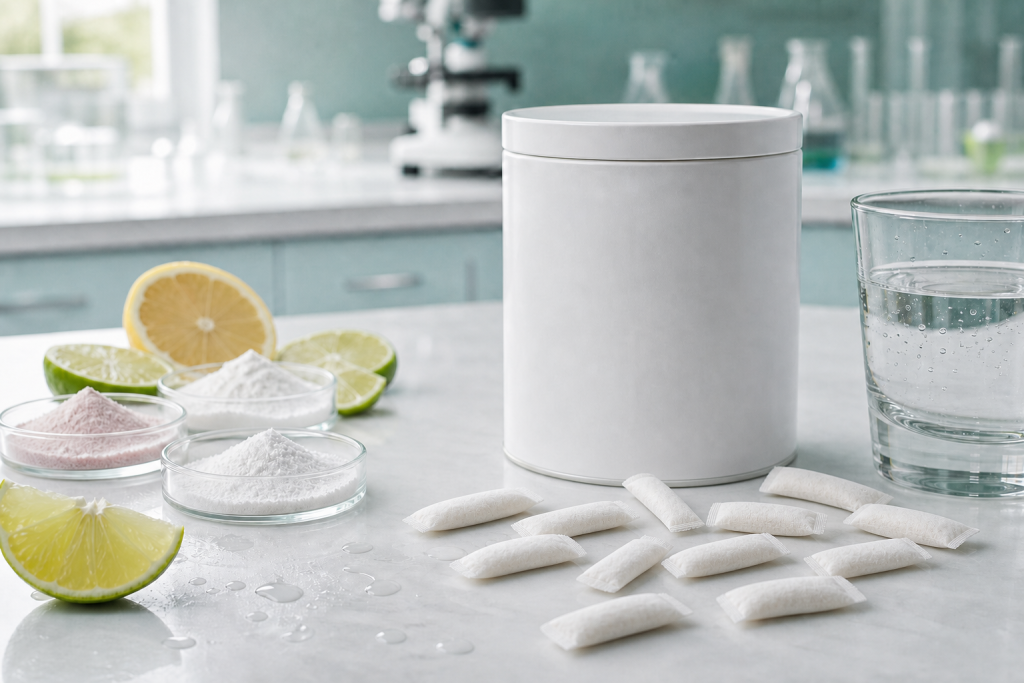
Electrolyte oral pouches sound straightforward until the formula has to fit inside a small, comfortable pouch. Sodium, potassium and magnesium ingredients occupy space, influence taste and may pull moisture into the blend. A concept borrowed from a large drink powder serving rarely transfers without adjustment.
For an OEM project, the first decision is not the flavor. It is what the pouch is intended to contribute per unit and per suggested daily use. That determines the mineral forms, fill weight, label approach and whether the product can deliver a credible experience without becoming bulky or salty.
Define the Mineral System by Exact Form
Write the chemical source as well as the elemental amount. Potassium chloride, citrate salts and magnesium compounds do not contribute the same percentage of elemental mineral or the same taste. Supplier specifications, assay, particle size, carriers and country-specific ingredient status should be reviewed before the formula is priced.
For U.S. dietary supplement projects, the FDA Dietary Supplement Labeling Guide explains that vitamins, minerals and electrolytes follow defined declaration rules and that the specific mineral salt belongs in the ingredient statement. Classification and labeling still depend on the actual product and market.
Calculate the Whole Serving Before Sampling
Brands should distinguish amount per pouch, serving size and maximum suggested daily use. A mineral total that appears modest in a beverage may consume much of the usable space in a slim pouch. Include carriers, sweeteners, flavor and moisture in the weight calculation instead of reserving the full pouch for headline ingredients.
A focused formula can be stronger than a crowded one. Decide whether sodium and potassium carry the central concept, whether magnesium is technically and sensorially practical, and whether additional vitamins genuinely support the positioning. Decorative doses add complexity to testing and labels without necessarily improving the product.
Expect Saltiness, Bitterness and Moisture Work
Mineral salts can taste salty, bitter, metallic or chalky. Citrus and light fruit profiles often provide a logical direction, but flavor alone will not fix a poorly balanced mineral load. Evaluate acidity, sweetness and cooling as separate controls. The selected mineral grades must be present at commercial amounts in the final sensory sample.
Some mineral ingredients are hygroscopic. Moisture changes powder flow, pouch softness, seam cleanliness and shelf stability. Agree on the target pouch format, moisture range, can liner and storage plan together. A dry prototype in an unsealed sample bag does not demonstrate commercial behavior.
Testing and Release Questions
- Identity and certificate of analysis for each mineral source
- Elemental amount calculations and manufacturing tolerances
- Blend and fill-weight uniformity controls
- Finished-product mineral testing where required
- Moisture, water activity and microbiological specification
- Seam integrity, loose powder and count per can
- Stability work in the final retail package
Use Hydration Language Carefully
An electrolyte ingredient list does not make every performance or dehydration claim appropriate. Review nutrient-content statements, intended-use language and serving directions against the exact formula and destination-market rules. Avoid disease, emergency-treatment or guaranteed-performance messages unless the product is authorized and supported for them.
A Practical First Range
Start with one mineral system and a small flavor set. Lemon-lime, berry-citrus or a clean mint-citrus direction can be screened without committing to several package versions. Confirm ingredient minimums and flavor MOQ before splitting the order into too many SKUs.
LinkBioLabs supports nutritional oral pouch development using project-approved nutrients, carriers and flavors. To assess an electrolyte concept, share the target market, proposed mineral amounts, serving direction, flavor, pouch count and launch volume through our contact page.