
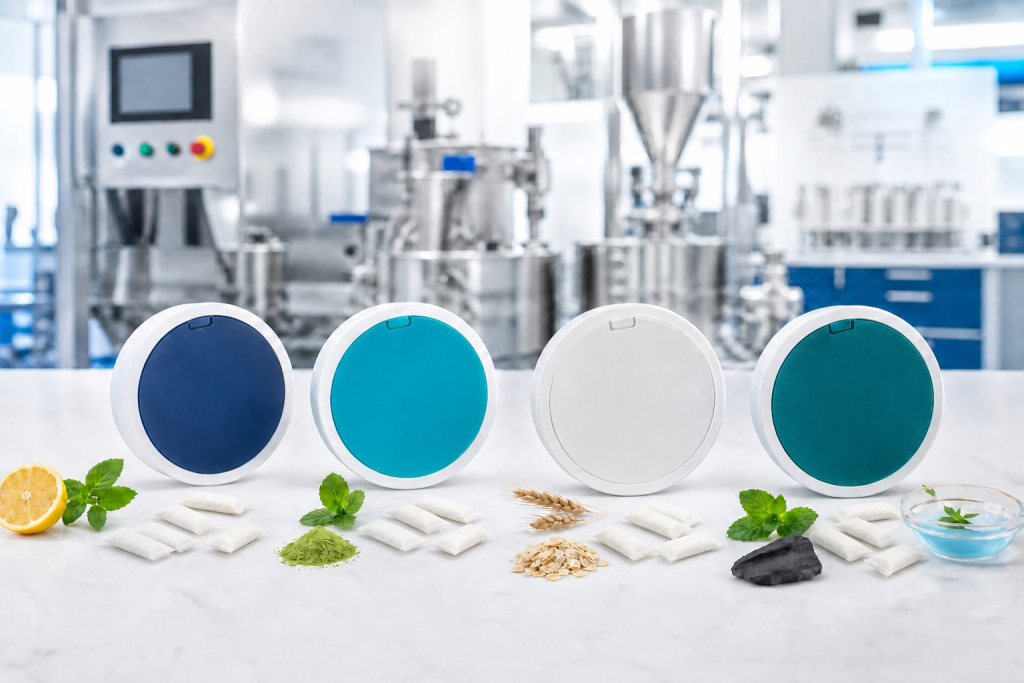
Nicotine-free oral pouches are not simply nicotine pouches with one ingredient removed. They are a broader product format used for energy, focus, oral care, nutrition and calm-positioned concepts. That difference changes the formula brief, the consumer promise and the questions a buyer should ask the factory.
For brands entering the category, “nicotine-free” is an important product fact, but it is not a complete identity. The pouch still needs a clear use occasion, a workable ingredient system and a destination-market review. A manufacturer should be able to discuss all three without borrowing the language or assumptions of tobacco products.
Define the Product by What It Is
Start with the intended function: portable caffeine, botanical energy, focus support, fresh-mouth experience, daily nutrients or another specific direction. Put that description at the top of the brief. Nicotine-free and tobacco-free statements can sit alongside it, but they should not be the only reason a customer understands the product.
Product classification varies with ingredients, claims and market. The absence of nicotine does not automatically make every formula a conventional food or dietary supplement, and a factory cannot determine every country’s position from the pouch format alone. The brand and importer should obtain market-specific advice before artwork is printed.
Use a Written Exclusion and Ingredient List
If nicotine-free or tobacco-free positioning is central, list excluded materials in the approved specification and supplier requirements. Ask how the factory prevents mix-ups when different product categories are handled on the same site. Line clearance, identified storage, batch reconciliation and documented change control are more useful than a verbal assurance.
- Exact ingredient names, grades and suppliers for the approved formula
- Written confirmation of excluded materials
- Batch-level traceability for ingredients and packaging
- Cleaning and line-clearance procedures appropriate to the site
- Finished-product testing where a market or buyer specification requires it
- Approval before any supplier or ingredient substitution
Build the Formula Around Pouch Reality
Functional ingredients compete for limited pouch space. Particle size, bitterness, solubility, moisture uptake and color can matter as much as the amount on a concept sheet. A formula that works in a capsule may feel gritty or release unevenly in a pouch. The manufacturer should screen the exact material before promising a commercial specification.
Flavor also needs to work with the base. Caffeine and botanicals may need bitterness management; vitamins and minerals can add sharp or metallic notes; oral-care formulas often depend on controlled mint and cooling. Approve timed sensory notes, pouch weight, moisture and seam quality together rather than treating flavor as a final decoration.
Keep Claims Attached to Evidence
Words such as energy, focus, calm and oral care can carry implied messages. The U.S. Federal Trade Commission advises marketers to identify both express and implied claims and hold adequate support before advertising. Product names, imagery and testimonials count as part of the message. Review the FTC Health Products Compliance Guidance when planning U.S. marketing.
Questions for the Manufacturer
- Which functional pouch types are produced in-house?
- How are excluded ingredients controlled and documented?
- Can the factory support stock, modified and custom formulas?
- Which tests are included in the quotation?
- How is an approved sample transferred to commercial production?
- What MOQ applies per formula, flavor, strength and artwork?
- Which export and batch documents can accompany the shipment?
A Practical Route to Launch
A first range usually works best with one clearly defined product family and a small number of flavors. LinkBioLabs develops nicotine-free functional pouches across energy, nootropic, oral care, nutritional and stress-relief formats. Send the target market, product function, ingredients to include or exclude, pack count and estimated quantity through our contact page for an initial manufacturing review.
Related manufacturing references
For a complete OEM review, connect this article with the main product and process pages. Buyers usually need category fit, stock-formula options, custom formulation support, process checks, and a direct project discussion before approving samples.
- Custom oral pouch manufacturing
- Stock formulation options
- Private label pouch project planning
- Formulation and R&D support
- Manufacturing process and quality checks
- Technical manufacturing blog
- Discuss a project
Content review note: technical articles are reviewed for functional oral pouch, ODF, packaging, and OEM procurement relevance.